Photo: Well This Is News
Conservative-packed appeals court moves to choke off abortion access by banning pill by mail
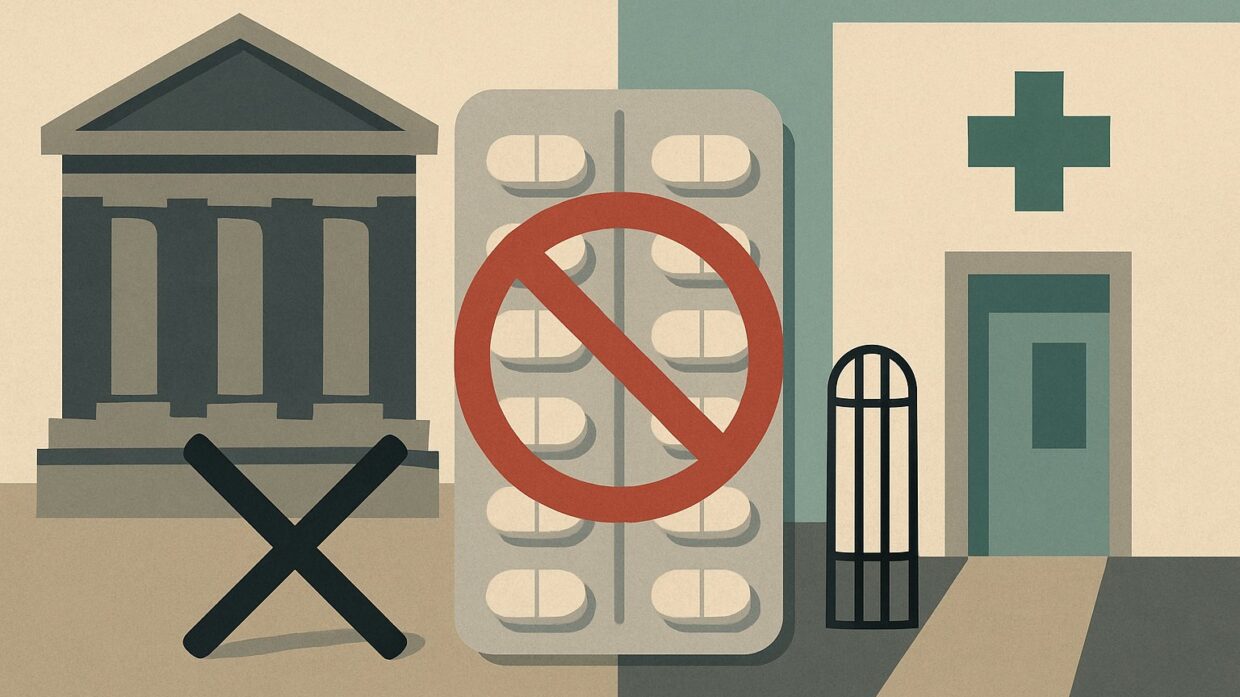
Federal court halts Biden-era policy allowing abortion pills to be prescribed online and mailed
Fifth Circuit Court blocks mail distribution of abortion pill mifepristone nationwide
Key Takeaways
- The court's decision hinges on the Comstock Act of 1873, an obscure law originally written to ban obscene materials, which both Republican and Democratic administrations previously considered inapplicable to prescription medications like mifepristone.
- The FDA changed its policy on mifepristone in 2023, but this reversed a Trump-era decision that kept restrictions in place, meaning the rule change itself has murky regulatory pedigree that neither side has fully examined.
- A Supreme Court ruling on whether Comstock applies to prescription drugs would reshape not just abortion access but potentially the FDA's authority to regulate mail delivery of all controlled substances, making this case's significance far broader than abortion alone.
The Analysis
A three-judge panel of the Fifth Circuit Court of Appeals blocked the FDA's 2023 rule allowing mifepristone to be mailed to patients, reinstating a requirement for in-person dispensing. This ruling, announced Friday and nationwide in effect, immediately collapsed the telemedicine abortion pathway that had become the primary means of accessing abortion in post-Roe America.
The facts are specific: The court found the FDA's 2023 rule, which removed the in-person requirement during the COVID-19 pandemic and made it permanent, "likely unlawful." The Fifth Circuit cited the Comstock Act, a 1873 federal law banning the mailing of "obscene" materials, as the statutory foundation for blocking mail distribution. Mifepristone now accounts for over 60% of abortions nationwide, according to data cited across all coverage. The ruling takes immediate effect while appeals proceed.
The left frames this as a coordinated assault by "conservative-packed" courts. Mother Jones used the phrase "a right-wing court just moved to choke off abortion by mail," emphasizing judicial ideology rather than legal reasoning. NPR and MSNBC focused on the practical effect: telemedicine providers are "shut down, at least temporarily," and abortion access for patients in restrictive states is severed. This framing omits the actual legal argument the court made and ignores that the case was brought by anti-abortion groups challenging the FDA's statutory authority, not a partisan witch hunt. The left's silence on why the FDA changed this rule in 2023, and whether that process followed Administrative Procedure Act requirements, is deliberate.
The right frames this as a legal victory against executive overreach. The Daily Wire called it "a major legal victory for the pro-life movement" and stated the court "ordered a nationwide halt to a Biden-era policy." Fox News emphasized that the ruling "likely sends the abortion pill fight to the Supreme Court," treating this as one move in a longer constitutional game. The right does not mention that the in-person requirement was originally an FDA safety precaution under the Risk Evaluation and Mitigation Strategy, not a political choice. It also does not acknowledge that medication abortion has a safety profile comparable to or better than many common prescriptions, which is why the FDA relaxed the rule in the first place.
What neither side is saying: This case turns on a genuine legal question about the scope of the Comstock Act, passed in 1873 to ban obscene materials, and whether it applies to prescription medications at all. The FDA under both Republican and Democratic administrations treated mifepristone as exempt from Comstock for decades. The 2023 rule change was made by the Biden FDA, but it reversed a Trump-era decision to keep the restriction. The Fifth Circuit has become a destination court for conservative legal challenges because of its composition, but the legal question itself is not settled law. The Supreme Court's 2022 decision in Dobbs v. Jackson eliminated the federal right to abortion but explicitly said it was not ruling on medication abortion specifically. A Supreme Court ruling on Comstock's application to prescription drugs would reshape not just abortion access but potentially FDA authority over mail delivery of any controlled substance.
The honest headline: Conservative federal appeals court invokes 1873 obscenity law to block mailing of abortion pill, escalating legal fight to Supreme Court and exposing gap between how long the FDA has allowed this practice and how the court now interprets decades-old federal law.
A ruling that redefines what an 1873 obscenity law covers could reshape FDA authority over mail delivery of prescription drugs far beyond abortion, making this a constitutional question about regulatory power that will likely reach the Supreme Court.