Photo: 大 董
Nearly half of US population exposed to dangerous air pollution on Earth Day
Earth Day report ignores regulatory costs of environmental mandates
44% of Americans breathe unhealthy air, new lung association report finds
Key Takeaways
- Air quality in the United States has improved 78 percent since 1970 despite a 260 percent increase in GDP and population growth, meaning the problem is not that regulation has failed entirely but that substantial challenges remain unsolved.
- The Clean Air Act and its amendments have governed air quality for 56 years, yet 44 percent of Americans still live in nonattainment zones, indicating either enforcement is not happening, current technology cannot meet standards at viable costs, or pollution sources are too economically embedded to regulate without explicit trade-offs that neither side names.
- Both the left and right avoid the core political question: whether the real failure is lack of enforcement of existing law, or whether America must choose between accepting worse air quality or explicitly accepting the economic costs of meeting stricter standards.
The Analysis
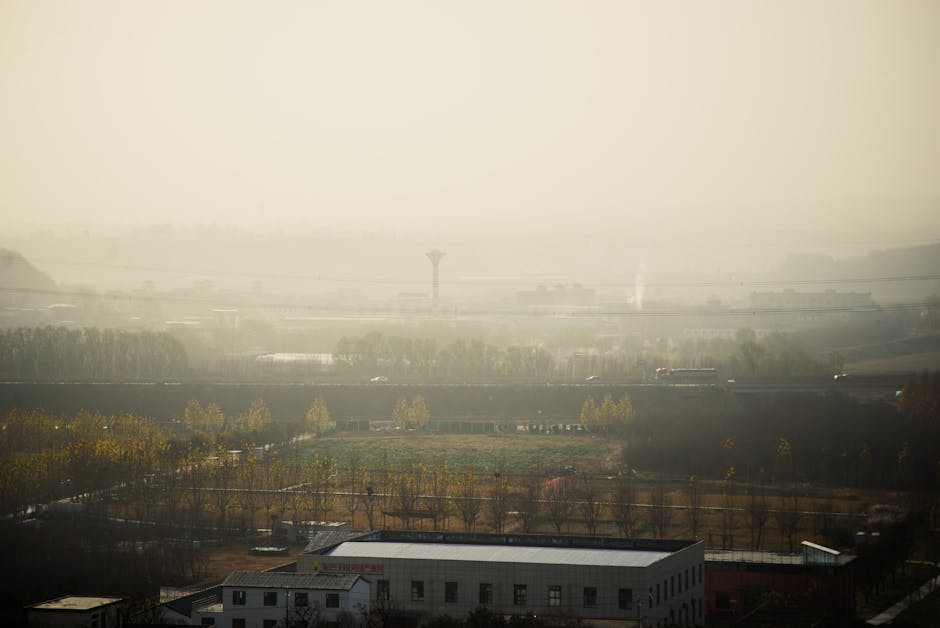
The American Lung Association released a report on Earth Day stating that 44 percent of Americans—152 million people—live in areas with unhealthy air, and that 46 percent of children breathe toxic air, but the framing of this crisis reveals far more about political messaging than about the actual state of American air quality.
The verified facts are stark and specific: the ALA's 2026 State of the Air report measured air quality against federal standards under the Clean Air Act, finding particulate matter and ozone pollution at concerning levels in nearly half the country. The report named 33.5 million children living in nonattainment zones. These numbers come from the American Lung Association, a 125-year-old advocacy group with no hidden agenda on the raw data itself—the measurements exist independently of the framing.
The left's framing, deployed loudly by Inside Climate News and echoed throughout environmental media, uses the language of moral urgency: "toxic air," "public health crisis," "dangerous levels." This language is not false—the EPA's own standards classify these zones as failing—but it performs a specific rhetorical function: it positions the problem as immediately catastrophic and demands as the only rational response. The framing omits an inconvenient fact: air quality in the United States has improved 78 percent since 1970, according to EPA data, despite a 260 percent increase in GDP and population growth. This omission is not accidental. Mentioning progress would complicate the narrative that current policy is failing and more regulation is needed.
The right's response, exemplified by The Daily Wire's decision to lead on Earth Day's "dark origins" rather than the air quality data itself, performs a different omission: it sidesteps the actual health numbers entirely and attacks the messenger. The Daily Wire's piece focuses on the complicated history of Earth Day's founder, Denis Hayes, rather than engaging with whether 152 million people breathing degraded air is a problem worth solving. This is rhetorical avoidance. By changing the subject to institutional critique, the right avoids the harder position: admitting pollution exists while arguing the cure is worse than the disease. The right also leaves unspoken what it clearly believes—that emissions regulations cost jobs and economic growth—without naming the specific trade-off or providing data on it.
What neither side is saying: The Clean Air Act has been law since 1970, amended significantly in 1990. The zones identified in this report are already subject to federal regulation. If 44 percent of Americans still breathe unhealthy air after 56 years of the world's strictest air quality law, this tells us something both sides avoid: either the standards are not being enforced, the technology to meet them is not economically viable at current regulatory thresholds, or the sources of pollution (vehicle emissions, agriculture, power generation) are too economically embedded to regulate away without explicit trade-offs. The report itself does not address which of these is true.
The real headline: The American air quality crisis is not new, it is not secret, and it is not a simple choice between environmental protection and economic growth—it is a 56-year failure of political will to either enforce existing law or be honest about what enforcement actually costs.
A half-century of environmental law has failed to deliver breathable air to nearly half the nation, exposing that the gap between regulatory standards and reality reflects not a lack of rules but a shortage of political courage to enforce them or honestly price their enforcement.