Photo: Well This Is News
Democratic establishment enabled Eric Swalwell's alleged misconduct for years before finally acting
Media finally catches up to what it missed: Swalwell's fall reveals institutional failure across the board
Eric Swalwell resigns after sexual misconduct allegations; Rubén Gallego distances himself from former ally
Key Takeaways
- Multiple institutions across the political spectrum—Democratic leadership, media outlets, congressional HR processes, and individual politicians—had access to these allegations for years and remained silent until public pressure forced action.
- Gallego's reversal was a political calculation timed to public exposure rather than a response to new information, suggesting his initial defense and current regret both serve his career interests rather than genuine accountability.
- Critical details that could reveal systemic protections for alleged predators—such as Title IX complaints, HR knowledge, internal settlements, and non-disclosure agreements—remain publicly unavailable, suggesting institutional protection crosses party lines.
The Analysis
Eric Swalwell's resignation after four women alleged sexual assault reveals a story both sides are framing to avoid their own complicity: the Democratic establishment sheltered him while the media missed it, yet the right is using the discovery as vindication rather than examining why it took this long.
The verified facts: Four women came forward publicly with sexual assault allegations against Swalwell spanning years. Swalwell, a California congressman and former presidential candidate, resigned. Rubén Gallego, an Arizona senator and close ally, had publicly defended Swalwell before the allegations surfaced and now says he regrets that defense. The Vox interview captures Gallego explicitly stating he was wrong to stand by Swalwell, framing the decision as a political liability for his own 2028 presidential calculations.
The left's framing, visible in Vox and The Hill's coverage, uses the language of "institutional failure" and "party complicity." These outlets emphasize that Democratic leadership and media figures knew or should have known about Swalwell's behavior and chose not to act. The implicit narrative: this was a specific failure of Democratic gatekeeping, one that Gallego is now correcting. What this framing omits is the broader pattern of institutional silence around sexual misconduct that crosses party lines, and crucially, the media's own role in not investigating Democratic figures as aggressively as Republican ones. By focusing on "the party that sheltered him," the left avoids the question of why their own institutions didn't report these allegations earlier.
The right's framing, in National Review, uses the language of "missed stories" and "we missed the story." The National Review piece specifically critiques the media for treating Swalwell's downfall as a "testament to investigative reporting" when, the publication argues, the media simply failed to report what was there. National Review is correct on this point—the allegations emerged through other means, not through traditional press investigation. But the right uses this to argue the media is institutionally captured by the left, avoiding the question of why conservative media also failed to break this story. The right's framing suggests partisan media bias as the primary villain, which is real, but obscures the fact that multiple institutional failures across the political spectrum enabled Swalwell's alleged behavior to persist.
Neither side is naming the specific prior agreements or institutional patterns that created conditions for silence. No outlet is asking: What Title IX complaints were filed? What did HR departments know? What did party leadership specifically know and when? Were there non-disclosure agreements or internal settlements? The absence of these specifics suggests they are being protected across party lines. Gallego's regret appears to be purely political calculation—he distanced himself the moment the political cost became public, not because new information emerged but because the story finally became public.
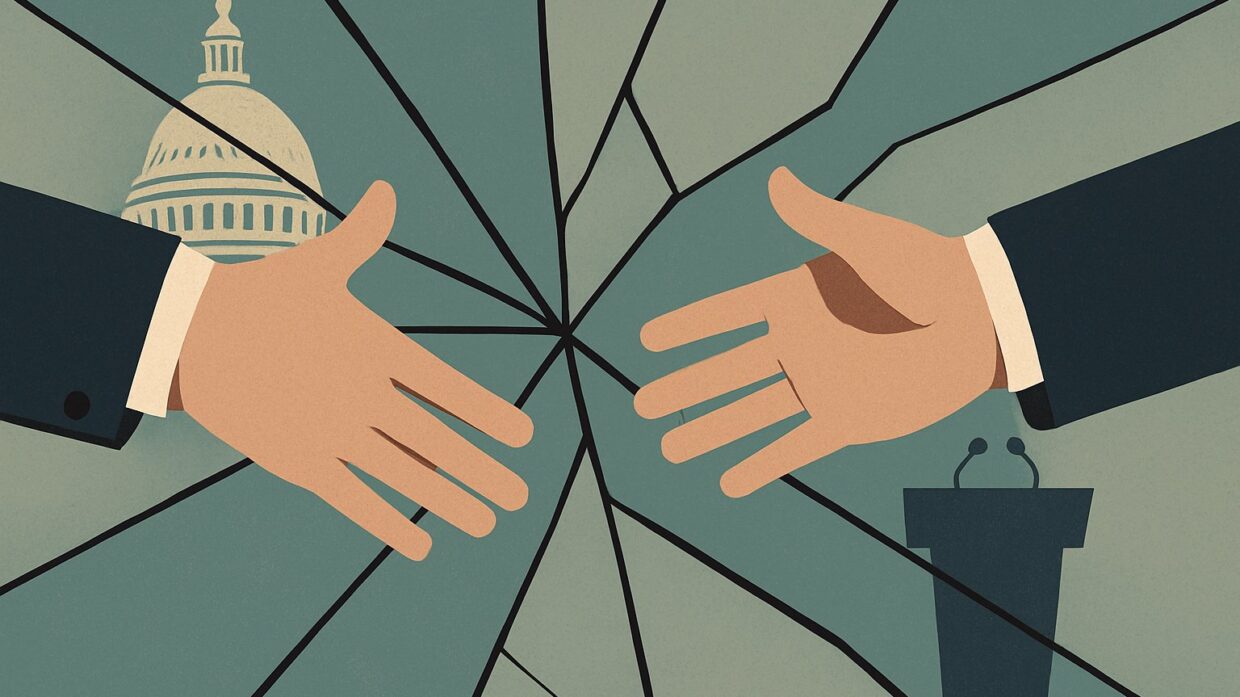
The real headline should be: Multiple institutions—Democratic Party leadership, media outlets, congressional HR processes, and Gallego himself—had years to act on allegations and chose silence until public pressure forced their hands. This is not a story about one party's corruption or one media outlet's bias. It is a story about how institutional power protects alleged predators across ideological lines until the cost of silence exceeds the cost of action. Gallego's reversal is not a correction of his judgment; it is a calculation that his political future depends on appearing to have corrected it.