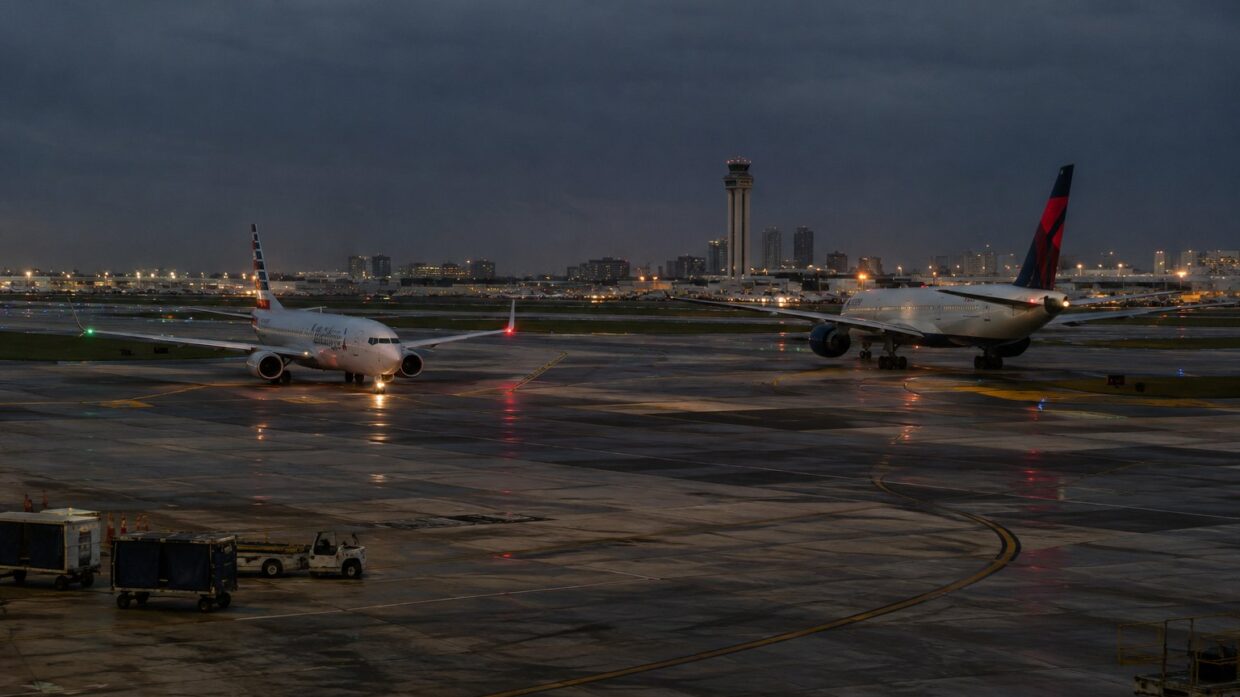
Photo: Well This Is News
Two injured in Miami airport collision as FAA struggles with system recovery
Cargo and passenger planes collide at Miami International Airport amid ongoing FAA disruptions
Two planes collide on Miami tarmac day after nationwide FAA ground stop
Key Takeaways
- The FAA has not disclosed whether the ground stop itself caused unusual traffic patterns or staffing pressures that contributed to the Miami collision on Saturday.
- The collision is the third documented incident in the ground stop aftermath, but the connection between the Friday shutdown and Saturday's accidents remains unestablished in official reporting.
- The public still does not know what triggered the Friday ground stop or whether the conditions that prompted it created safety vulnerabilities when normal operations resumed the next day.
The Analysis
A cargo plane and a passenger aircraft collided on the Miami International Airport tarmac on Saturday at 9:15 p.m. EST while both were taxiing, injuring two people and raising immediate questions about whether the FAA's system-wide ground stop the previous day left airports unprepared for the surge in operations that followed. The collision is not an isolated safety lapse but the third documented incident in the ground stop aftermath, following security breaches at Denver and Dallas airports.
The factual record establishes the basic sequence. The FAA ordered a nationwide ground stop on Friday, halting all flights across the United States. By Saturday evening, as airports cleared backed-up traffic, two aircraft made contact on the tarmac at Miami. The FAA is investigating. Two people sustained injuries. The exact nature of those injuries and the precise mechanism of the collision remain unreported in the available coverage.
The left-leaning framing, represented by NBC News, leads with the injuries and emphasizes the timing as particularly damaging to public confidence. NBC names the ground stop as having occurred "a day" before the collision, placing the incidents in direct narrative sequence. This framing invites readers to connect the disruption to the safety incident, even though the coverage does not establish causation. The omission here is technical: what specific air traffic control procedures or staffing levels changed between Friday and Saturday, and whether those changes contributed to the collision. NBC leaves that question unaddressed.
The right-leaning frame, presented by the Washington Examiner, similarly sequences the ground stop and the collision but emphasizes operational disruption rather than system failure. The Examiner specifies that both planes were taxiing, naming the cargo plane and passenger plane as distinct aircraft and the time with precision. This framing focuses on what happened rather than what it suggests about FAA management. The understated element here is systemic: the Examiner does not explore whether the ground stop itself created unusual traffic patterns or staffing pressures that increased collision risk on Saturday.
What neither frame adequately addresses is the ground stop's own unresolved cause. The coverage names the ground stop as fact but does not establish what triggered it or whether whatever prompted it on Friday created conditions on Saturday that increased safety risk. The Hill mentions both the security breaches and the collision but does not establish whether these incidents are connected to the ground stop or are separate failures occurring coincidentally during the same period.
The available evidence suggests the collision occurred during normal Saturday operations at a busy airport, not during emergency procedures. If that is accurate, the question becomes whether normal Saturday operations, following a nationwide shutdown that day earlier, created unusual demand on air traffic control that contributed to the incident. The public record does not yet establish whether such a connection exists or whether the collision represents a standard airport accident unrelated to Friday's disruption.
What matters here is not the isolated incident but whether the ground stop revealed vulnerabilities in how airports manage traffic surges after disruption. The FAA's ability to prevent a pattern of failures in the aftermath will determine whether this becomes a one-day crisis or the opening of a longer operational problem.
The Miami collision matters because it tests whether the FAA can maintain safety margins during recovery operations after system-wide disruptions. If the ground stop created traffic management conditions that contributed to Saturday's incident, it establishes a direct institutional liability: the agency's decision to halt all flights may have inadvertently increased collision risk when operations resumed. The pattern of three incidents across Miami, Denver, and Dallas within 24 hours suggests the ground stop created cascading vulnerabilities rather than resolving them. The FAA's investigation will determine whether its own intervention triggered the very safety failures it was designed to prevent, potentially forcing a fundamental redesign of how the agency manages nationwide traffic halts and their aftermath.