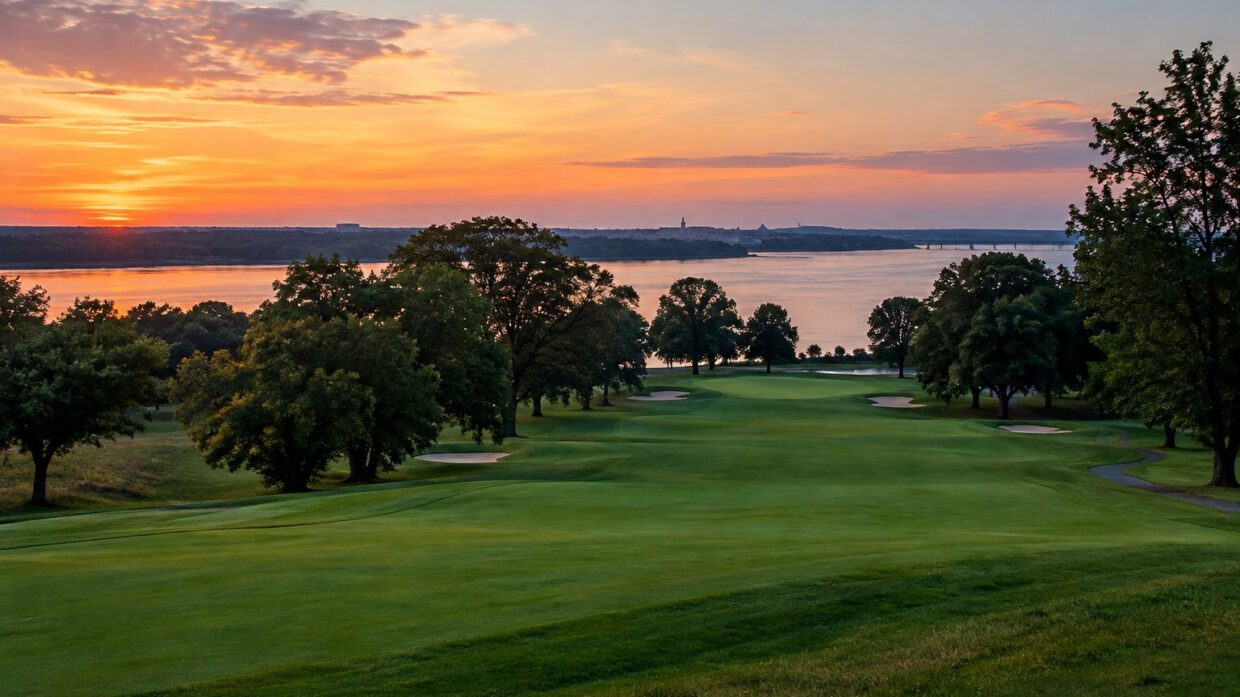
Photo: Well This Is News
Judge temporarily blocks Trump's plan to redevelop East Potomac golf course in D.C.
Trump announces 50% DC resident discount at renovated Potomac golf course despite court block
Federal judge blocks Trump administration from closing East Potomac Park for golf course renovation
Key Takeaways
- Neither the left nor right reporting explains what specific legal claims or statutes prompted the judge to block the closure, leaving the substantive basis for the ruling unexplained.
- The sources reference this as the second judicial block of the project but do not establish when the first block occurred, what changed between the two rulings, or whether the administration modified its approach in response to earlier court skepticism.
- The court ruling shifted control of the project timeline from the executive branch to the judicial system, but reporting does not clarify whether the legal challenge targets the renovation plan itself or only the procedures used to announce and implement it.
The Analysis
A federal judge in Washington blocked the Trump administration's plan to close East Potomac Park on Saturday, issuing a temporary restraining order that prevents the closure for at least two weeks. The court's action halts the administration's announced Sunday closure date, which would have begun construction of an 18-hole championship-length golf course on the public park's existing course. This is the second judicial block of the plan, according to reporting, suggesting the legal challenges to the project have already accumulated.
The specific ruling establishes that the closure cannot proceed without further court review. The judge imposed a waiting period of at least two weeks before any additional hearings on whether a longer injunction should remain in place. The Trump administration had announced the park would close for the renovation without specifying how long the public would be excluded from the space during construction.
The left frame, represented in NBC News coverage, emphasizes this as a legal "blow" to the president's effort and describes it as preventing closure "for now," language that foregrounds the temporary nature of the block while treating the administration's plan as the presumed direction. This framing leaves out the substantive legal reasoning the judge provided for why closure might be problematic, focusing instead on the outcome as a political setback. It does not explore what legal claims prompted the restraining order or what statutory or constitutional provisions might be at issue.
The right frame, reflected in Washington Examiner reporting, shifts attention entirely away from the court order. Instead of leading with the judicial block, it leads with Trump's announcement that D.C. residents will receive a 50% discount at the renovated course once completed. Trump's statement that the course is currently in poor condition and that the renovation benefits area residents reframes the project as a public amenity rather than a private development. This coverage does not mention the court order in the summary material provided, treating the discount announcement as the day's news rather than the judicial restraint.
What neither framing foregrounds is the legal foundation for the challenge itself. The reporting does not explain whether the case turns on whether East Potomac Park is subject to closure under federal park law, whether the National Park Service has authority to close it, whether an environmental review was required before announcement, or whether the legal problem is that the administration proceeded without necessary consultation or statutory procedures. The sources establish that a judge found cause to halt the closure but do not establish what legal principle that judge invoked. This matters because the reason for the block determines whether the administration can eventually prevail by addressing the court's concern or whether the legal obstacle is more fundamental.
The prior restraining order that The Hill references as a second block suggests this case has generated repeated court intervention, but the sources do not establish when the first block occurred, what happened between it and this one, or whether the administration modified its approach in response to earlier judicial skepticism. The sequence raises questions about whether the administration proceeded despite knowing a court had already signaled concerns, but the available reporting does not establish the timeline or the administration's reasoning.
What changes as a result of this ruling is the closure date: the public retains access to the park for at least another two weeks pending further court proceedings. The institutional implication is that the court system, not executive timeline, now controls the pace of this project. What remains unclear is whether the legal challenge addresses the substance of the renovation plan itself or only the procedures by which it was announced and implemented.
This restraining order transfers control of East Potomac Park's future from the Trump administration's announced closure date to the federal judiciary's review schedule, meaning no renovation can proceed without surviving judicial scrutiny of either the administration's statutory authority to close a major public recreation space or the procedures it followed before announcing closure. The repeated judicial blocks suggest the legal obstacle runs deeper than procedural missteps; if the judge found the closure legally improper at its foundation, the administration cannot simply revise its announcement process and proceed. The park remains open only because a court determined the closure order raised substantial legal questions that warrant examination, establishing that executive control over public parkland is not absolute and that federal judges will intervene when agencies attempt to remove public access without demonstrating clear legal authority.