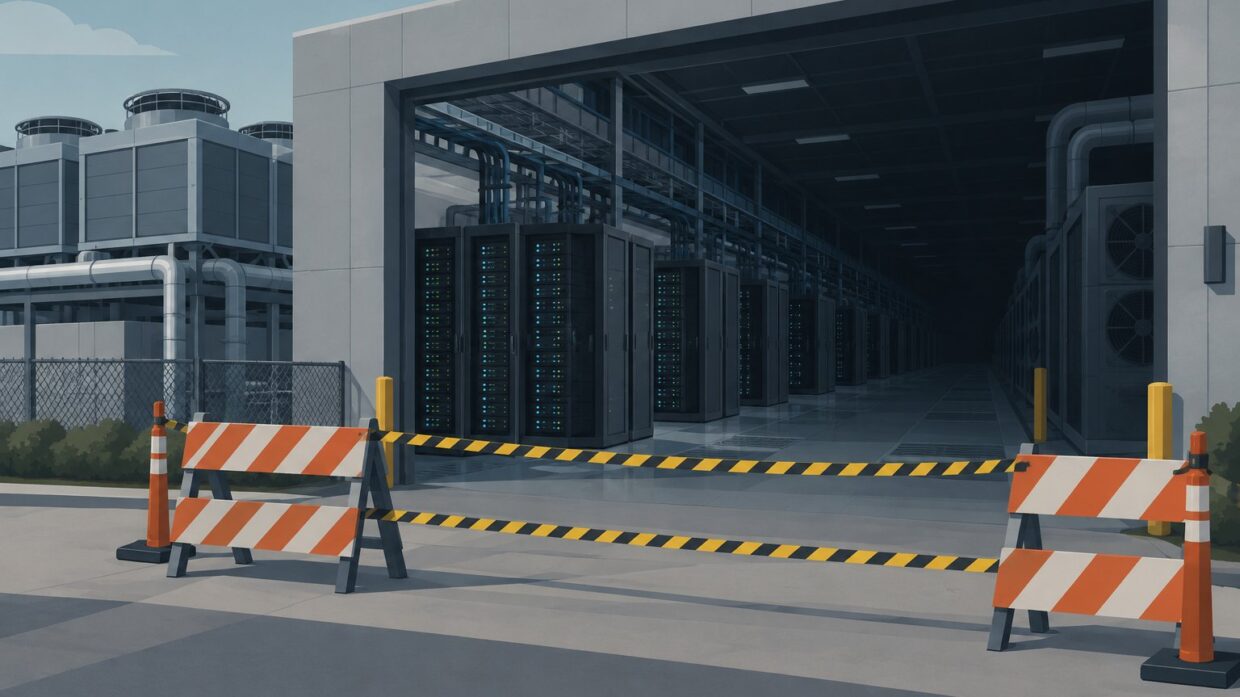
Photo: Well This Is News
OpenAI's data center rebrand won't fix the real problem: voters are rejecting AI expansion
Market sell-off over data center restrictions risks America's AI leadership against global competitors
Voters restrict data centers in 40 of 41 ballot measures as AI infrastructure faces political headwinds
Key Takeaways
- Data center ballot measures typically cite specific local concerns like energy grid strain and water consumption, but neither left nor right coverage examines whether those concerns reflect genuine engineering problems or misunderstandings of how the infrastructure works.
- The coverage does not clarify whether the restrictions are permanent bans or subject to variance requests, and whether they apply uniformly to all data center operators or create selective exemptions that could undermine their stated intent.
- The ballot results show what voters chose but not why they chose it, leaving open whether the restrictions represent durable voter preference or temporary reaction to information gaps about AI infrastructure needs and trade-offs.
The Analysis
Voters across the country approved 40 of 41 ballot measures restricting data center development in the midterm elections, creating simultaneous pressure on AI companies' expansion plans and on equity markets that price those companies on growth assumptions. OpenAI responded by rebranding its data center strategy, a shift that has triggered divergent interpretations about what the ballot results actually represent and what they require from the industry.
The factual record is narrow but significant: local voters made an explicit choice to limit data center buildout through binding ballot measures. The 40-of-41 result suggests this was not a regional or issue-specific rejection but a broad pattern. That pattern followed election cycles where candidates promising "tougher oversight of AI companies" won office. These are acts of direct democratic input, not polling or sentiment. The stock market registered the risk immediately, with a post-election tech sell-off that caught the attention of major financial analysts.
Vox frames this as a rebuke to AI expansion that OpenAI is now attempting to manage through rhetoric. The framing emphasizes that voters actively chose restrictions and that OpenAI's rebrand is a superficial response to a structural demand from the electorate for limits on corporate AI infrastructure. The language used is direct: voters "backed restrictions," not "expressed concern." This framing leaves out whether voters understood specific trade-offs between energy infrastructure costs and innovation capacity, or whether the ballot measures included exemptions or phase-in periods that might soften their real-world impact.
The Washington Examiner frames the data center votes as part of a panic that risks America's global competitiveness. The framing emphasizes market concern, competitive positioning against unspecified rivals, and the economic consequences of restricting buildout. The language suggests urgency: "America's global economic dominance" is the framing stakes. This framing leaves out whether the voter concerns about data center expansion relate to specific local harms (energy consumption, water use, land use) that are genuinely traded against national competitive advantage, or whether the framing conflates different questions.
What neither framing directly addresses is what specific harms voters believed they were preventing. Data center ballot measures typically cite local concerns: energy grid strain, water consumption, property tax impacts, environmental degradation. Neither the left nor right frame engages with whether those local concerns are sound engineering questions or misunderstandings of how data infrastructure works. Neither addresses whether the restrictions are permanent or subject to variance, or whether they apply equally to all data center operators or selectively.
The MarketWatch analyst framing suggests the sell-off may be overdone, that some AI stocks are "more insulated than they seem" from the restriction impact. This framing assumes the market overestimated the real cost of the restrictions, but does not specify which companies, which segments of the AI sector, or what regulatory pattern would justify that confidence. The implication is that uncertainty rather than fundamental restriction is driving the sell-off.
The underlying question the coverage has not adequately examined is whether data center restrictions are a durable voter preference or a reaction to information gaps about AI infrastructure. If durable, the restrictions represent a political ceiling on buildout that changes investment calculations across the industry. If temporary or correctable, the sell-off is indeed overdone. The ballot results tell us what voters chose. They do not tell us why, or what they were choosing against.
Voters have installed a binding constraint on AI infrastructure expansion that will force capital reallocation across the entire sector, regardless of whether the underlying concerns about data centers reflect genuine engineering tradeoffs or misunderstandings about energy and water use. OpenAI's rhetorical pivot cannot undo the fact that 40 jurisdictions simultaneously chose to limit buildout through democratic process, not through market competition or regulatory negotiation. If these restrictions hold across multiple election cycles and spread to additional localities, AI companies will need to pursue alternative strategies: investing in efficiency improvements rather than scale expansion, relocating operations to less restricted regions, or accepting slower deployment timelines than their market valuations currently assume. The market's immediate sell-off reflects recognition that growth assumptions built into current tech stock prices may require revision if localities weaponize ballot measures as a mechanism to reject industrial expansion. This is not a temporary sentiment that rebranding can dissolve. It is a governance tool that voters have now