Photo: Well This Is News
SpaceX Launches Historic Starship Test as Democratic Senators Demand Records on Musk's Ukraine Decisions
SpaceX Makes Historic First Attempt to Catch World's Most Powerful Rocket
SpaceX Starship Flight 15 Attempts Historic Dual-Stage Rocket Recovery
Key Takeaways
- SpaceX's booster inventory is limited, making the catch attempts a response to production constraints rather than confidence demonstrations, which explains why rapid reusability has become operationally critical.
- SpaceX operates simultaneously under multiple regulatory regimes: FAA licensing for rocket tests, NASA and Department of Defense contractor rules, and separate oversight for Starlink geopolitical decisions, creating a governance structure neither the innovation nor accountability narrative fully examined.
- The rocket test and the Democratic records demand address different governance questions but operate on the same corporate entity at the same moment, revealing how commercial spaceflight has become strategically important enough to require oversight across technical, economic, and foreign policy domains.
The Analysis
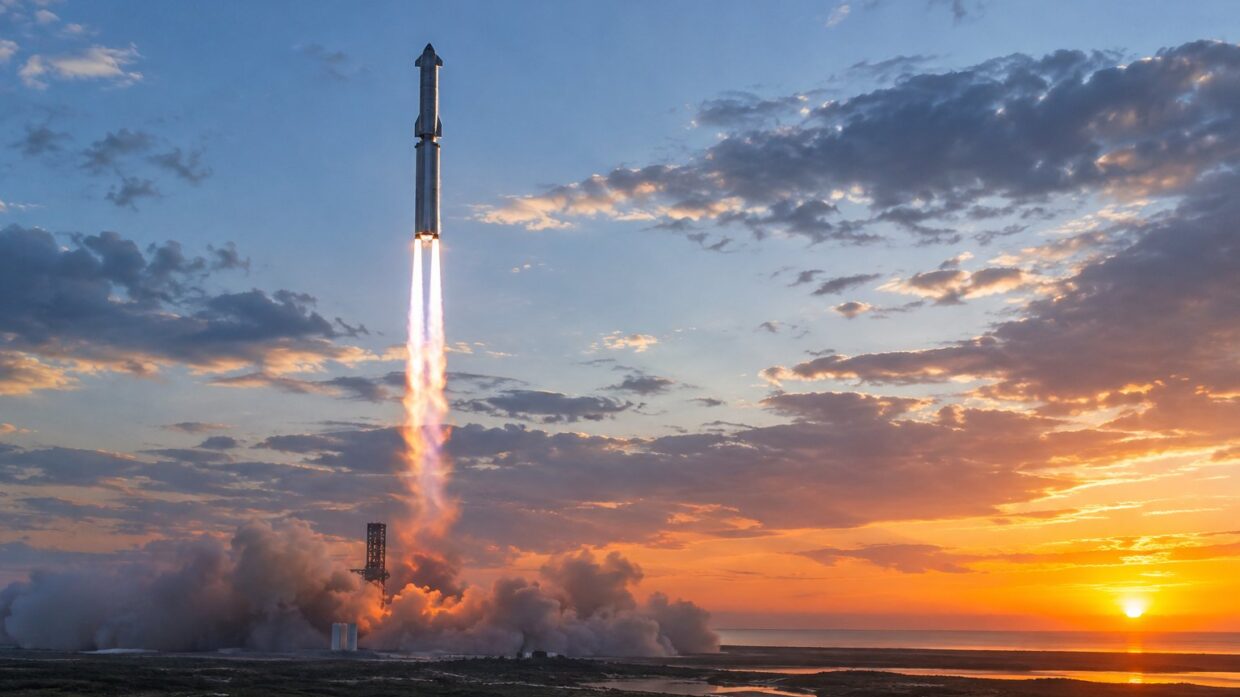
SpaceX's Starship Flight 15 launched Friday from South Texas with a technical objective that neither the left nor right coverage adequately contextualized: the company attempted to catch both the booster and Super Heavy first stage on return to Earth using the launch tower's mechanical arms, a procedure no orbital rocket system has ever completed. The test is real. The achievement, if successful, matters. What neither side's framing captured is why this test happens now, what it reveals about SpaceX's actual constraints, and what the simultaneous Democratic demand for records tells us about how government oversight of commercial space operates in practice.
The facts: Starship Flight 15 lifted off Friday from Starbase near Boca Chica, Texas. The mission design called for both stages to be caught by the launch tower's mechanical arms, known as "chopsticks," rather than landing on the ground or at sea. This is a significant engineering challenge because it requires precision control, timing, and structural capability that no other spaceflight program has demonstrated. The Super Heavy booster has been caught once before, in October. Catching both stages simultaneously on the same flight would represent a step toward rapid reusability, which SpaceX has long cited as necessary for Mars missions and reduced launch costs.
The right framing, represented by The Daily Wire, emphasizes the "daring" nature of the attempt and frames it as a demonstration of American technological leadership. The language "historic first" and "largest and most powerful rocket ever built" positions this as an unambiguous achievement narrative. This framing omits a crucial context: the catch attempt is not a display of confidence but a response to operational necessity. SpaceX's current booster inventory is limited. Successful catches accelerate the reusability cycle that makes the program economically viable. The right coverage treats the test as triumph-in-progress without examining why the company must prioritize rapid reusability, which points to production and cost pressures the triumphalist framing leaves undiscussed.
The left framing, from NBC, leads with a question: "How were they allowed to do that?" This suggests regulatory approval is itself newsworthy, implying either surprise at the decision or concern about oversight. The summary provided does not elaborate on regulatory justification or what the approval process entailed. Separately, the Investing.com reporting brings forward a different left-aligned narrative: Democratic senators demanding Musk preserve SpaceX records related to Starlink decisions during the Ukraine conflict. This introduces a second story about Musk's discretionary control over critical infrastructure. The left coverage sequence creates an impression of a powerful CEO operating with minimal constraint, whether in space tests or geopolitical decisions. What this framing leaves out is whether the regulatory approval process was rigorous, what safety conditions were imposed, or what Starlink decisions actually occurred.
Neither side addresses the institutional question: SpaceX operates as a contractor to NASA and the Department of Defense while also being a private company subject to different oversight regimes depending on the activity. Starship flights operate under FAA licensing. Starlink decisions involve foreign policy influence. These are separate regulatory domains with separate accountability mechanisms. A reader exposed only to today's headlines would not understand that the rocket test and the records demand address different governance questions operating simultaneously on the same corporate entity. The real headline is that commercial spaceflight has become strategically important enough that a single company's technical and geopolitical decisions are now simultaneous subjects of federal oversight, and neither the innovation narrative nor the accountability narrative adequately captures what that structural shift means.
SpaceX's dual-stage catch attempt exposes a fundamental governance gap in how the U.S. regulates strategic commercial infrastructure. The company operates simultaneously as a NASA contractor, a DoD vendor, a FAA licensee, and a private actor with geopolitical influence through Starlink, yet these oversight domains remain compartmentalized. Democratic senators demanding records of Ukraine-related Starlink decisions while the FAA approves increasingly complex Starship tests reveals that federal agencies lack a unified framework for assessing whether a single corporation's technical decisions, business judgments, and discretionary control over critical systems serve national interest. This institutional fragmentation will deepen as SpaceX's reusability goals require faster test cadences and as Starlink's role in conflict zones expands, leaving no single authority positioned to weigh the full range of risks and benefits the company now poses.