Photo: Well This Is News
NYC building collapse kills two, injures dozens as rescue efforts continue
Deadly NYC Building Collapse Leaves Crews Searching For Survivors
Three-story Brooklyn building collapses, killing two and injuring at least 17
Key Takeaways
- The building's inspection and maintenance history before the collapse remains publicly undisclosed, leaving open whether structural problems were flagged by city regulators or documented in building records.
- Neither the timeline connecting the adjacent construction site's start date to the collapse nor evidence of construction-related damage to the 1930 structure has been established in initial reporting.
- The investigation will need to determine whether the collapse resulted from decades of structural decay, inadequate city inspections, direct damage from nearby construction activity, or a combination of these factors.
The Analysis
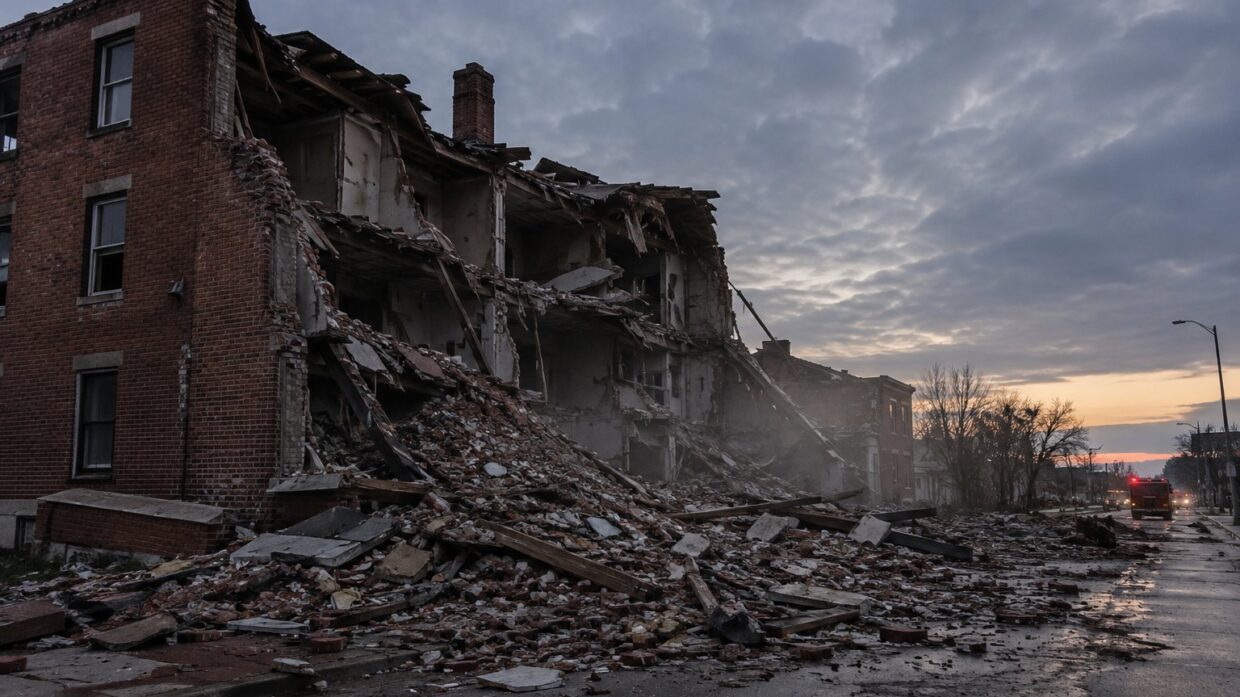
A three-story building at 1321 Flatbush Avenue in Brooklyn's Flatbush neighborhood collapsed around 4 p.m. on Wednesday, killing at least two people and injuring between 17 and 19 others, with rescue operations still ongoing in the rubble. The building, constructed in 1930, stood near an active construction site at the corner of Bedford and Flatbush Avenues, and NYC Fire Commissioner officials confirmed the death toll while Mayor Zohran Mamdani announced that law enforcement would lead the investigation into the cause.
The left-leaning framing, represented by NBC News, emphasizes the emergency response and rescue operations while centering Mayor Mamdani's administrative role. The language used, "partial building collapse at the edge of a construction site" and focus on rescuers "trying to reach people trapped", frames this as an active emergency management scenario. NBC's reporting does not foreground questions about why a 96-year-old structure failed or whether prior building inspections or maintenance records flagged structural issues. By emphasizing the rescue operation, the framing implicitly locates the story in the present response rather than in historical building management or regulatory oversight.
The right-leaning framing, represented by the Washington Examiner, provides more granular detail about the specific address and injury numbers, and distinguishes between the total injured and those in critical condition. The phrase "fully collapsed" appears in Examiner coverage but only as "partial" in NBC's language, though both describe the same three-story structure. This distinction may reflect reporting precision rather than editorial intent, but it establishes a factual divergence in how the damage is characterized. The Examiner does not emphasize Mayor Mamdani's role or the rescue operation as a central frame; instead, it leads with numbers and location specificity.
What neither framing addresses is the building's inspection and maintenance history prior to collapse. The available reporting does not establish whether the structure had received recent inspections, whether violations were documented, whether the building was subject to emergency repair orders, or whether the adjacent construction site had created structural instability through vibration, excavation, or load shifting. The New York City Department of Buildings maintains detailed inspection records; the public record on whether this particular building at 1321 Flatbush Avenue had been flagged for structural concerns remains undisclosed in the initial reporting. Similarly, neither the left nor right framing establishes the timeline between the start of construction work adjacent to the building and the collapse itself, which would help establish whether construction activity contributed to the failure.
The omission of building inspection history is not equally distributed. The left framing's emphasis on Mayor Mamdani and the emergency response can inadvertently shift attention away from questions about regulatory agency performance or building maintenance records that might have been available before the collapse. The right framing's focus on casualty numbers and specific addresses foregrounds the disaster itself without addressing underlying structural questions. Both framings treat this as a discrete emergency rather than as a potential failure of either private building maintenance or public regulatory oversight.
The actual headline here is that a nearly century-old structure failed catastrophically near an active construction site, and the public record has not yet established whether that failure reflected accumulated structural decay, inadequate inspection protocols, or direct damage from adjacent construction activity. The investigation's findings will determine whether this reflects a property management failure, a regulatory gap, or a construction safety violation. Until then, both sides are accurately reporting the immediate casualty and rescue facts while leaving unstated the question of how a major structural failure went undetected.
New York City's building inspection regime faces direct scrutiny after a 96-year-old structure near active construction work collapsed without apparent warning, killing at least two and injuring 17. The Department of Buildings' pre-collapse inspection records for 1321 Flatbush Avenue will now become central to determining whether existing regulatory protocols failed to identify structural vulnerabilities or whether the adjacent construction site created unanticipated load conditions that bypassed standard oversight. If inspections were inadequate or absent, the city faces pressure to mandate more frequent structural assessments for aging buildings in proximity to major construction. If construction vibration or excavation destabilized the structure, contractors face liability and potential new regulations on construction site buffer zones. The collapse exposes either a maintenance gap or a regulatory blind spot that will reshape how the city monitors pre-1940 housing stock, which comprises roughly 40 percent of Brooklyn's residential buildings.