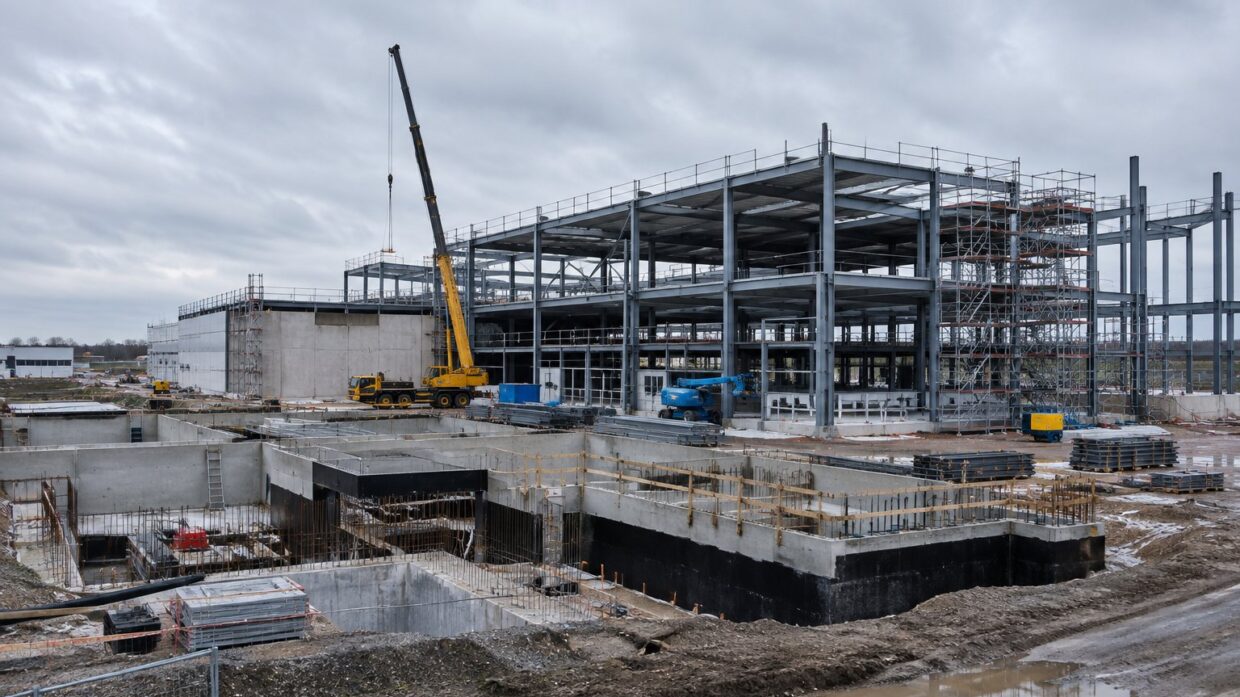
Photo: Well This Is News
Protesters storm Microsoft Amsterdam data center site over AI's environmental and social costs
Over 100 leftist activists break into Microsoft data center construction site, chant anti-Israel slogans
Activists breach Microsoft Amsterdam data center construction site amid AI infrastructure protests
Key Takeaways
- Major AI companies are racing to build data center capacity faster than European governments have established environmental standards or local consultation requirements for such projects.
- The protest simultaneously expressed environmental and pro-Palestinian concerns, but available reporting does not reveal whether these were equally weighted motivations or served different organizing purposes.
- Microsoft's Amsterdam project is part of a broader competitive pattern where Google, Microsoft, and other hyperscalers are securing dedicated computational infrastructure sites across multiple regions, suggesting infrastructure competition rather than isolated activism.
The Analysis
Activists breached a Microsoft data center construction site in Amsterdam on Friday as part of coordinated European protests, but what the breach actually signals depends entirely on which details each side chose to emphasize and which they chose to omit.
The Guardian's framing emphasizes the protest as a response to "the social and environmental harms of the AI boom," grounding the action in concerns about resource consumption and the broader consequences of AI acceleration. That framing is accurate as far as it goes. The left's language choices reflect a narrative centered on systemic harm and institutional accountability. What that framing leaves largely unaddressed is why this particular moment, this particular company, and this particular site became the focal point. Data centers consume electricity. Microsoft's project in Amsterdam would require power infrastructure. But the reporting does not establish the specific capacity, the specific energy source, or comparative environmental impact relative to other infrastructure projects in the region. The Guardian frames the breach as part of a broader European mobilization, but does not clarify whether the protesters' concerns are primarily about AI's energy footprint, about Microsoft's business model, or about something else entirely.
Breitbart's framing emphasizes the protesters as "at least 100" individuals, names the specific slogans they chanted, and highlights the "Fuck AI" banner alongside "Free Palestine" chants. The language choice here serves to broaden the protester coalition beyond environmental activists to explicitly include pro-Palestinian organizing. That characterization is accurate. What the Breitbart framing does not foreground is the specific environmental or energy-related concerns, the site's role in European AI infrastructure expansion, or why activists chose this moment and location. The emphasis on slogans and the decision to describe the group as "radical" and "leftist" frames the story primarily as a matter of protest tactics and activist ideology rather than as a response to material conditions. The reporting does not establish whether the environmental concerns and the Palestine-solidarity concerns are equal motivators or whether one framing predominates among the actual protesters.
What neither side fully addresses is the underlying infrastructure question that actually matters: why are hyperscale companies building data centers at this scale and at this pace right now. The Investing.com reporting indicates that Google is acquiring data center sites in Wyoming, suggesting a broader competitive dynamic in which major AI companies are securing dedicated computational infrastructure. That reporting does not directly address Amsterdam, but it does suggest that the Microsoft project is part of a larger industry pattern. The available reporting does not establish whether the Amsterdam site's specifications, power requirements, or timeline differ materially from comparable projects, or whether activists' concerns are specific to this project or reflect opposition to AI infrastructure expansion more broadly.
The breach itself is a documented fact. The protesters' stated concerns appear to span environmental and geopolitical grounds. What remains undisclosed in all three framings is the composition of the activist coalition, whether environmental and pro-Palestinian groups coordinated this action, and whether the environmental critique and the solidarity action serve the same organizing purpose or represent distinct constituencies using shared access to the site.
The real headline is less about what happened than about what neither frame addresses: Microsoft and its competitors are racing to build computational capacity faster than public institutions have settled on environmental standards, energy sourcing, or local community consultation for data center expansion. Activism targeting that gap is predictable. What makes this particular breach politically loaded is that it occurred in a European capital with strong environmental policy traditions and active pro-Palestinian organizing, allowing both framings to claim the action as primarily about their own concerns. The actual drivers of the protest remain partially opaque in all the available reporting.
Microsoft's Amsterdam data center breach exposes a critical gap in European AI governance: hyperscale companies are securing dedicated computational infrastructure faster than national regulators can establish binding environmental standards or mandate community consultation protocols. The protesters' action, whether motivated primarily by energy consumption concerns or geopolitical solidarity, signals that public institutions have lost narrative control over infrastructure decisions that carry both environmental and resource implications. Until EU member states establish concrete power-sourcing requirements and environmental impact assessments specific to AI data centers, similar breaches will continue at future construction sites across the continent, and the debate will remain split between opposing political framings rather than centered on measurable infrastructure standards.