Photo: Well This Is News
Trump spends second day focused on White House decor as major issues loom
Trump protects iconic White House rooms from future presidential alterations
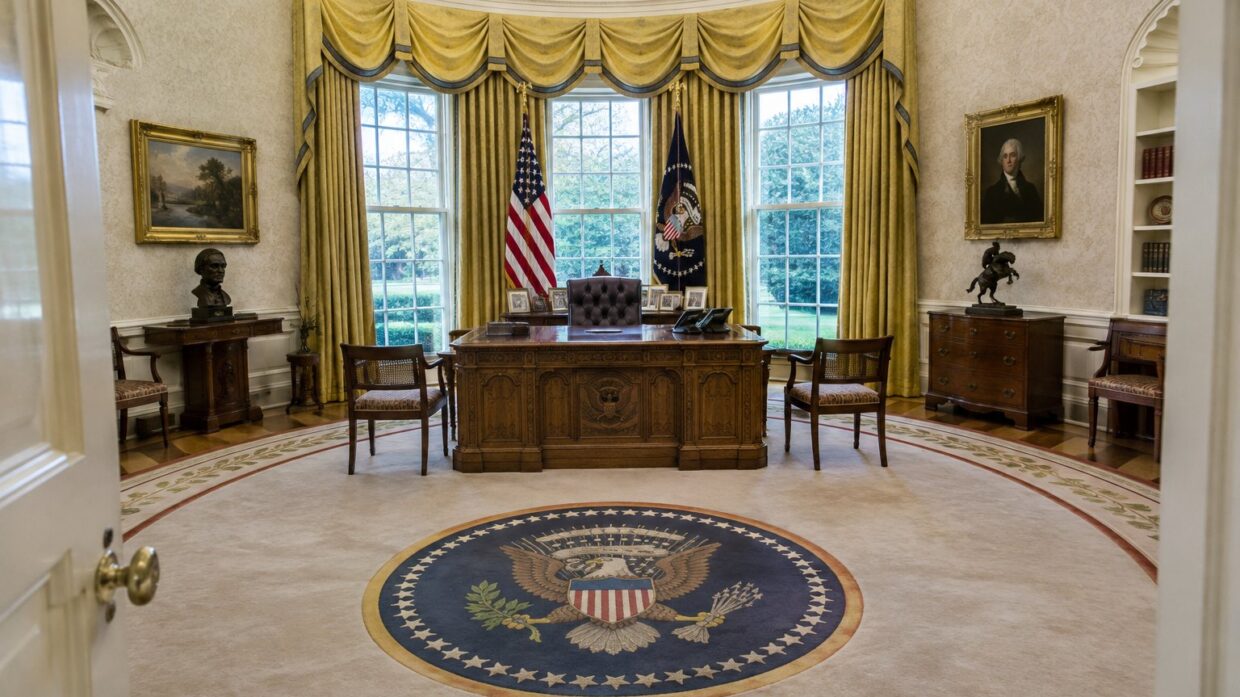
Trump signs proclamation designating Oval Office and Cabinet Room as national monuments
Key Takeaways
- Trump's proclamation claims to prevent future presidents from changing the Oval Office and Cabinet Room without Congress, but PBS reporting directly contradicts this, stating future presidents can still redecorate regardless.
- No reporting establishes what legal authority a presidential proclamation actually carries over White House interior design, and it remains unclear whether this action has any enforceable force.
- Applying national monument designation to executive office interiors is an unusual use of a mechanism typically reserved for federally owned lands and structures with public historical significance.
The Analysis
Trump signed a proclamation Thursday designating the Oval Office and Cabinet Room as national monuments, framing it as a binding constraint on future presidents. The exact legal mechanics matter here, and the reporting does not establish whether this proclamation carries enforceable force.
What actually happened: Trump signed the document Thursday. The proclamation claims to require congressional approval for major changes to these rooms by future presidents. NBC News reported the language as a "proclamation that he said would prevent major changes." Fox News reported it as "designating the Oval Office and Cabinet Room a national monument to prevent future presidents from altering them." PBS NewsHour noted that Trump's claim about future constraint did not match the legal reality, reporting that "future presidents can still redecorate" despite the proclamation. This is the third consecutive day Trump focused remarks on White House renovation projects.
Why the left is framing it this way: NBC News emphasizes the "second straight day" and the disconnect between this focus and post-midterm governing priorities. The frame highlights misplaced attention. It uses Trump's own words ("he said would prevent") rather than confirming that the proclamation actually does prevent changes, introducing skepticism without stating it directly. The implicit message: Trump is distracted by aesthetics when material policy work awaits.
Why the right is framing it this way: Fox News accepts the proclamation at face value, reporting it as a completed action with stated intention. The frame emphasizes preservation and intentionality, treating Trump's design choices as something worth protecting. It avoids the word "claimed" and does not foreground whether the legal mechanism actually works. The implicit message: Trump is acting to preserve something meaningful against future interference.
What neither side is addressing: The available reporting does not establish what legal authority a presidential proclamation actually carries regarding interior design of executive spaces. Sitting presidents have historically held substantial discretion over their own work environment. The comparison to national monument designations (which typically apply to federal lands and structures with public access) is analogous but not identical. Neither framing acknowledges whether Congress has ever legislated on this question or whether courts have ever addressed it. Neither explains what specific changes Trump is trying to prevent or why. Neither addresses whether this action diverts executive authority from statutory obligations.
The PBS reporting offers the most accurate framing by directly contradicting Trump's stated effect: the proclamation does not actually prevent future changes. This is a factual dispute about what the document accomplishes, not an interpretive one. What remains unclear is whether Trump understands this legal limitation or whether the proclamation serves primarily as a symbolic claim rather than a binding one.
The underlying pattern: A president using ceremonial or legal-adjacent tools to attempt locking in decisions against successor authority. The specific subject matter (office décor) is unusual. The mechanism (national monument designation) is typically reserved for lands and structures of public historical significance. What this signals is worth noting: an effort to constrain successor discretion over spaces the successor will occupy daily.
This proclamation establishes a potentially significant precedent for locking in executive branch decisions through designation mechanisms traditionally reserved for public lands. If future presidents accept Trump's framing that monument status constrains interior design choices, it creates a new rationale for using proclamation authority to bind successors across any number of executive spaces and decisions. The legal ambiguity PBS identified matters because it leaves unresolved whether courts would enforce such constraints, inviting copycat attempts by future administrations to designate other executive facilities or functions as protected monuments. The actual enforceability remains untested, but the moment either a successor president defers to the designation or litigation clarifies its scope, a new tool for executive overreach becomes institutionalized. This transforms a décor decision into a constitutional question about which president controls which spaces and decisions.