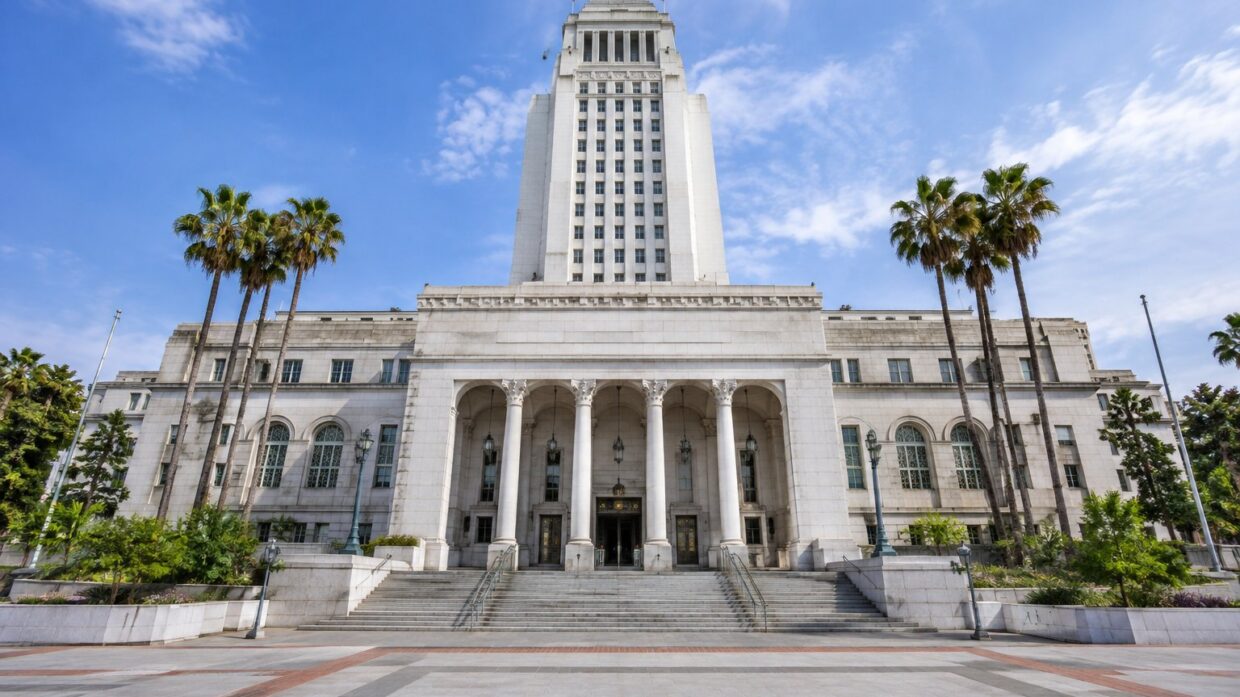
Photo: Well This Is News
Democratic socialist Nithya Raman defeats incumbent Karen Bass in LA mayor race
Los Angeles elects democratic socialist Nithya Raman as new mayor
Nithya Raman defeats Karen Bass for Los Angeles mayor in competitive race
Key Takeaways
- Karen Bass lost her reelection bid after three years marked by increased homelessness and criticism of her response to the January 2025 Palisades wildfire, but no reporting establishes which of Bass's specific policies or decisions voters rejected.
- Raman ran as an opponent of the status quo on homelessness and city services, but neither left nor right sources detailed her actual policy platform or how it differs from Bass's approach.
- Both political framings use Raman's democratic socialist affiliation as either a credential to celebrate or a warning to fear, rather than explaining what that identity means for her governance priorities or methods.
The Analysis
Nithya Raman defeated incumbent Karen Bass for Los Angeles mayor with 51.6% of the vote to Bass's 48.3%, but what both the left and right frames emphasize tells you almost nothing about why Bass lost or what Raman actually won.
The factual record: Raman, a member of the Democratic Socialists of America and Los Angeles City Council member, unseated Bass after a campaign that centered on three issues: the city's response to the January 2025 Palisades wildfire, homelessness, and dissatisfaction with basic city services. The race was called Wednesday evening. Raman is now positioned to become mayor of the nation's second-largest city. Bass, who took office in 2022 and previously served in Congress, faced erosion of support during her first term amid visible increases in encampments across the city and criticism of her handling of emergency preparedness.
The left frame, represented by NBC News, emphasizes Raman's "rapid political ascent" and positions her as a challenger who "railed against the broken status quo." The language choices matter: "broken status quo" is not Bass's framing of city governance, it is NBC's attribution of Raman's campaign message. NBC does not report what Bass accomplished or attempted during her three years in office, nor does it specify which policies Raman proposes to replace the status quo. The framing invites readers to accept that the status quo is indeed broken without establishing what that means.
The right frame, represented by the Washington Examiner and The Daily Wire, emphasizes that Los Angeles has elected a "democratic socialist" and draws a parallel to Washington, D.C.'s recent mayoral election by comparing Raman to Mahmood Mamdani, a Ugandan-born scholar and activist associated with left-wing analysis. The Daily Wire uses the phrase "West Coast Mamdani," a comparison that requires readers already familiar with Mamdani's work. The Examiner's opinion section goes further, framing the election as evidence that Los Angeles has "gone down the path of socialism," and adds an editorial line: "You can only hope that those voters get everything they voted for." That sentence performs interpretive work without attribution. It assumes voters understood what they were voting for and positions the opinion writer as skeptical of that understanding.
What neither side foregrounds is the specific record: Bass's three years as mayor and the actual conditions she inherited and faced. The Palisades wildfire in January 2025 was the largest wildfire in Los Angeles history, raising documented questions about emergency response coordination. Homelessness in Los Angeles increased during Bass's tenure, but neither the left nor the right frame examines whether that reflected Bass's policies, funding constraints, court decisions, or structural factors beyond mayoral control. Bass's concession suggests she accepts the verdict, but the reporting does not establish whether voters were rejecting specific proposals or responding to a general dissatisfaction with progress.
The available reporting also does not specify Raman's platform beyond the framing that she opposed the status quo. No source lists concrete policy differences between the two candidates on housing, budgeting, or emergency response.
What the evidence establishes: Raman won a close race in a city frustrated with homelessness and concerned about emergency preparedness. Both frames use her democratic socialist affiliation either as a credential (left) or as a warning (right) without reporting what it means for how she intends to govern.
Los Angeles voters will discover whether Raman's campaign messaging translates into executable policy on homelessness and wildfire preparedness, issues that directly affect municipal operations and budget allocation. Her first budget cycle will reveal whether her democratic socialist platform produces different spending priorities than Bass's tenure or faces identical structural constraints. The city's homelessness count, emergency response protocols, and service delivery metrics over her next two years will either validate the electorate's rejection of Bass's approach or expose whether the frustration voters expressed stemmed from solvable policy failures or intractable systemic problems. Her administration will test whether anti-establishment messaging survives contact with the bureaucratic and financial realities of governing the nation's second-largest city.