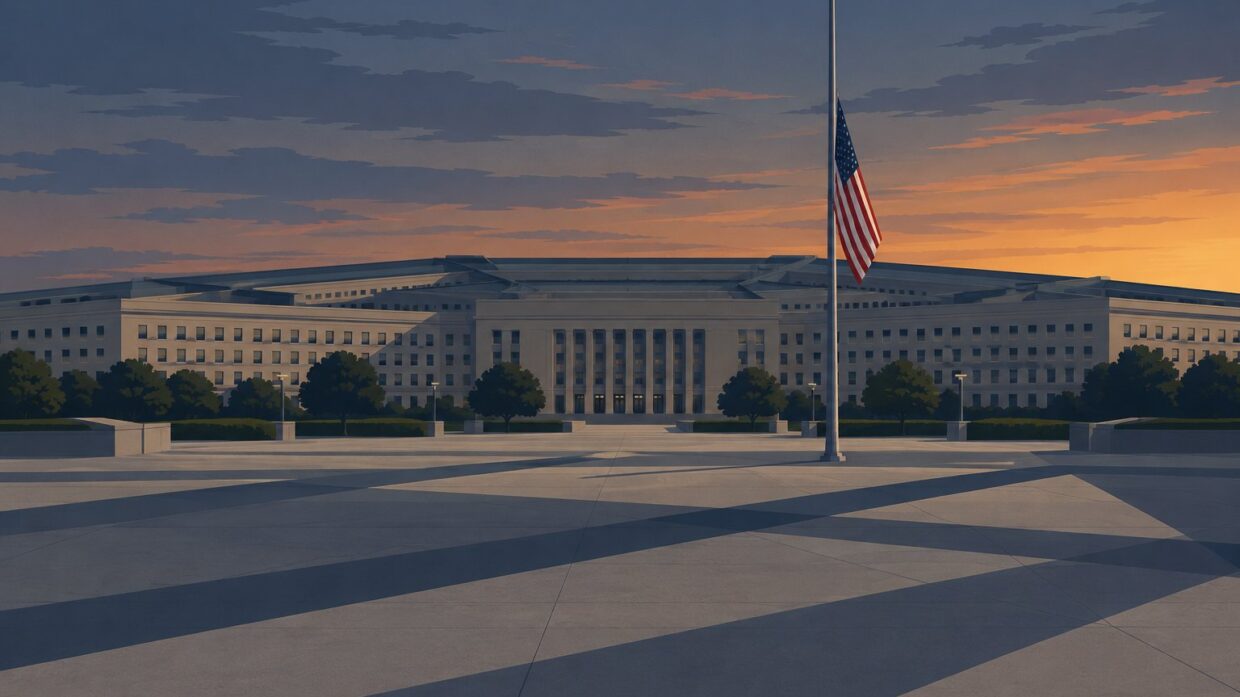
Photo: Well This Is News
Democrats' midterm sweep puts Pentagon priorities at risk under Hegseth leadership
Trump insiders question Hegseth's future as scapegoat for Iran war fallout
Pentagon chief Hegseth faces political vulnerability after GOP midterm losses
Key Takeaways
- The reporting attributes blame for midterm losses to a White House official, not to Trump directly, leaving unclear whether the President actually agrees with holding Hegseth responsible.
- No available reporting establishes whether Democrats are actively calling for Hegseth's removal or whether political pressure is exclusively internal to the Trump administration.
- The midterm losses may result from multiple causes unrelated to military operations in Iran, but the reporting does not provide polling or analysis isolating the Iran war's actual electoral impact.
The Analysis
Pete Hegseth's position as Secretary of Defense has become politically exposed following Democratic gains in the midterm elections, but the exact nature of his vulnerability and Trump's intentions remain unclear from the available reporting.
What is documented: Fox News reported that a White House official blamed "the Iran war" for midterm losses and suggested Trump may hold Hegseth accountable during the lame duck session. Axios reported that Hegseth is viewed inside the administration as "the most vulnerable" cabinet member, facing pressure from multiple directions: the Iran military operations, deteriorated bipartisan relationships with Congress, and the political aftermath of unexpected Democratic victories in traditionally Republican areas including the Deep South. Neither source provides the direct quote of Trump weighing in on Hegseth's future, only the framing of internal concern.
The left-leaning framing, emphasized in Axios coverage, connects Hegseth's vulnerability to substantive policy failures. The reporting foregrounds his "unpopular war" and his inability to maintain working relationships across party lines, positioning these as legitimate grounds for his political exposure. This framing leaves out whether Democrats are actually calling for his removal or whether the political pressure is primarily internal to the administration. The Axios language, "Somebody's gotta take the fall," presents Hegseth as a scapegoat mechanism rather than addressing whether the Iran military strategy itself faces documented public disapproval or if the midterm losses are actually attributable to that policy.
The right-leaning framing, in Fox News reporting, emphasizes that Trump "isn't budging yet," which does two things: it acknowledges internal pressure while suggesting Trump's loyalty remains intact. This creates a tension between what insiders are saying and what Trump is doing. Fox News names that a White House official made the blame attribution, but does not report whether Trump himself agrees. The framing leaves out what specific alternative approaches might exist or whether the Iran military operations had congressional authorization and oversight.
What neither framing addresses clearly: The available reporting does not establish whether Democrats are actively pushing for Hegseth's removal, whether there is documented public polling showing the Iran war is driving midterm losses specifically, or what Trump's actual position is beyond the claim that he "isn't budging yet." The Fox News article attributes the Iran war blame to "a White House official," not to Trump or his inner circle directly, which is a material distinction. The Axios framing of a de facto scapegoat-choosing dynamic is plausible but rests on interpretation of internal culture rather than on documented decisions or statements from Trump himself.
The underlying question is whether Hegseth's exposure reflects genuine policy failure with measurable electoral consequences, personal friction with Congress that has become untenable, or a political dynamic where the administration needs to assign blame for midterm losses to someone in the cabinet. The reporting does not establish which interpretation is most accurate. Trump's actual view remains undisclosed, and the midterm losses themselves may have multiple causes unrelated to military operations in Iran.
Hegseth's potential removal would reshape defense policy continuity during a critical period of military operations and congressional realignment, but current reporting conflates internal blame-assignment with actual policy accountability. The distinction matters because if Trump removes Hegseth primarily as political theater to absorb midterm losses, the underlying strategic decisions about Iran operations remain unchanged while the Pentagon loses institutional knowledge during a transition. Conversely, if Congress actually demands his removal based on documented failures in military oversight or bipartisan relationships, that signals a substantive recalibration of executive-legislative defense governance. The current coverage cannot distinguish between these outcomes, leaving the actual institutional consequences obscured by speculation about Trump's loyalty and internal scapegoating dynamics.