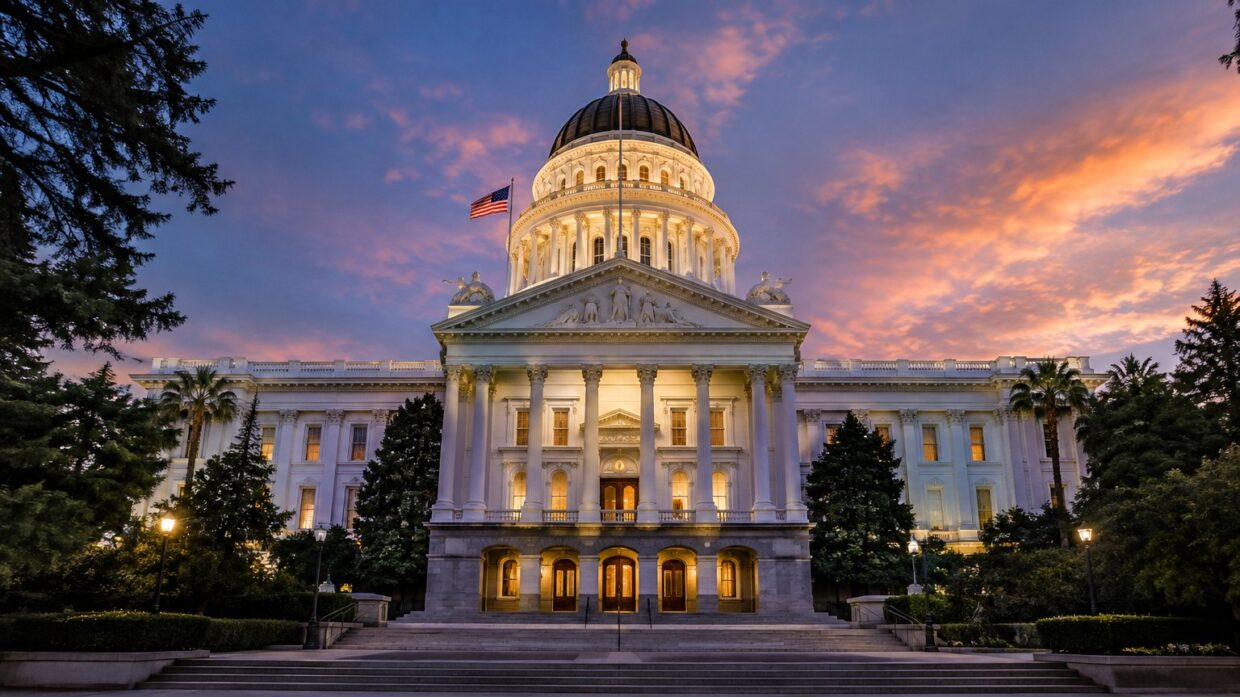
Photo: Well This Is News
Xavier Becerra defeats Steve Hilton, solidifying Democratic control of California
Becerra defeats Hilton in California governor race over housing, homelessness issues
Xavier Becerra wins California governor's race, becoming first elected Latino governor
Key Takeaways
- Becerra's position as an incumbent Biden official should have been a significant campaign liability, yet it appears to have been neutralized by California's overwhelming Democratic voter registration advantage.
- The race outcome was virtually predetermined by California's two-decade pattern of statewide Democratic victories, making extensive election-night coverage of a foregone conclusion unusual.
- Coverage from both left and right sources avoided examining whether Republican messaging on housing and homelessness actually gained support among California voters or simply reinforced existing party preferences.
The Analysis
Xavier Becerra's victory in California's gubernatorial race was called by the Associated Press at 11:01 p.m. Eastern on election night, defeating Republican Steve Hilton to become the state's first elected Latino governor. What neither the left nor the right has emphasized is that this outcome was determined largely before Election Day, given California's documented 20-year streak of rejecting Republican statewide candidates.
The factual record is straightforward. Becerra served as U.S. Representative from California's 30th and 34th districts from 2013 to 2021, then as President Biden's Health and Human Services Secretary from 2021 to 2025. He is the son of immigrants, born in Sacramento in 1958. Hilton, the Republican nominee, is a former Fox News host and political commentator who relocated to California to run for office. The AP called the race decisively on November 4, 2026, immediately after polls closed.
The left's framing, evident in NBC News's coverage, emphasizes Becerra as a "longtime fixture in Democratic politics" and frames his victory as a continuation of Democratic institutional strength. This language does specific work. By calling him a "fixture," the reporting normalizes his candidacy as inevitable, almost institutional. What this framing leaves out is any substantive examination of Becerra's record as HHS Secretary during the Biden administration, his performance managing federal health policy during inflation and recession, or voter sentiment toward the Biden administration he directly represented. The omission is notable because a Democrat's connection to an unpopular administration would typically be a central question in campaign coverage.
The right's framing, visible in the Washington Examiner and Fox News coverage, emphasizes the issues Hilton raised: housing costs, homelessness, and Trump. The Examiner notes Becerra "defeated" Hilton and calls him "California's first elected Latino governor," adding factual weight to the outcome while also anchoring the identity dimension of the story prominently. Fox News reports the candidates "battled over" the core issues. This framing assigns agency to the candidates and centers policy competition. What this framing does not address is whether Hilton's candidacy or messaging gained any measurable ground, or whether Republican arguments about housing and homelessness resonated beyond the party's current California base. The reporting does not establish whether this was a competitive race tightened by issue resonance or a predetermined outcome that played out over six months.
What neither side fully captures is the structural context that made this election outcome nearly certain from the start. California has not elected a Republican governor since 1994, has 18 million registered Democrats compared to 5.2 million Republicans, and Biden won the state in 2020 by 16 percentage points. Becerra's status as an incumbent Biden official, widely expected to be a liability in most electoral contexts, appears to have been offset by the state's Democratic registration advantage. The framing puzzle is not whether Becerra won, but why the coverage of a race with a predetermined outcome required extensive election-night treatment. The real headline is that California's gubernatorial race confirmed a two-decade pattern of Democratic dominance that began in 2004, with no indication that Republican messaging on housing or homelessness has shifted underlying party preferences in the state.
Becerra's victory was assured by California's 20-year rejection of Republican statewide candidates and 18 million registered Democrats versus 5.2 million Republicans, yet media coverage treated the outcome as a competitive race determined by Election Day messaging rather than structural reality. His connection to Biden's unpopular administration, typically damaging for Democrats, registered as insignificant against California's partisan registration advantage. This confirms that in heavily tilted states, individual candidate quality and campaign competence matter far less than demographic composition, rendering extensive horse-race coverage misleading. The real story is institutional: Democratic control of California's statewide offices remains locked in place regardless of opponent quality or issue salience, establishing that major elections in non-competitive states function more as formalities than contests.