Photo: Well This Is News
Trump Repeats Centuries-Old Presidential Mistake by Making Midterms About Himself
America Picks Sides: Control of Congress on the Line in 2026 Midterms
2026 Midterms Underway: Congress Control at Stake as Trump Rallies Echo Campaign Strategy
Key Takeaways
- Trump's 28 rallies were concentrated in states and districts he won by wide margins in previous elections, suggesting both parties believed his political capital would determine outcomes rather than local candidate strength or district-specific issues.
- The left criticizes Trump's campaign strategy as historically doomed while the right treats it as normal voter engagement, but neither side has provided evidence about whether the rallies actually moved votes in swing districts or primarily energized already-committed Republicans.
- Reporting from multiple outlets did not establish whether presidential campaigning helps or hurts the president's party in modern midterm elections, leaving the core mechanism question unanswered even as results began rolling in.
The Analysis
The 2026 midterm elections are proceeding with control of Congress genuinely uncertain and President Trump's campaign strategy as the dominant interpretive frame on both sides. Trump held 28 in-person rallies in recent months, according to The Hill, and The Atlantic frames this as historically problematic, while right-leaning outlets frame it as legitimate engagement with voters in contested districts.
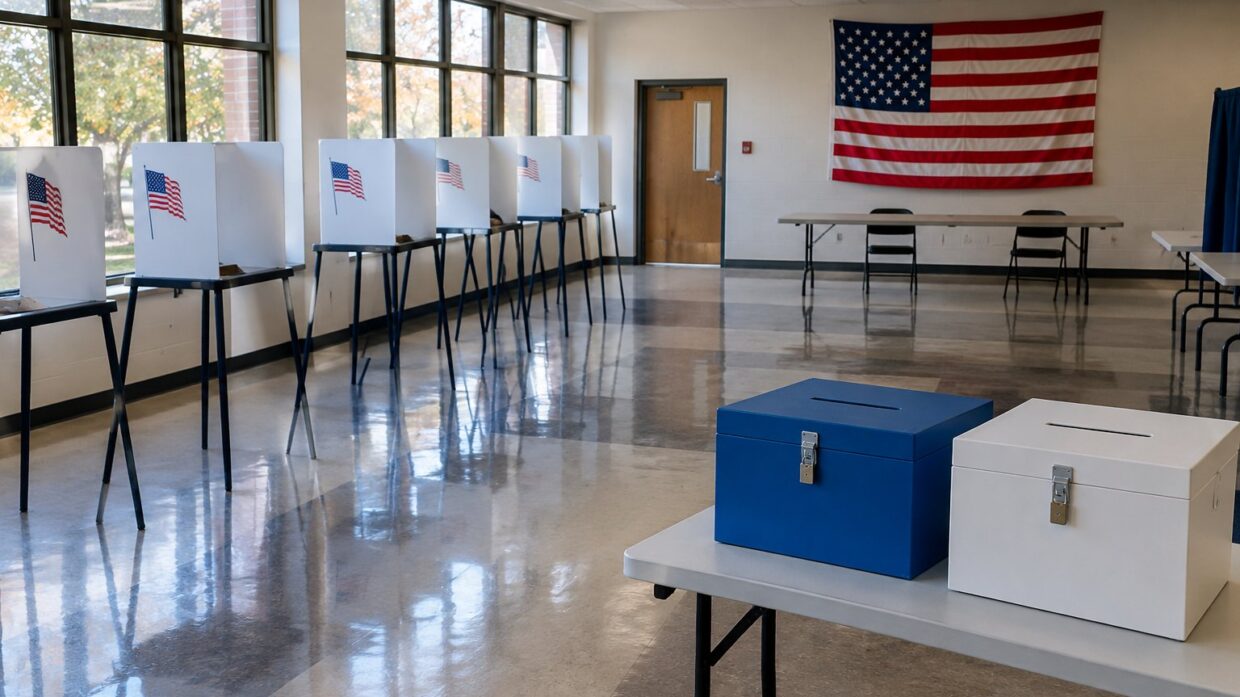
What actually happened: Polls opened on Election Day 2026 with voting concentrated in states and districts Trump won by wide margins in previous elections, according to PBS NewsHour reporting. Early polls began closing in Indiana and Kentucky by evening. Both parties had conducted extensive get-out-the-vote operations. The specific congressional seats in play and the margin projections vary significantly across outlets, though all acknowledge the result will determine which party controls the House and Senate.
The left frame, anchored by The Atlantic's historical comparison to Andrew Johnson's presidency, argues that personalizing midterms around a sitting president's popularity and rallying is a strategic error that past administrations have made and regretted. This framing accepts that Trump's 28 rallies represent a campaign choice to make the election about himself rather than about policy alternatives or local congressional candidates. The language chosen, "repeats a centuries-old mistake," establishes this not as neutral strategy but as a documented failure pattern. What this frame leaves out: whether Trump's rallies actually mobilized voters more effectively than traditional candidate-focused campaigns, or whether his base remains energized while swing voters respond differently. It also does not address whether Democratic candidates or organizations have made their own choices about how to frame the election, or what specific policies either party is advancing as alternatives.
The right frame, represented by National Review and The Daily Wire, emphasizes voter choice and party differentiation without assessing Trump's campaign strategy as inherently problematic. The Daily Wire's headline, "America Picks Sides With Congress On The Line," treats the election as a straightforward ideological choice rather than an assessment of campaign mechanics. The National Review and Daily Wire live-update framing focuses on results as they roll in and who wins or loses seats, staying largely neutral on whether Trump's rallying strategy is effective or counterproductive. What this frame underplays: explicit analysis of whether Trump's personal campaigning helps or hurts Republican candidates in swing districts, or whether it is driving Democratic turnout as well.
What neither side fully captures is the actual mechanism question: in elections where a president campaigns heavily, do voters respond to the president's presence and messaging, or to local candidate and district-specific factors? The available reporting does not establish whether Trump's 28 rallies moved measurable numbers of voters in districts where Republicans were vulnerable, or whether they primarily energized voters already inclined to vote Republican. The Hill reports that Democrats "eye a potential blue wave," but does not quantify what that means or provide concrete seat projections. The Atlantic's historical comparison raises a legitimate institutional question about whether midterms are more effectively won through local organization and district-specific messaging, but does not provide 2026-specific evidence about whether that principle holds in this particular election cycle.
The underlying question is whether midterm elections in the modern era are won through presidential campaigning and national framing, or through distributed local campaigns that may actually be hindered by excessive presidential attention. The outcome of the 2026 election will provide one data point, but the reporting as it stands does not establish causation in either direction.
Control of Congress hinges partly on whether presidential campaigning in midterms mobilizes swing voters or merely energizes existing supporters. If Trump's 28 rallies correlate with Republican gains in suburban districts Biden won in 2020, it validates a high-visibility presidential strategy that future administrations will replicate regardless of long-term consequences for party brand or legislative capacity. If Democrats gain seats despite Trump's presence, it signals that midterm messaging and local organization matter more than presidential rallying, fundamentally reshaping how parties allocate resources in future election cycles. The 2026 results will establish either that sitting presidents should flood contested districts with personal appearances or that they should step back and let congressional candidates define races locally. This precedent will constrain or enable every midterm campaign for the next decade.