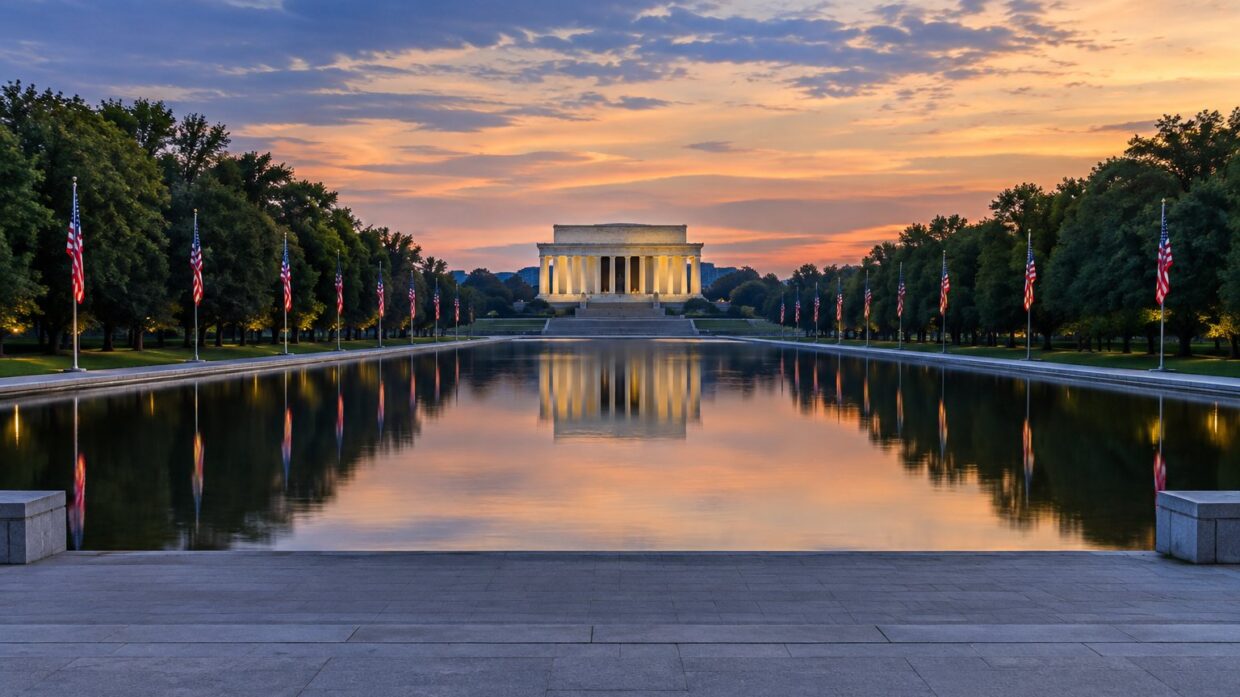
Photo: Well This Is News
Trump's final pitch to voters focuses on fountain repairs, not kitchen tables
We haven't found a right-leaning take on this story yet.
Breaking stories sometimes publish before every side has covered them. We'd rather show you that than invent a view.
Trump closes campaign with D.C. infrastructure message as election looms
Key Takeaways
- The 47-minute speech reportedly covered multiple topics in a weaving structure, but available reporting does not establish what proportion of the address focused on fountain repairs versus other campaign issues.
- No explanation has been publicly disclosed for why Trump selected the reflecting pool as his closing campaign venue or what strategic purpose the location was meant to serve.
- The characterization of Trump's message as primarily about algae and fountain maintenance may reflect media emphasis on one element rather than the actual balance or content of the full speech.
The Analysis
Trump used his final campaign address before the election to focus on Washington D.C. infrastructure and aesthetic renovations, including work at the Lincoln Memorial Reflecting Pool, according to reporting from NPR Politics, PBS NewsHour, and Mother Jones. The 47-minute appearance took place on Monday afternoon at the reflecting pool itself, serving as both the physical location and the rhetorical centerpiece of his closing message.
The documented facts establish that Trump held this event one day before voters headed to the polls and that he spent significant campaign time discussing D.C. renovations rather than canvassing other battleground states. PBS NewsHour noted that the closing message addressed "why they should support Republicans" but was "weaving" in its construction. The Mother Jones framing identified the specific focus on fountain repairs and asked whether undecided voters in Alaska and Michigan would base their decisions on this messaging, implying skepticism about the strategic choice.
The left frame, articulated most explicitly by Mother Jones, emphasizes the disconnect between Trump's closing argument and what polls suggest voters care about. The headline "Trump's Closing Argument Is About Algae" uses the technical detail of the reflecting pool's maintenance challenge to highlight what the framing treats as misalignment between candidate priority and voter concern. This framing leaves out any explanation for why Trump selected this venue or message, instead treating the choice as self-evidently misguided. The underlying critique assumes voters should reward campaigns that address "kitchen table" issues and punish those that emphasize infrastructure aesthetics.
What the right-leaning analysis does not appear in the available reporting. No source provided a Republican perspective on this closing argument or defended the strategic choice to focus on D.C. renovations during the final campaign day.
What neither side fully captures is the actual content of Trump's message beyond the venue choice. NPR notes the message was "weaving," suggesting it covered multiple topics, but the reporting does not establish what else he said, how long he spent on renovations versus other subjects, or whether the renovation focus dominated the speech or comprised a section of it. The available coverage also does not establish whether this was Trump's planned closing message for the campaign or whether it was adjusted based on late-breaking events. The strategic rationale remains undisclosed: whether Trump chose the reflecting pool to highlight infrastructure accomplishments, to secure a symbolic location for final messaging, or for some other documented reason is not explained in any of these sources.
The headline question becomes whether a closing campaign address focused on D.C. infrastructure represents a fundamental strategic miscalculation or whether the framing of what happened has emphasized one element of a longer, more varied message. The reporting does not establish the relative weight of renovation discussion within the full 47-minute address, making it unclear whether this characterization reflects the actual balance of the speech or the media's emphasis.
Trump's choice to spend his final campaign day discussing D.C. infrastructure rather than targeting swing state voters in Michigan, Pennsylvania, or Wisconsin will reshape how political strategists evaluate closing argument theory. If Trump loses, this decision will become the textbook example of how campaigns can squander final-week momentum on symbolically meaningful but electorally irrelevant messaging. Campaign operatives across both parties will cite this moment when justifying why closing arguments must relentlessly focus on persuadable voters in high-turnout regions rather than rhetorical positioning in Washington. The infrastructure focus establishes a cautionary tale about the difference between what excites a candidate and what moves undecided voters, fundamentally altering how major campaigns allocate resources during their final seventy-two hours.