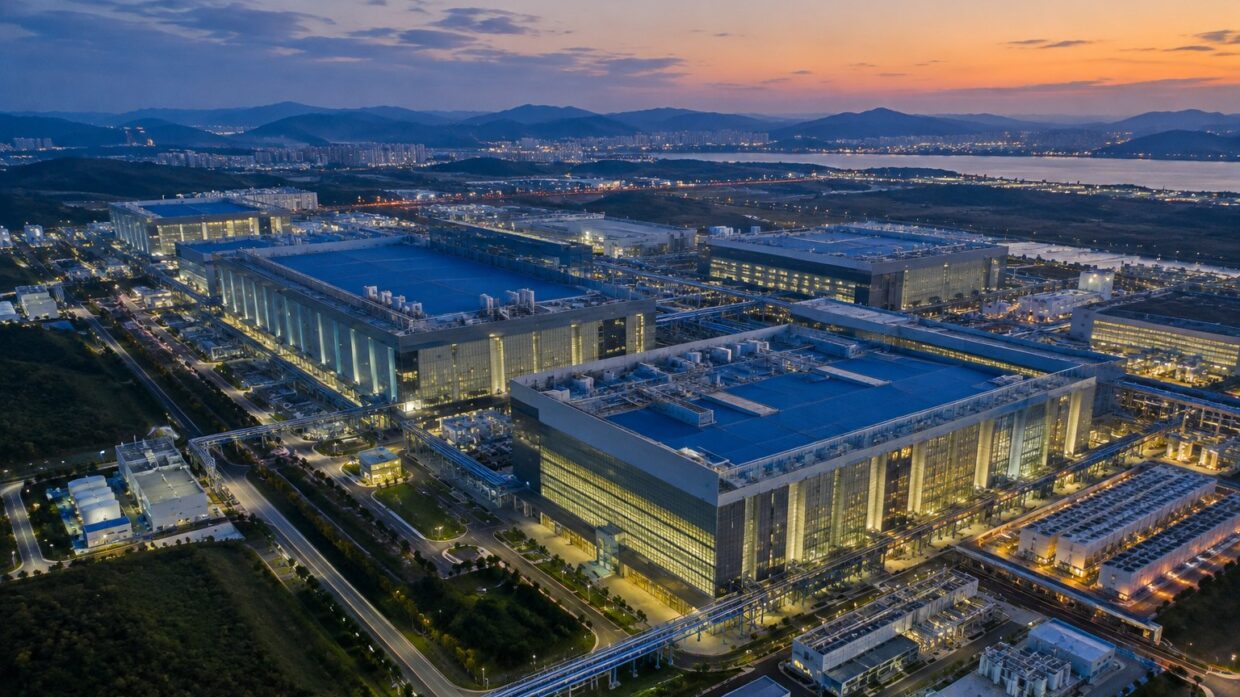
Photo: Well This Is News
The AI Gold Rush Is Hollowing Out Other Industries, Study Shows
We haven't found a right-leaning take on this story yet.
Breaking stories sometimes publish before every side has covered them. We'd rather show you that than invent a view.
AI Investment Boom Reshapes Global Trade: South Korea Surges While Other Sectors Face Reallocation
Key Takeaways
- South Korea's export boom reflects genuine global demand for AI infrastructure, but it also reveals a concentration risk where only countries with existing semiconductor dominance can capture those returns.
- The trade-offs critics identify between AI investment and traditional sectors may reflect rational capital reallocation rather than irrational abandonment of viable industries.
- Neither rising exports nor falling investment in other sectors tells us whether current capital patterns are sustainable long-term or whether they create vulnerability if AI demand softens or manufacturing diversifies.
The Analysis
South Korea's export surge in October 2024 masks a deeper structural question about how global capital is moving: toward AI infrastructure or away from it entirely. The data shows exports nearly doubled, with semiconductor-driven growth reaching levels not seen since 1974. The Atlantic simultaneously reports that this capital concentration is creating measurable trade-offs in non-AI sectors. Neither framing tells the complete story of what is actually being sacrificed.
The Atlantic's framing emphasizes scarcity and opportunity cost. The piece argues that every investment dollar flowing into AI data centers and chip manufacturing represents capital withdrawn from other industries. The language used is instructive: "crowding out" suggests displacement rather than growth alongside growth. What this framing leaves out is whether the non-AI sectors losing investment were themselves economically sustainable or whether they were already facing structural headwinds independent of AI competition. The Atlantic does not establish whether traditional manufacturing, for instance, was declining due to AI diversion or whether it was already losing competitiveness to automation, labor costs, or shifting consumer demand. By focusing on what is being sacrificed, the reporting implies that the sacrifice is involuntary or irrational rather than potentially reflecting rational capital allocation toward higher-return sectors.
The Investing.com framing celebrates South Korea's export performance and treats it as evidence that the AI boom is working. The piece emphasizes the growth metric itself, the year-on-year comparison, and the sector driving it. What this reporting does not foreground is whether South Korea's success reveals a pattern of capital concentration that is making other countries or sectors more vulnerable. South Korea benefits from historical dominance in semiconductor manufacturing and an existing ecosystem of chip design and fabrication. The reporting does not ask whether this data reflects South Korea's structural advantages or whether it demonstrates that capital is now flowing only to countries with existing AI-adjacent infrastructure, potentially widening global inequality. The framing treats the surge as good news without examining concentration risk.
What neither side addresses is the international dimension of the trade-off. South Korea's doubled exports suggest that global demand for AI-related semiconductors and infrastructure is real and growing. But the Atlantic's concern about domestic capital reallocation in the United States is not the same question as whether capital is flowing toward or away from South Korea specifically. If anything, the data suggests South Korea is capturing outsized returns from the AI boom because it has the manufacturing capacity others lack. The unspoken question is whether this concentration of AI-adjacent manufacturing in a handful of countries with existing chip competency represents a sustainable global trade pattern or a vulnerability. If demand softens, or if manufacturing diversifies to other regions, what happens to exports that are now almost entirely dependent on AI-related demand.
The most honest framing requires accepting both claims: capital is concentrating in AI infrastructure, which is real and creates real trade-offs in other sectors, AND some economies like South Korea are benefiting measurably from that concentration because they have the competitive position to capture it. What the headlines do not say is that this pattern may be both economically rational in the short term and structurally risky in the medium term, for both countries benefiting from it and those being left out.
South Korea's semiconductor boom reveals a dangerous concentration of global manufacturing capacity around a single technology cycle. When one country captures outsized returns because it dominates AI chip production, the entire international trade system becomes hostage to fluctuating demand for that specific infrastructure. If AI investment cools, if alternative chip architectures emerge, or if competitors build competing capacity, South Korea's export economy faces sudden contraction while other nations never developed the complementary manufacturing capabilities to absorb displaced workers or capital. The current surge masks a structural vulnerability: economies that bet everything on being the world's AI factory have eliminated their strategic redundancy.