Photo: Well This Is News
Trump White House's Halloween post draws backlash over racial imagery
Trump hosts hundreds of trick-or-treaters at White House Halloween celebration
Trump White House hosts Halloween event for trick-or-treaters
Key Takeaways
- News coverage split into two entirely separate stories: one about an actual Halloween event with children and candy, and another about a social media post, but neither outlet explained what the post actually said.
- Left-leaning coverage labeled a post as racist without quoting it or identifying which specific language or images provoked the criticism.
- No source clarified whether the White House communications office approved the post, a lower-level staffer created it, or the institution responded to the backlash in any way.
The Analysis
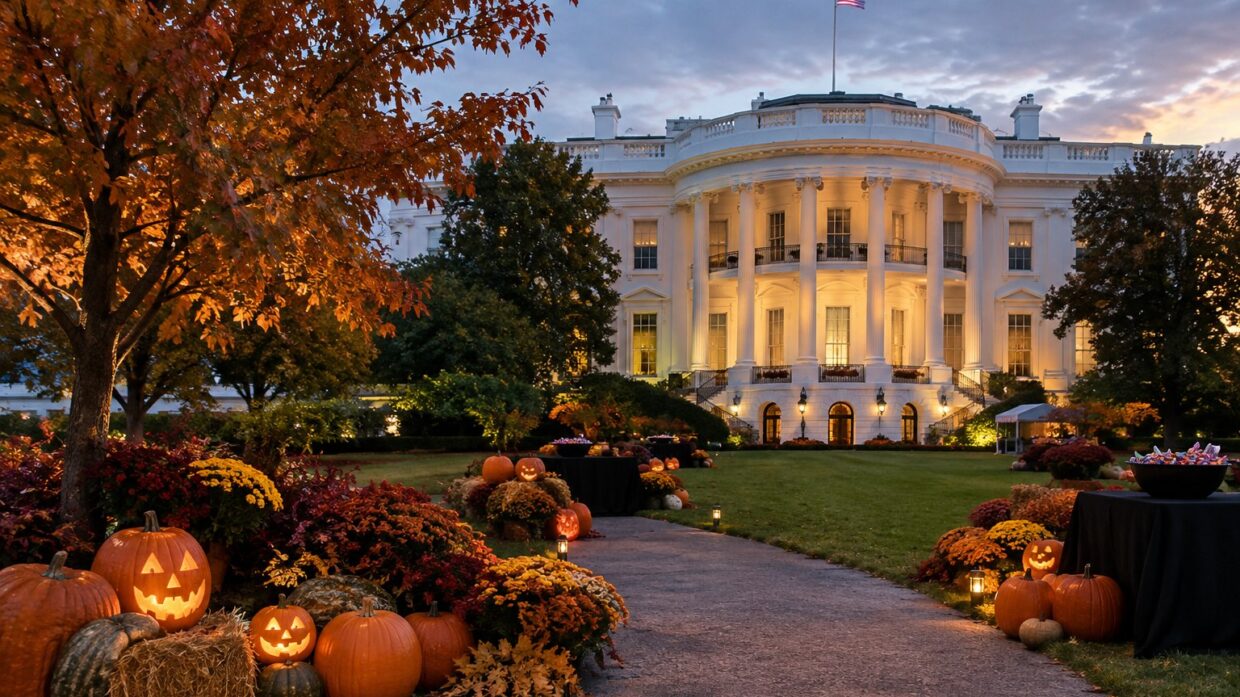
The Trump White House's Halloween event produced two distinct narratives that are actually describing different things: one covering the actual celebration of hundreds of trick-or-treaters on the South Lawn, and another focused on a social media post that accompanied it. The core facts are not disputed. Trump and Melania Trump hosted children on Thursday evening, distributed candy, and Air Force One flew over twice. What divided coverage was the framing of a social media announcement that the White House issued.
HuffPost's framing emphasizes the term "insanely racist" applied by critics to an unspecified "Halloween troll" post on social media. The article does not quote the actual post itself, does not name what specific imagery or language drew the criticism, and does not identify which critics made the "racist" accusation. The headline presents the critical interpretation as the story itself, but the actual substance of what provoked that interpretation is absent from the summary provided. This framing strategy concentrates reader attention on the accusation rather than the thing accused.
The Washington Examiner and PBS coverage focus on what actually occurred at the residence: the event itself. They name specifics: trick-or-treaters "of all ages," candy distribution, the South Lawn location, the Air Force One flybys. The Examiner includes that Trump had just returned from a South Carolina rally, which establishes the temporal context. Neither outlet addresses any social media controversy or any criticism at all. Their framing treats this as a straightforward White House event.
What neither framing establishes is what the specific post said or what language provoked the criticism. Without knowing what the social media post actually contained, readers cannot evaluate whether the "racist" characterization is supported by the content or reflects interpretive disagreement about framing and context. The left-leaning outlet provides the accusation but not the evidence. The right-leaning and center outlets ignore the controversy entirely. The public record, as presented in these sources, does not contain the actual text or images from the post that generated the backlash.
This creates a structural information gap. One narrative announces that critics found something objectionable, but does not show readers what they should examine. The other narrative describes the event that occurred without acknowledging that a separate online dispute existed. Both framings are incomplete in different ways. The useful version of this story would require specifying what the post actually said and what exact language or imagery the criticism targeted. Whether the post used a particular aesthetic choice, a specific phrase, a cultural reference, or a particular tone choice determines whether "insanely racist" is an evidence-based assessment or a partisan characterization. The sources provided do not resolve this.
The underlying question this coverage leaves unresolved is whether the social media post represented a strategic choice by the White House communications office, a lower-level staffer decision, or something that drew criticism but generated no formal response or correction. The significance of a Halloween event controversy depends partly on whether it reflected institutional intent, individual judgment, or was treated as a non-issue by the organization itself.
Halloween events at the White House have historically served as nonpartisan ceremonial moments, which makes this coverage gap consequential for understanding how the executive branch's communications function in polarized times. The split between outlets that highlight an unspecified accusation without showing the actual post and outlets that ignore the controversy entirely leaves readers unable to assess whether this represents a failure in White House social media moderation, a deliberate messaging choice, or an overreaction to standard content. If the disputed post reflected institutional policy rather than individual error, that distinction matters for tracking how the executive communications office operates under this administration. The absence of the actual post from public reporting prevents accountability mechanisms from functioning, whether those mechanisms are internal review processes, press scrutiny, or informed public judgment. This creates a precedent where controversial social media outputs can generate headlines about accusations without requiring the White House to answer specific charges or defend specific choices.