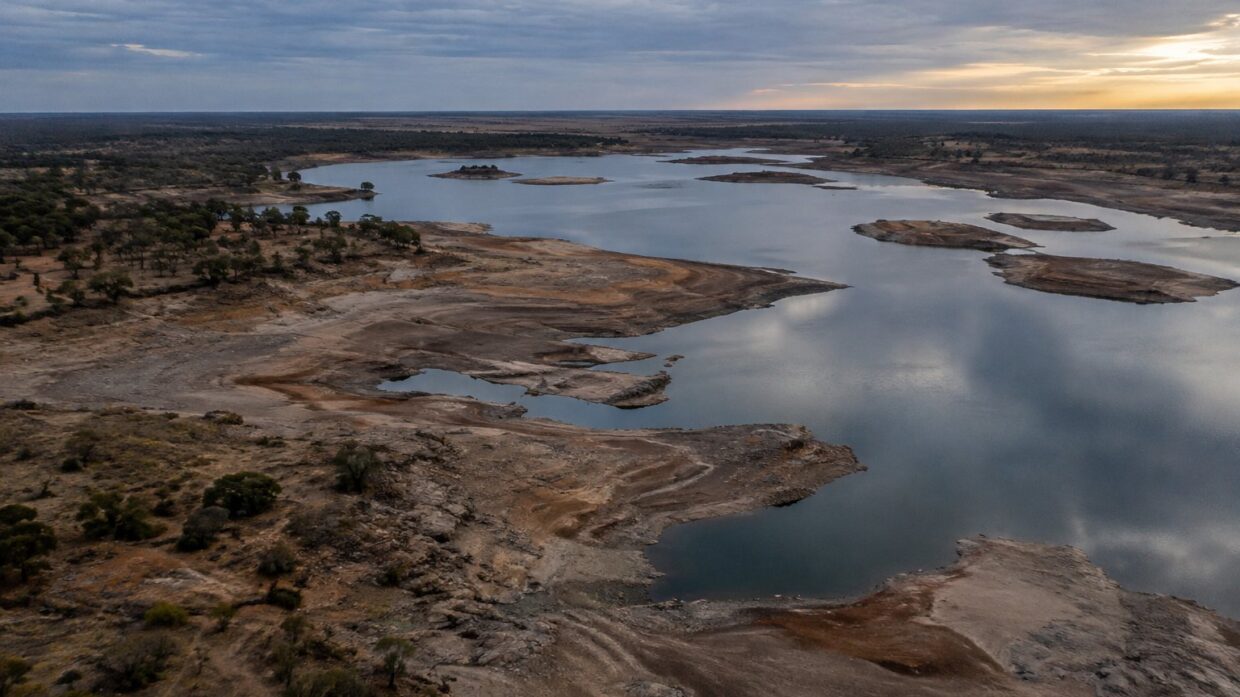
Photo: Well This Is News
Menindee Lakes plummet to crisis levels as climate impacts intensify across inland NSW
We haven't found a right-leaning take on this story yet.
Breaking stories sometimes publish before every side has covered them. We'd rather show you that than invent a view.
We haven't found a neutral take on this story yet.
Breaking stories sometimes publish before every side has covered them. We'd rather show you that than invent a view.
The Analysis
Menindee Lakes in western New South Wales have fallen to their lowest water level in five years, a measurable threshold that has triggered NSW government action but also exposed a significant gap between what the reported facts show and what each side emphasizes about their meaning.
The verified facts are straightforward. Water volumes at Menindee Lakes have dropped below the levels recorded in 2021. The decline is severe enough to prompt regulatory response: the NSW government has imposed new water restrictions. Experts quoted in available reporting have warned that continued decline risks mass fish deaths. The lake system serves multiple functions, supplying water to regional communities and agricultural operations across inland NSW. The sequence of restriction has occurred before: 2021 marked a previous crisis point, suggesting this is not unprecedented for the region but rather a recurring pattern in a system under sustained stress.
The Guardian's framing emphasizes acceleration and ecological consequence. The language choice matters: "lowest in five years" establishes recency and suggests a worsening trend. The headline foregrounds expert warnings of "mass fish deaths," placing ecological damage at the center of the narrative. This framing assumes readers will understand low water levels as a climate-driven crisis requiring urgent response. The coverage does not prominently feature what competing water users might argue about allocation priorities, nor does it examine what infrastructure investments or water-sharing agreements might mitigate the crisis. The omission is not accidental; it narrows the story to environmental degradation without foregrounding the policy levers available to manage it.
The right-leaning perspective is absent from the provided sources, which limits the analysis here. A right-oriented framing would likely emphasize that Menindee Lakes have experienced multiple cycles of low water levels (2021 being recent precedent), that water restrictions are an existing policy tool already deployed, and that the question is whether current restrictions are proportionate to the actual risk or represent regulatory overreach. Such a frame would shift focus from climate as the primary driver to water management efficiency, irrigation allocation, or whether restrictions on agricultural users are justified given the cyclical nature of inland Australian water systems. Without a right-sourced article, that framing cannot be directly verified here.
What neither available source fully addresses is the water-sharing agreement framework that governs Menindee Lakes allocation. The Murray-Darling Basin Plan, established in 2012, sets the rules for how water is distributed across state borders and competing users. That agreement has been revised multiple times amid legal challenge and interstate dispute. Whether current low levels reflect the plan's allocation formulas working as designed, or whether the plan itself requires revision given longer-term climate patterns, is the institutional question the headlines avoid. The reporting also does not establish whether the 2021 low point was actually resolved through policy change or simply through rainfall, which frames whether restrictions prevent future crises or merely respond to them. These are not small details; they determine whether the appropriate response is emergency management or systemic redesign.
The water crisis at Menindee is real and measurable. What remains unexamined is whether this five-year cycle reflects the limits of existing infrastructure and allocation rules, or whether it reflects something that existing policy can address if deployed differently. That question requires more than environmental alarm or restriction cycles; it requires naming the specific agreement structures governing the lakes and analyzing whether they are fit for the hydrological conditions the region now faces.
Menindee Lakes hitting five-year lows exposes a deeper failure: the Murray-Darling Basin Plan's allocation formulas are not designed for the climate volatility now defining inland Australia. When water crises recur every five years rather than in genuinely exceptional circumstances, restrictions become perpetual emergency measures rather than temporary interventions. The NSW government can tighten allocations indefinitely, but without examining whether the 2012 Basin Plan's interstate water-sharing framework accounts for sustained drought patterns, each crisis response treats symptoms while the institutional architecture allowing repeated scarcity remains untouched. Regional communities and agricultural operators face ongoing uncertainty not because infrastructure cannot manage the current water availability, but because the agreement governing distribution has not been tested against whether it remains fit for the hydrological reality unfolding.