Photo: Well This Is News
We haven't found a left-leaning take on this story yet.
Breaking stories sometimes publish before every side has covered them. We'd rather show you that than invent a view.
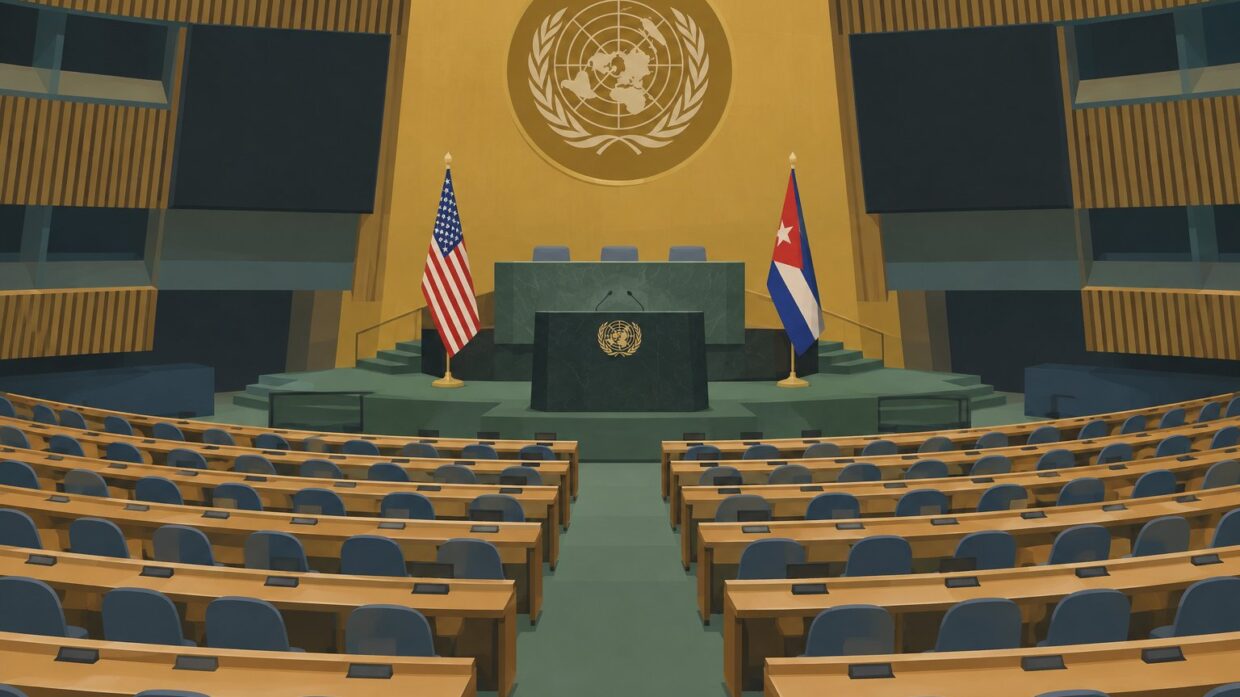
Shouting match erupts at UN as Cuban foreign minister moves toward US ambassador's podium
Confrontation erupts at UN as Cuban officials approach US ambassador's podium during General Assembly speech
Key Takeaways
- The diplomatic protocol governing podium access and objections during UN General Assembly speeches is not established in any reporting, leaving unclear whether Cuba's approach was a routine parliamentary procedure or a deliberate escalation.
- No major left-leaning outlet has documented Cuba's version of events or intentions, creating an information gap where only the right-wing framing of the incident is publicly available.
- The confrontation reflects how US-Cuba diplomatic disputes routinely play out at the UN, but reporting does not clarify whether this specific exchange represents unusual behavior or typical adversarial engagement between the two countries.
The Analysis
U.S. Ambassador Mike Waltz and Cuban Foreign Minister Bruno Rodríguez Parrilla had a heated confrontation at the UN General Assembly podium on Tuesday, with video evidence showing Cuban officials approaching the podium while Waltz was speaking and Waltz telling them to move back. The core dispute centers on what happened and what it means, but both versions rest on what actually occurred: multiple Cuban officials stood during Waltz's address, approached the podium area, and an audible confrontation ensued that Waltz captured on video and later posted.
The sequence of events is documented. Waltz was addressing the General Assembly when Cuban officials rose and moved toward the podium. Waltz told them to "back up" or "back away." Cuban delegation members responded verbally. At some point during the exchange, according to The Daily Wire, another Cuban delegation member attempted to prevent Waltz's spokesman from recording the interaction. The confrontation lasted long enough for Waltz to capture video and post it after the session ended.
The right-leaning framing, as presented in Fox News and Breitbart, emphasizes the aggression and disrespect of the Cuban action. Fox frames this as a "shouting match" initiated by the Cubans approaching the podium. Breitbart uses language like "mob scene" and "shout down," characterizing the Cuban officials' actions as organized disruption designed to prevent Waltz from speaking. The right frame emphasizes that Waltz was presenting "an exposé on the corruption of the ruling Castro family," suggesting the Cuban response was a defensive reaction to damaging allegations. This framing leaves out the diplomatic history that might explain Cuban sensitivity to such presentations or whether the approach to the podium was routine parliamentary pushback rather than unprecedented aggression.
The left-leaning sources in the provided materials are absent. No major left outlet is represented in these clips. This is itself significant: the absence of left framing means there is no documented counter-narrative about Cuban officials' intentions, whether Waltz provoked the response, or what the diplomatic context was. The Hill provides the most neutral description, noting that video shows "Cuban officials standing and speaking to Waltz," but does not characterize their actions as aggressive or defensive.
What neither right-leaning account establishes is the diplomatic protocol governing podium access during General Assembly speeches, whether Cuban officials have approached other ambassadors' podiums in similar circumstances, or what Waltz said immediately before the Cuban response. The right frames this as Castro regime aggression, but the reporting does not explain whether the podium approach was a deliberate escalation or a standard parliamentary objection procedure.
The underlying tension is between treating the confrontation as a serious breach of UN decorum and treating it as a routine, if heated, disagreement between adversaries who have been in diplomatic dispute for decades. Video evidence confirms physical proximity and raised voices. What remains unclear from the available reporting is whether this exchange represents unusual behavior at the General Assembly or reflects how the US-Cuba relationship routinely plays out in multilateral forums.
This confrontation establishes a precedent for physical intervention during General Assembly speeches that will reshape how ambassadors navigate the podium. If Cuban officials' approach to Waltz's podium goes unaddressed through UN protocol enforcement, other delegations will cite this moment when staging similar disruptions against adversaries. The UN General Assembly relies on a fragile norm that hostile nations tolerate each other's floor time without interruption. Video evidence of officials approaching an ambassador's speaking position without consequences weakens that norm measurably. Future US diplomats addressing the Assembly will now calculate whether hostile states will repeat this tactic, potentially requiring security adjustments or altered speaking formats. The institutional question is whether the UN General Assembly president will enforce uniform decorum standards or allow great power confrontations to determine whose speech gets protection from disruption. That determination will fundamentally alter how the forum functions.