Photo: Well This Is News
Second major train crash on same Spanish line in under a year kills at least 30
At least 30 dead in crash between 2 trains in central Spain
At least 30 dead in high-speed train collision in central Spain
Key Takeaways
- The collision's cause remains unexplained; reporting has not disclosed whether signaling failure, human error, maintenance neglect, or dispatcher error was responsible.
- The prior accident on the same line in less than a year is mentioned by some outlets but never analyzed for cause or what safety changes followed it.
- Without knowing whether this represents a pattern of systemic failures or coincidental isolated incidents, it is impossible to determine what policy or investment responses Spain actually needs.
The Analysis
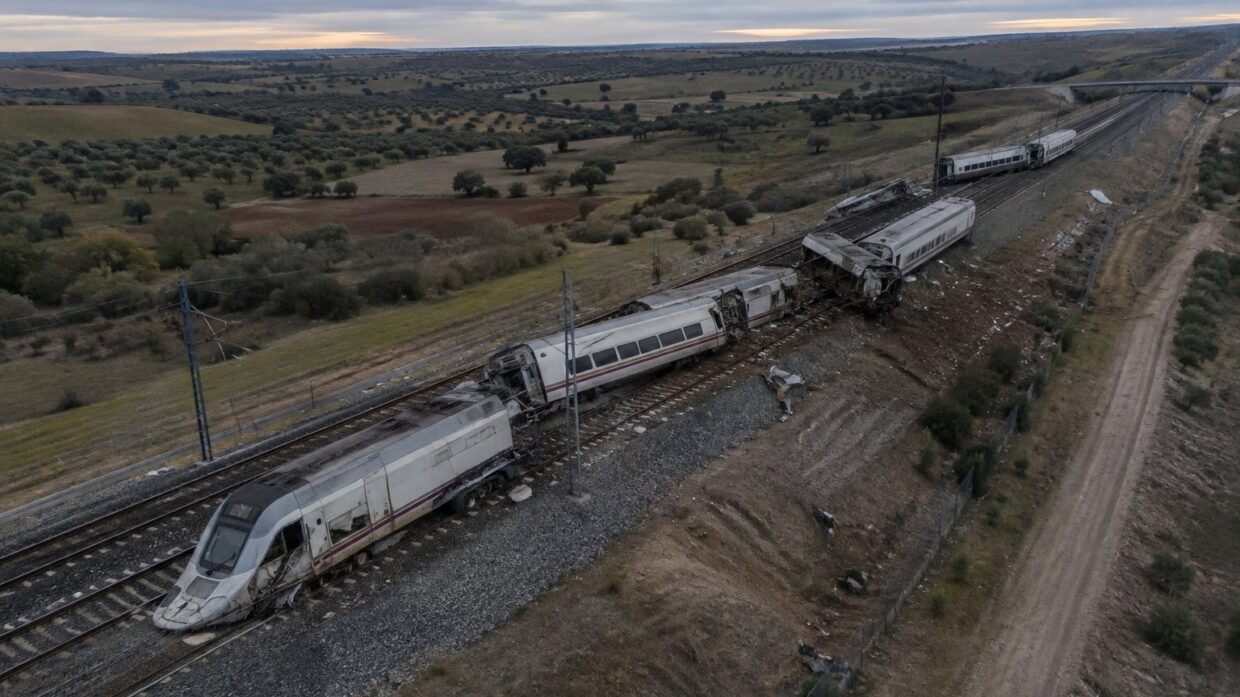
Two high-speed trains collided on the Madrid-Seville line near Toledo in central Spain on Wednesday, killing at least 30 people and injuring 80, according to regional president Emiliano García-Page. One train struck the rear of another that had stopped on the tracks, derailing two carriages. The collision occurred on a major Spanish rail corridor, and emergency crews continued rescue operations as authorities suggested the death toll could rise further.
The factual record is straightforward: a high-speed service ran into a stationary train, causing significant casualties and track damage. NPR, NBC News, the Guardian, and the Washington Examiner all report the same basic details with minimal variation. The collision happened in Toledo province. The death toll as reported stabilized at 30 to 31 people across outlets. Eighty people sustained injuries. Two carriages derailed. The regional president made public statements confirming these numbers.
Left-leaning outlets, particularly NBC News, emphasize that this is the second major accident on the same line in less than a year. The Guardian's headline explicitly flags this pattern: "second major collision this year." This framing raises an implicit question about infrastructure safety and maintenance protocols on a heavily used rail line. By anchoring the story to the prior accident, the reporting invites readers to consider whether systemic issues exist. The Guardian quotes and amplifies concerns about rising death tolls, using language like "concerns the death toll could much higher" rather than simply stating the confirmed figure. This emphasis on uncertainty serves to underscore the severity and ongoing crisis character of the situation.
Right-leaning coverage in the Washington Examiner reports the same core facts but without the comparative framing. The Examiner does not mention the prior accident on the same line. It presents this as a discrete incident with confirmed casualty figures rather than as evidence of a pattern. The attribution to authorities and the regional president is direct and factual, without added context about previous failures or systemic concerns.
What neither framing addresses is the specific cause of the collision or the operational circumstances that allowed a high-speed train to approach a stationary train at speed. The record does not yet establish whether the collision resulted from signaling failure, human error, maintenance neglect, dispatcher error, or some combination. The sources do not disclose whether the stopped train had issued standard warnings, whether braking systems functioned, or whether the approaching train received any alert before impact. The prior accident mentioned by left outlets also goes unanalyzed; readers learn only that it occurred, not why or what changed afterward.
The underlying structural question is whether Spain's high-speed rail system, which handles significant traffic on the Madrid-Seville corridor, has adequate safeguards and maintenance. A single collision is a tragedy; a second one on the same line in less than a year suggests either a pattern or a coincidence. The public record so far does not distinguish between them. That gap matters because infrastructure investment and safety protocol reform depend on knowing whether this reflects systemic failure or isolated incidents.
The most honest version of this headline acknowledges both the immediate human toll and the unanswered question about prevention. At least 30 people died when two high-speed trains collided in central Spain; whether the same line had experienced critical safety failures before remains unclear from current reporting.
Spain's high-speed rail authority faces immediate pressure to audit the Madrid-Seville corridor after a second major collision in less than a year on identical tracks, forcing a public reckoning with whether the line's signaling, maintenance, or dispatch protocols are fundamentally deficient. The collision near Toledo killed at least 30 people and injured 80, establishing a documented pattern that regulators cannot dismiss as coincidence. European rail safety standards require member states to demonstrate root-cause analysis within 60 days of major accidents, meaning Spanish authorities must now publish findings on both this crash and the prior incident within weeks. If both collisions stem from the same unaddressed infrastructure failure, liability extends to operators and government officials who failed to mandate corrective measures after the first accident. Investment in modern automatic train protection systems across the line will likely become non-negotiable, reshaping Spain's rail budget priorities and creating precedent for other European corridors with similar accident histories.