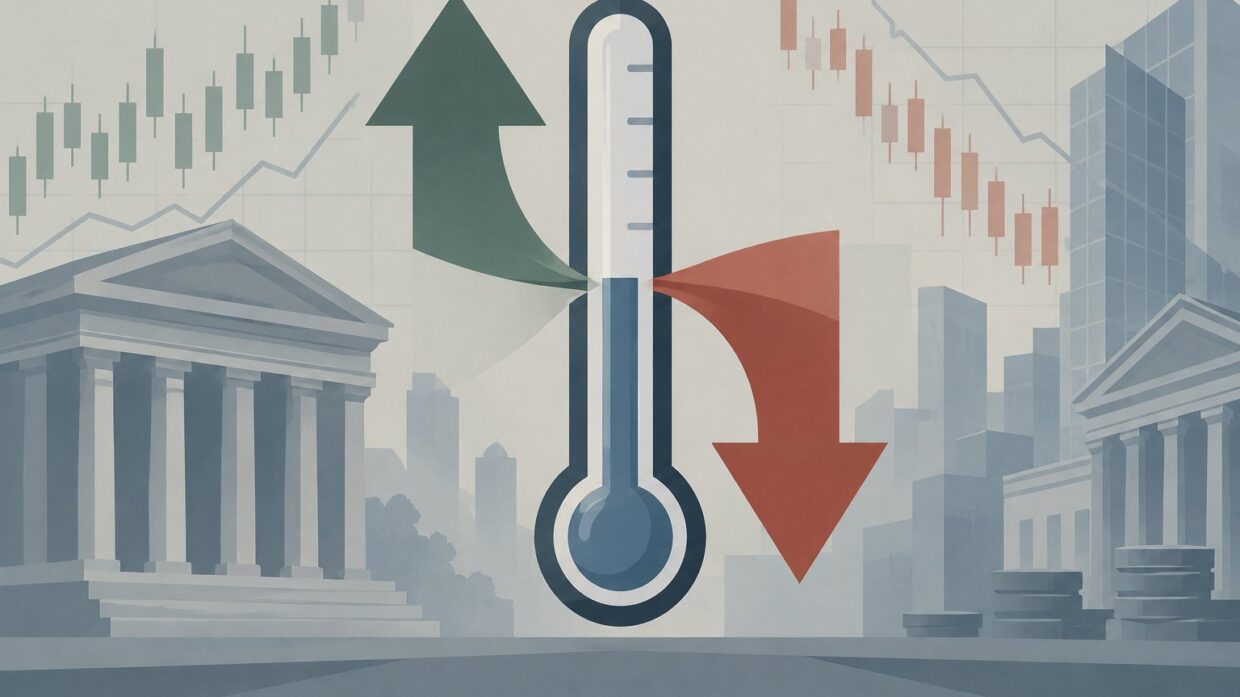
Photo: Well This Is News
Fed Pauses Rate Hikes to Avoid Election-Season Economic Turbulence
Fed Holds While Sector-Specific Inflation Persists in Housing, Healthcare, Education
Fed Holds Rates Steady as Inflation Remains Above Target Ahead of Midterms
Key Takeaways
- The Fed previously signaled in early 2024 it might cut rates if inflation fell, then revised that signal when inflation proved stickier than expected, making the current hold a recalibration of prior policy rather than a sudden pause.
- The economic question the Fed is answering is whether inflation is decelerating enough to justify eventual rate cuts, not whether inflation has disappeared, which is a narrower technical question than the political debate suggests.
- The election timing creates political optics, but the Fed's actual reasoning was to preserve room for assessing whether recent inflation data justified future cuts rather than committing to cuts before the election.
The Analysis
The Federal Reserve's decision to hold interest rates steady arrives at a specific political moment, but the framing of that moment differs sharply depending on which economic narrative dominates the coverage.
What actually happened: The Fed announced it would not raise rates at its most recent meeting, leaving the benchmark federal funds rate in its current range. Annual inflation measured 3.7 percent according to the September Consumer Price Index, down from earlier peaks but still 1.7 percentage points above the Fed's formal 2 percent target. The decision came approximately one week before midterm elections. Officials at the Fed stated publicly that they believed there was sufficient time remaining to bring inflation to target without making a policy move immediately before voters cast ballots.
The left frame, articulated most clearly in NBC's coverage, emphasizes the election-adjacent timing of the decision and links it to broader White House efforts to manage inflation messaging. NBC reports that Trump's administration has "tempered" its "combative approach" to Canada tariffs specifically because "tariff-fueled inflation is a primary concern for voters." This framing contains an implicit claim: that the administration recognizes inflation as an election liability and is adjusting policy rhetoric accordingly. The language choices are important. "Tempered" suggests conscious restraint. "Primary concern" anchors inflation to voter behavior. The coverage does not establish whether the tariff softening reflects polling data, internal campaign analysis, or economic principle. It presents the sequence and invites the reader to connect the dots.
The right frame, represented in the Washington Examiner op-ed, recontextualizes the inflation picture itself. The piece argues that "in most areas, inflation is not out of control" and notes that "on an annual basis, inflation is rising at around 3 percent." It emphasizes that "most economists believe modest further tightening" will eventually reach target. This framing disaggregates inflation, distinguishing between headline rates and sector-specific pressures, and suggests that broad voter concern may exceed the economic reality. The op-ed does not engage with the election timing at all. It treats the Fed's decision as a technocratic response to data, not a political calculation.
What neither side adequately addresses is the tension within the data itself. The 3.7 percent September CPI is materially higher than the Fed's target, yet the Fed has already raised rates substantially from near-zero during the pandemic. The question is not whether inflation exists, both sides acknowledge it does, but whether it is still accelerating or decelerating, and whether the Fed has already done enough rate-raising to cool it without the next move. The left coverage emphasizes political timing without establishing whether the Fed's assessment of "sufficient time remaining" is economically sound or politically motivated. The right coverage emphasizes economic data without confronting why voters remain anxious about inflation even if sector-specific analysis suggests it is moderating.
The omitted context is the prior Fed communication. Earlier in 2024, Fed officials signaled openness to rate cuts if inflation continued to decline. That signal was revised as inflation proved stickier than expected. The current hold reflects a genuine recalibration, not a new phenomenon. The election timing may matter politically, but the economic logic is that the Fed wanted room to assess whether recent data was sufficient to justify cuts later, rather than committing to cuts before midterms. That distinction matters for understanding whether the decision reflects sound policy or political cover.
The Fed's decision to hold rates steady will reshape how central bank independence is discussed in Congress over the next two years. If inflation remains above target through early 2025, Democratic lawmakers will argue the Fed delayed necessary action to avoid pre-election controversy, while Republicans will use the same data to demand rate cuts to protect economic growth. Either way, the Fed's next chair confirmation will face intense scrutiny over whether political calendars influenced monetary policy decisions. The precedent of linking Fed meetings to electoral cycles, whether justified or not, erodes the institutional separation that has protected rate-setting from direct voter pressure since the Volcker era.