Photo: Well This Is News
We haven't found a left-leaning take on this story yet.
Breaking stories sometimes publish before every side has covered them. We'd rather show you that than invent a view.
Trump signals Iran strikes after midterms as war costs hit $47B; supporters defend delay
Trump signals Iran strikes after midterms as war costs hit $47B; supporters defend delay
Key Takeaways
- Trump explicitly stated military strikes on Iran would resume after the midterm elections at a rally, but the reporting does not clarify whether this timeline was coordinated with Pentagon planners or communicated only to campaign audiences.
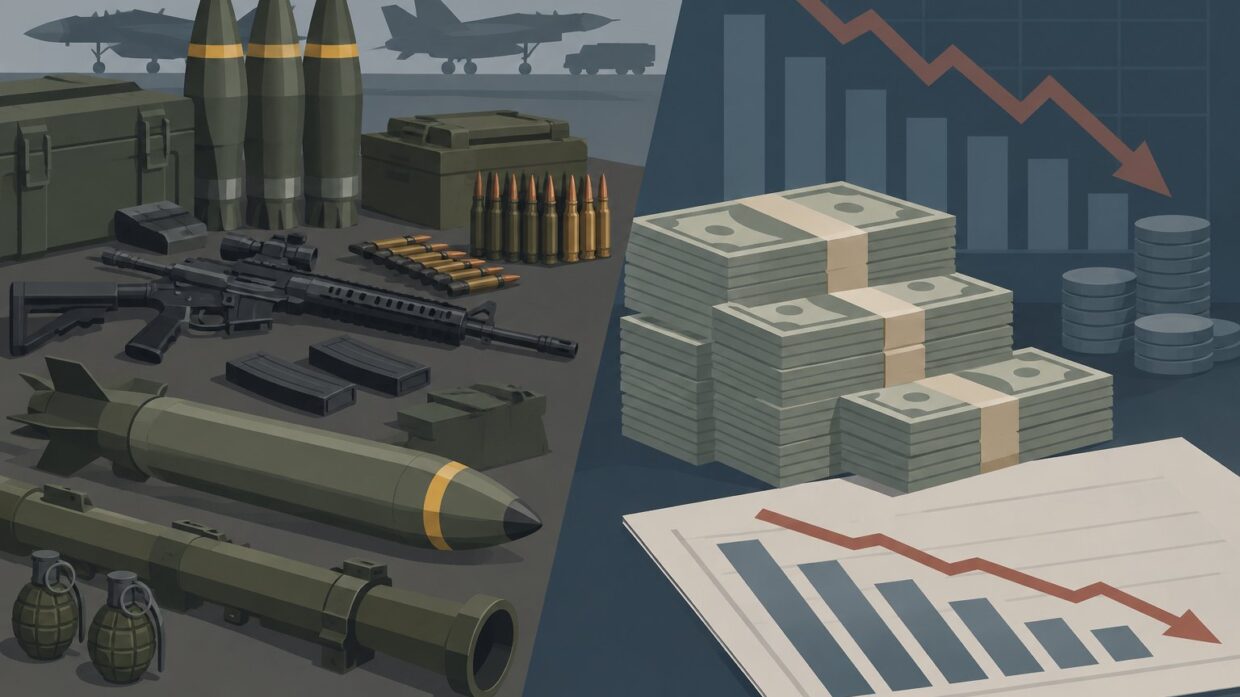
- The total cost of the Iran conflict has reached $47 billion in a single month increase, with $29 billion going to munitions replacement, yet no available source explains the acceleration rate or how it compares to historical military spending patterns.
- The public announcement of post-election military timing to campaign audiences is an unusual form of communication to adversaries, allies, and domestic political opponents simultaneously, but coverage treats it either as straightforward strategy or avoids examining its dual signaling.
The Analysis
Trump has explicitly signaled that escalated military action against Iran will commence after the midterm elections, using the phrase "You'll see Iran in a couple of weeks, if you don't mind" at a Lubbock, Texas rally. This statement directly ties military operations to electoral timing, a connection worth examining separately from the policy merits. The cumulative cost of the existing Iran conflict has climbed to $47 billion, with munitions replacement accounting for $29 billion of that total, according to The Hill's defense cost tracking.
The right-leaning framing, represented in Fox News coverage from Perry, Georgia, emphasizes that Trump supporters are prepared to grant the president additional time to achieve his foreign policy goals, framing criticism as premature. Fox quotes attendees offering "give him time" as their response to affordability concerns and rising gas prices at $3.66 per gallon. The Washington Examiner frames Trump's midterm timeline as a tactical decision, using the word "hints" to characterize his explicit public commitment to post-election strikes. This framing positions the timing as strategic rather than politically motivated, though the distinction between those two things is precisely what remains unexamined.
What the right-leaning sources do not fully foreground is that Trump announced military escalation explicitly tied to an election cycle, creating potential questions about the separation of military planning from domestic political advantage. The coverage does not address whether this timing statement was made to military planners or only to campaign audiences. The cost trajectory is mentioned only peripherally in the right-leaning accounts, appearing as a contextual detail rather than a primary editorial concern.
The Hill's coverage of the $47 billion cost increase provides the most directly verifiable data point in this story: the actual financial magnitude of the conflict has grown by more than $3 billion in a single month. This figure is documented and specific. However, none of the sources provided offer direct explanation for why costs have accelerated so rapidly, what the $29 billion munitions replacement entails, or how that figure compares to historical spending patterns in similar conflicts.
What neither framing adequately addresses is the relationship between campaign rhetoric about military timing and the internal military decision-making process. Trump's public statement that strikes will resume "in a couple of weeks" after an election is unusual as a communication to adversaries and allies alike. The sources do not report whether this timeline was coordinated with defense officials, whether it reflects an actual operational plan, or whether it functions primarily as a campaign message. The right-leaning sources treat it as straightforward strategic communication. The absence of left-leaning sources in this set means no alternative framing is available to examine what that statement signals about either military readiness or political calculation.
The underlying question is whether the public announcement of a post-election military timeline reflects genuine operational planning disclosed for strategic messaging purposes, or whether military timelines are being subordinated to electoral ones. The available reporting does not establish which interpretation is accurate.
Publicly tying military escalation to electoral calendars creates institutional precedent for future administrations to structure defense operations around campaign cycles rather than strategic necessity. The $47 billion cost accumulation and $29 billion munitions replacement figure signal that Iran operations consume resources comparable to entire annual budgets of federal departments, yet no reporting explains the rapid acceleration of these costs or whether operational planning exists independent of campaign announcements. When a sitting president declares strike timing to rally audiences rather than through military channels, defense decision-making structures lose institutional insulation from electoral pressure. This erodes the established norm that military operations are planned by strategists, not announced by candidates seeking voter approval. Future conflicts will face the question of whether timelines should match campaign calendars or operational readiness, a distinction that vanishes once the first public example succeeds politically.