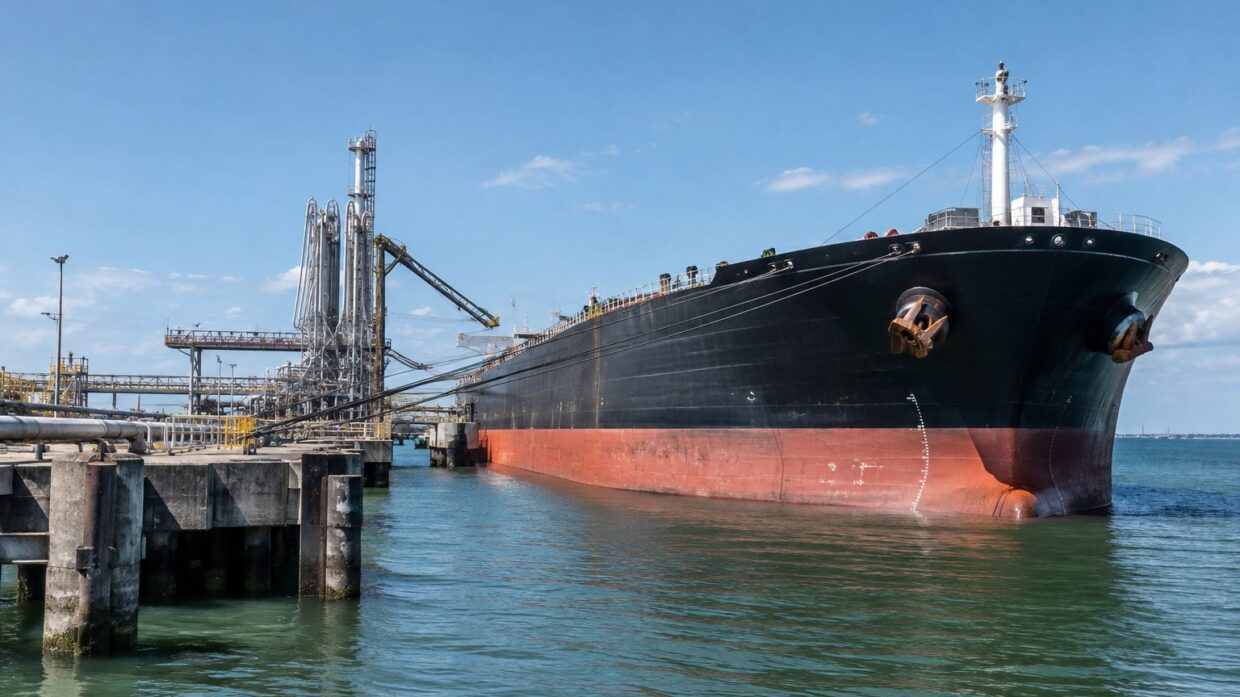
Photo: Well This Is News
Trump floats Venezuela as 51st state while showcasing oil 'gift' from new government
We haven't found a right-leaning take on this story yet.
Breaking stories sometimes publish before every side has covered them. We'd rather show you that than invent a view.
Trump administration displays Venezuelan oil shipment as part of post-Maduro engagement
Key Takeaways
- The Trump administration has a working relationship with Venezuela's post-Maduro government involving oil exports, but the public record does not disclose what the U.S. gave up in return, whether sanctions relief, recognition, or loan guarantees.
- Rubio's statement to Machado that street protests won't lead to democracy indicates the administration will only recognize the government currently in power in Caracas, not support alternative paths driven by popular mobilization.
- The reporting does not identify who actually runs Venezuela's new government, whether elections have been held, or whether any written agreement exists between Washington and Caracas governing the oil arrangement and future political conditions.
The Analysis
Trump and Secretary of State Marco Rubio displayed a Venezuelan oil tanker at a Texas rally Tuesday, framing a one-million-barrel crude shipment as validation of the administration's Venezuela strategy, but the governing arrangement driving that shipment remains undisclosed to the public.
The available reporting establishes these facts: A tanker arrived in Texas carrying Venezuelan crude. Trump claimed it was a "gift" and called it "the greatest oil victory in history." Rubio attended the event and appeared at the rally. The crude comes from Venezuela's post-Maduro government, which took power after Nicolás Maduro left office. Separately, Rubio warned opposition leader Maria Machado against organizing street protests, telling her "you're not going to street-protest your way into democracy." The Politico reporting notes Rubio appeared in Texas partly because Republicans sought him on the campaign trail and Trump "coaxed" him there.
The left frame, represented by The Guardian, emphasizes Trump's annexation language and the novelty of a U.S. president openly suggesting a neighboring country become a state. That language is real: Trump did use the phrase "51st state" at the rally. The Guardian's framing casts this as grandiosity and imperial overreach. What this frame leaves out is any detail about what the Venezuelan government actually received or agreed to in return for the oil, whether sanctions relief, diplomatic recognition, loan guarantees, or other consideration. The public record does not yet establish the transaction's terms.
The right frame is unavailable in the provided sources. Conservative outlets are likely to emphasize the diplomatic achievement of securing Venezuelan oil exports while the country transitions governments, the economic benefit to Texas refineries, and the contrast with the Biden administration's approach. That framing would presumably emphasize stability over ideology. What it would likely underplay is Rubio's warning to Machado, which suggests the administration is conditioning support for democratic processes on Venezuela's compliance with its oil export arrangement.
What neither frame adequately addresses is the specific political and economic structure now governing Venezuela. The reporting refers to a "post-Maduro government" and "new government" but does not name who is running it, what they have committed to in writing, or whether they have held elections. Rubio's warning to Machado against street protests is significant because it suggests the administration prefers a non-democratic transition process to one driven by popular mobilization. The phrase "you're not going to street-protest your way into democracy" is conditional and directional: it tells Machado that the Trump administration will not support her path to power, only the path it has chosen. The public record does not establish whether any written agreement exists between the Trump administration and Venezuela's current government, what economic or political concessions were made, or whether international recognition of that government is conditional on specific outcomes.
The underlying question is whether the United States is using oil as a lever to shape Venezuela's political future in ways that benefit American energy interests and administration foreign policy but bypass Venezuelan democratic process. The Rubio warning to Machado suggests that framing, but the reporting does not establish it directly. What the available sources establish is that the administration has a working relationship with whoever currently holds power in Caracas, that relationship involves oil exports to the United States, and the administration is signaling opposition to domestic mobilization that could challenge that arrangement.
Control of Venezuela's oil exports now conditions U.S. leverage over Venezuela's internal politics, and Rubio's warning to opposition leader Maria Machado reveals the administration has chosen which faction to support rather than backing democratic processes. The shipment itself matters less than what it signals: Washington will recognize and work with whoever controls Caracas, regardless of how they seized power, provided they export oil on American terms. This creates perverse incentives for authoritarian consolidation. Any Venezuelan leader who wants U.S. recognition and sanctions relief can now simply deliver crude and ignore domestic pressure for elections or pluralism. The administration has transformed Venezuela's political transition from an open question into a closed one, betting that oil dependence will keep the current government compliant. That bet may hold short-term, but it eliminates the possibility of popular legitimacy in Venezuela's government, ensuring future instability when oil prices shift or domestic pressure builds again. The precedent extends beyond Venezuela: other