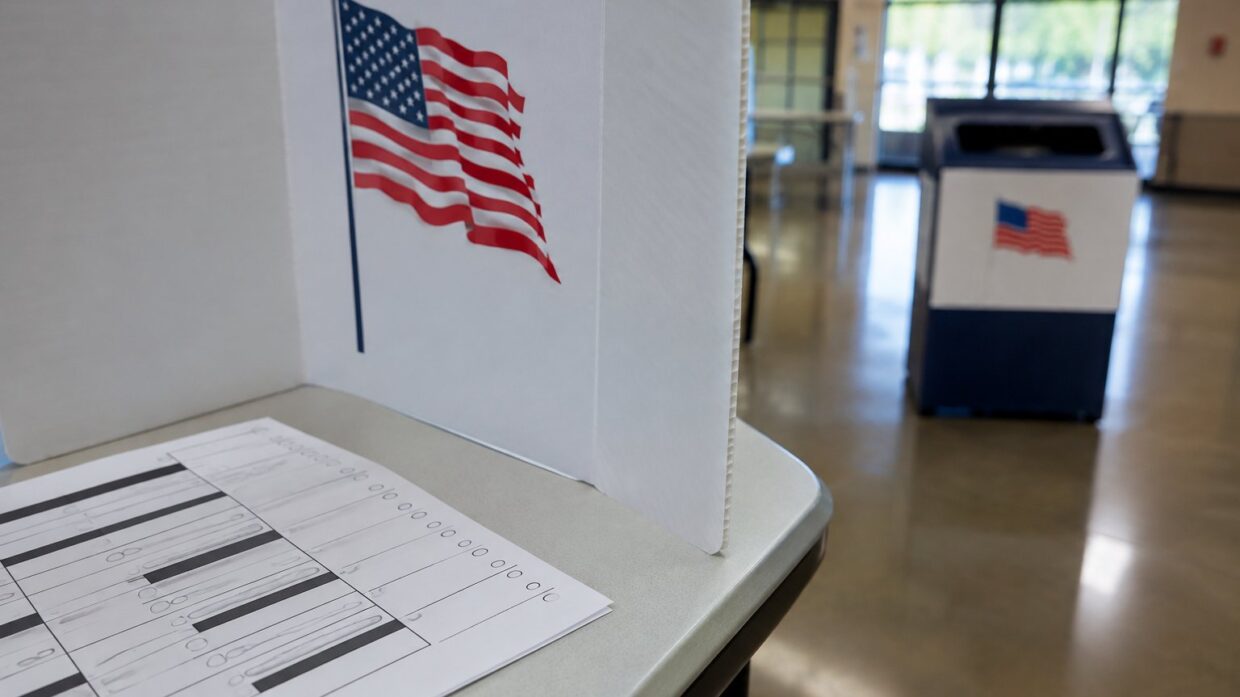
Photo: Well This Is News
We haven't found a left-leaning take on this story yet.
Breaking stories sometimes publish before every side has covered them. We'd rather show you that than invent a view.
We haven't found a right-leaning take on this story yet.
Breaking stories sometimes publish before every side has covered them. We'd rather show you that than invent a view.
Voters Cast Ballots on Candidates and Measures as Election Integrity Questions Persist
Key Takeaways
- The Trump administration flagged 400 ballots in Washington state but reporting does not confirm whether those voters were actually verified as noncitizens or whether the flagging process met any established legal standard.
- Noncitizen voting is documented as exceptionally rare, yet it receives significant administrative attention and reporting despite the mismatch between the stated problem's rarity and the resources deployed to address it.
- Voters are engaging with elections as multiple simultaneous decisions about candidates, ballot measures, and constitutional questions, while election administration and reporting frame voting primarily through eligibility and partisan intent rather than voter complexity.
The Analysis
Voters in swing states and across the country are casting ballots that simultaneously decide federal races and resolve state-level questions, while the Trump administration has requested that Washington state set aside approximately 400 ballots from voters it believes may be noncitizens. The three available stories frame voter behavior differently, but together they reveal a more complete picture of what voters are actually doing versus what administrative actions claim about election integrity.
The documented facts are these: voters in Pennsylvania, as reported by Fox News, say they are voting with Trump and MAGA concerns in mind, even in midterm races where Trump is not a candidate. PBS NewsHour reports that voters nationwide face ballot measures ranging from state constitutional questions to local policy decisions. The Trump administration, according to PBS NewsHour reporting, has asked Washington state to segregate 400 ballots from voters it identifies as potentially noncitizen, an action the reporting notes occurs within a context where noncitizen voting is described as exceptionally rare.
The Fox News framing emphasizes voter intention and Trump's influence over the electoral choice, even in his absence from the ballot. The headline structure (Trump's not on the ballot but swing state voters still cast ballots with MAGA in mind) treats Trump as a political force that shapes voter behavior independent of his candidacy. This frame foregrounds the gravitational pull of Trump as a political figure and suggests his ideological influence persists across electoral contexts. What this framing does not establish is whether this behavior is unique to Trump, unusual for midterm elections, or consistent with historical patterns of midterm voting driven by concerns about an incumbent administration's direction.
The Trump administration's request for ballot segregation, as reported by PBS, frames election integrity through the lens of noncitizen voting. The reporting explicitly notes that noncitizen voting is exceptionally rare, which creates a specific analytical tension: the action addresses a problem the reporting documents as statistically uncommon. PBS does not report whether the 400 voters in question have been verified as noncitizens or whether the identification process itself meets any specific legal or administrative standard. The action is reportable as fact; the underlying question of whether it addresses a material threat to election integrity remains distinct from confirmation that the threat exists.
What neither framing fully addresses is the relationship between these two phenomena. Voter behavior driven by concerns about a political figure's influence on governance, and administrative scrutiny of voter eligibility, are being reported as separate stories. One involves voter intention. The other involves state administrative action. Together, they suggest a contested landscape in which voting itself (who votes, how they vote, whether their votes count) has become a site of ongoing political negotiation and challenge.
The available reporting does not establish how many of the 400 flagged voters ultimately had their ballots counted, how the identification process occurred, or what standard of evidence triggered the segregation request. It also does not establish whether Pennsylvania voters' stated concern about Trump in midterm races reflects a broader shift in midterm voting behavior or is specific to the Trump era.
What emerges from reading all three sources is a picture of voters engaging with elections on multiple levels (candidate choice, ballot measures, political influence) while election administration grapples with questions of eligibility that the available data suggests are uncommon. The most honest headline is this: Voters cast ballots across multiple decisions while election integrity questions about noncitizen participation receive administrative attention despite documented rarity.
Pennsylvania voters expressing MAGA concerns in races where Trump is not a candidate reveals a structural shift in how midterm elections function, where ideological loyalty to a figure now operates independently of ballot presence. Simultaneously, the Trump administration's request to segregate 400 Washington ballots based on noncitizen suspicion establishes a precedent for administrative ballot quarantine that may persist regardless of whether noncitizen voting proves material to electoral outcomes. Together, these developments indicate that future elections will operate under competing claims about voter legitimacy itself, converting voting eligibility from a clerical matter into an ongoing political contest where ballots can be set aside pending verification of citizenship, fundamentally altering how quickly vote totals are certified and accepted.