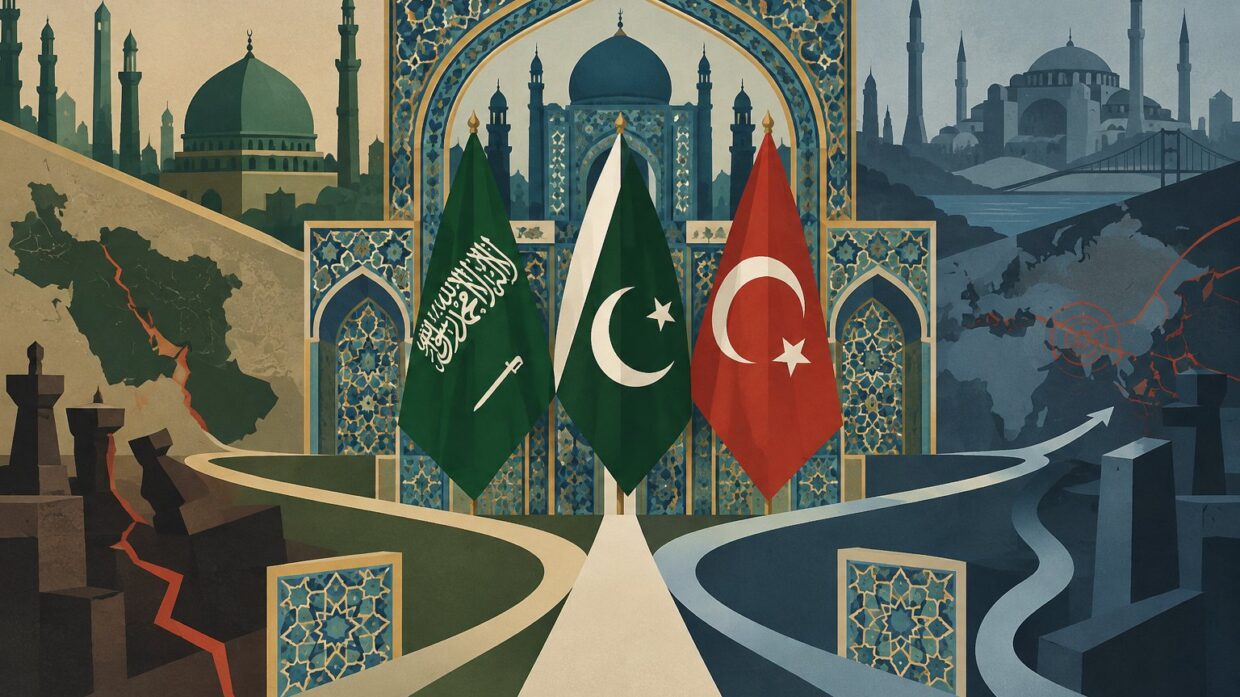
Photo: Well This Is News
Saudi, Pakistani, Turkish Officials Rush to Tehran to Prevent U.S.-Iran Conflict
We haven't found a right-leaning take on this story yet.
Breaking stories sometimes publish before every side has covered them. We'd rather show you that than invent a view.
Regional Delegations Visit Tehran as Trump Signals Decision Coming on Iran Policy
Key Takeaways
- Saudi Arabia, Pakistan, and Turkey's delegations to Tehran on the same day Trump announced he was nearing a decision on Iran policy suggests these regional powers were attempting to insert themselves as mediators to increase their strategic value to Washington.
- None of the reporting disclosed what specific concessions the delegations were offering Iran, what they were requesting from Washington, or whether Trump had coordinated the timing of his public statements with these regional partners.
- Trump's public statement about resuming strikes after the midterms may have been a negotiating tactic rather than a predetermined decision, but none of the available reporting establishes whether he had actually made up his mind or was using diplomatic cover.
The Analysis
Three regional powers sent delegations to Tehran on the same day Trump publicly signaled he was nearing a decision on Iran policy, a convergence that reveals competing calculations about what comes next in U.S.-Iran relations and who gets to influence it.
The delegations from Saudi Arabia, Pakistan, and Turkey traveled to Tehran explicitly to prevent what The Guardian framed as renewed fighting between Iran and the U.S.-Israel alliance. Bloomberg's reporting established the timing constraint: Trump has suggested U.S. strikes on Iran could resume after the November 3 midterm elections, creating a roughly week-long window in which diplomatic intervention might affect his calculus. The delegations appear to represent a coordinated attempt by America's regional security partners to preserve negotiation as an alternative before that window closes.
The left framing emphasizes the delegations' mission as urgent crisis prevention. The Guardian's language, "attempt to prevent renewed fighting" and the phrase "bellicose rhetoric heightens," constructs a narrative where regional actors are racing against American military escalation. This framing centers the agency and legitimacy of the Saudi, Pakistani, and Turkish governments as stabilizing forces and leaves unstated several facts: Saudi Arabia and Pakistan have longstanding security relationships with Washington; Turkey has negotiated its own deals with the Trump administration; none of these delegations announced their visits beforehand or disclosed what specific concessions they were offering Iran or requesting from Washington. The left frame treats diplomatic engagement itself as inherently preferable to military action without establishing what terms these delegations were proposing or whether they reflected Iran's actual negotiating position.
Bloomberg's framing, by contrast, centers Trump's decision-making as the pivot point. The reporting states Trump is "nearing a decision" on whether to make a deal with Tehran or resume attacks. This construction places the initiative with the American president and treats the delegations as contextual factors in his deliberation rather than as primary actors. Bloomberg also establishes what the left coverage does not foreground: Iranian and Houthi threats against Americans continue to escalate, providing Trump's administration with a stated rationale for potential military action independent of the delegations' diplomatic efforts. This framing leaves out whether Trump's suggested timeline was firm, whether he had actually consulted with these regional partners before setting it, or whether his public statements about resuming strikes were themselves a negotiating tactic to pressure Iran.
What neither side fully addresses is the structural question driving these moves. Saudi Arabia, Pakistan, and Turkey all depend on American military support and regional security guarantees. Their delegations to Tehran appear designed to position themselves as mediators with access to Iranian decision-makers, which increases their value to Washington. The delegations also serve Iran's interest in demonstrating that it can attract high-level diplomatic visits despite U.S. pressure. Trump's public statement that he is nearing a decision may itself be a negotiating tool aimed at Iran, at these regional partners, or at domestic audiences before the midterm elections. The reporting does not establish whether Trump had predetermined his course and was using the delegations as diplomatic cover, or whether he genuinely remained undecided. What remains unclear is whether any of these delegations carried concrete proposals from the Trump administration or were acting independently to preserve space for negotiation.
Saudi Arabia, Pakistan, and Turkey's simultaneous visits to Tehran expose a fundamental gap in Trump's regional strategy. These three nations, all dependent on American military guarantees, are attempting to position themselves as indispensable mediators between Washington and Iran, a role that paradoxically increases their leverage over both sides. If Trump follows through on strikes after the midterms, he undermines the credibility of allies who just invested political capital in preventing escalation, weakening their willingness to coordinate on future security matters. Conversely, if he negotiates, he risks signaling that military threats succeed only when regional partners intercede, inviting similar interventions the next time tensions spike. Either outcome reshapes the transactional basis of America's Middle East partnerships.