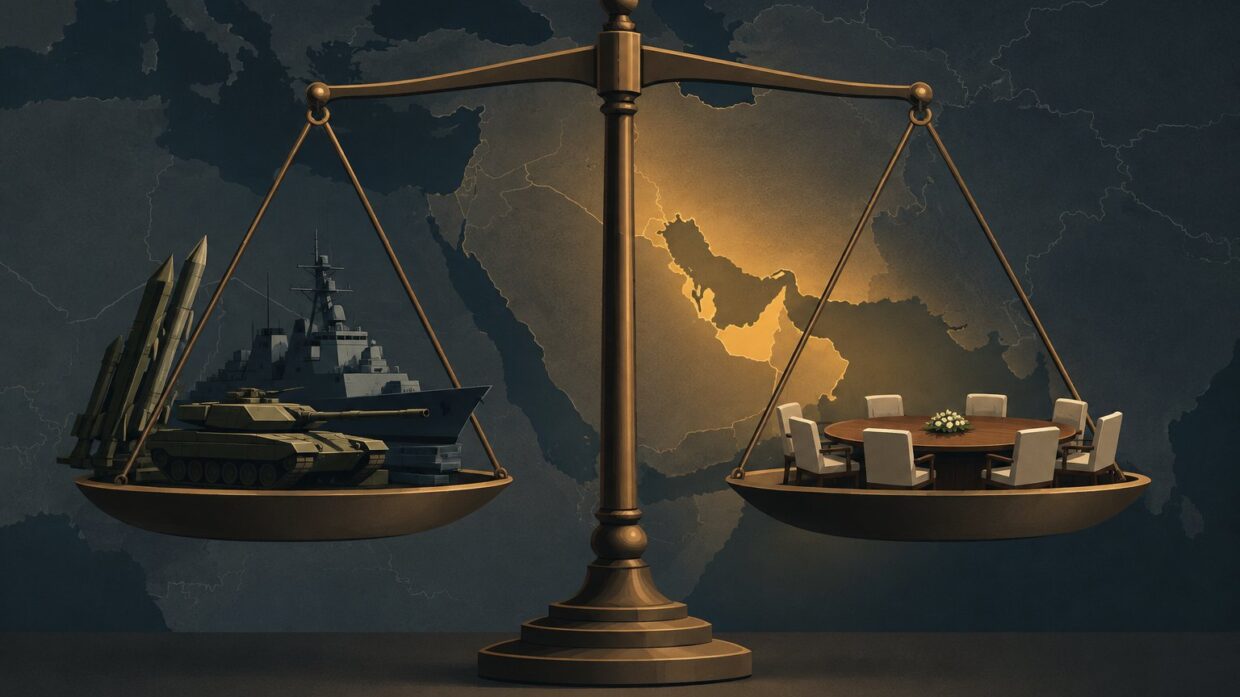
Photo: Well This Is News
We haven't found a left-leaning take on this story yet.
Breaking stories sometimes publish before every side has covered them. We'd rather show you that than invent a view.
Trump Considers Strike or Negotiation as Military Prepares New Iran Attack Options
We haven't found a neutral take on this story yet.
Breaking stories sometimes publish before every side has covered them. We'd rather show you that than invent a view.
The Analysis
Trump's statement that he is 'nearing a decision' on Iran presents a binary framing that omits the actual complexity of what is happening on the ground: while the president deliberates between deal and strike, Saudi, Pakistani, and Turkish officials are independently pursuing diplomacy without waiting for Washington's binary choice to resolve.
The documented facts are these. Trump told reporters on Sunday that decision time is approaching and used the phrase 'Do I Make a Deal or Finish Them Off,' according to Breitbart's account. Simultaneously, according to Bloomberg reporting, U.S. military commanders have prepared new strike options. At the same time, senior security officials from three regional powers were traveling to Tehran on Monday 'to defuse tensions and breathe new life into talks.' The sequence matters: the diplomatic mission is not responding to Trump's decision. It is proceeding independently.
Breitbart's framing emphasizes Trump's agency and the military readiness component. The headline forecloses ambiguity: 'finish them off' is presented as a live option, not speculation. The emphasis is on Trump's decision-making power and the military's preparedness. This framing leaves out that the regional powers are moving toward de-escalation without waiting for Trump's binary choice to be made, and leaves out the prior history of failed negotiations that would explain why Tehran might be receptive to talks now.
Bloomberg's reporting names the actors and their stated intent: 'defuse tensions and breathe new life into talks.' The language 'breathe new life' implies previous negotiations have stalled. Bloomberg does not emphasize Trump's either-or framing at all in the articles provided. Instead, it foregrounds the regional diplomatic initiative, treating Trump's statement as background context rather than the driving force. This emphasis implicitly suggests that resolution may not depend on Trump's binary choice alone.
What neither framing addresses directly is the prior history of the Iran nuclear deal (the Joint Comprehensive Plan of Action). Trump withdrew from the JCPOA in 2018. That withdrawal initiated the current escalation cycle. The current diplomatic push from Saudi Arabia, Pakistan, and Turkey is occurring because negotiations broke down after that withdrawal. The binary Trump is describing is only binary because he already chose one branch of it: he rejected the previous negotiated framework. What the regional powers are attempting is to reconstruct negotiating space that Trump destroyed.
Also undisclosed: why these three countries are moving now. The reporting does not establish whether this is a coordinated response to Trump's threats, a separate regional initiative, or both. It does not establish what leverage they believe they have with Tehran or what terms they are prepared to discuss.
The real headline is that Trump is describing a choice between two paths (deal or strike) while the actual geopolitical situation has already moved to a third path: regional powers are negotiating independently of that binary, suggesting either they do not believe Trump's binary is real, or they are attempting to close a deal before Trump closes military options. The precedent this sets concerns whether U.S. military threats can force diplomatic movement or whether regional powers will simply work around them.
Saudi, Pakistani, and Turkish diplomats traveling to Tehran while Trump deliberates signifies a fundamental shift in how regional crises resolve: America's binary choice between negotiation and military action no longer constrains outcomes. If these three powers secure de-escalation without Washington's approval or participation, it establishes that U.S. military threats have become insufficient to maintain negotiating leverage over Middle Eastern conflicts. Future administrations cannot assume allies will wait for American decisions before pursuing their own diplomatic channels. The institutional consequence is erosion of American veto power over regional conflict resolution.