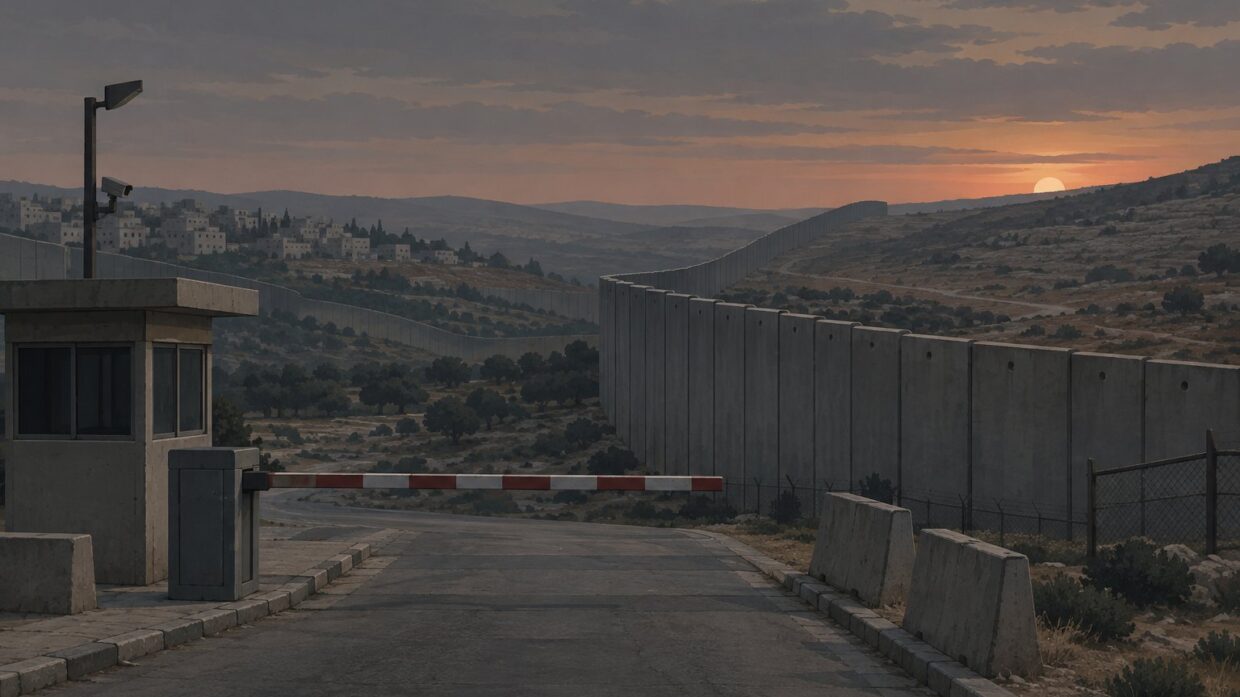
Photo: Well This Is News
Israel launches collective punishment in Hebron after soldiers killed in gunfight
Netanyahu signals massive West Bank operation after Hebron attack, days before election
Netanyahu orders major West Bank operation after two soldiers killed in Hebron gunfight
Key Takeaways
- Netanyahu announced a major West Bank operation four days before a national election where he faces close polling competition against Gadi Eisenkot, raising questions about whether electoral pressure influenced the operation's announced scale.
- The Israeli military described the incident as an attack that killed two soldiers, but the public record does not clarify the specific military threat assessment that justified the operation's size or whether it targets only combatants or also affects civilians.
- Neither security doctrine nor international law provides a clear public standard for distinguishing a proportional response to an attack from a broader operation using the attack as political justification, leaving the legality of Netanyahu's announced measures undefined.
The Analysis
Netanyahu announced a major West Bank operation after a gunfight near Hebron killed two Israeli soldiers, but what each outlet emphasizes reveals competing narratives about the incident's scope, legality, and political timing. The details matter because they establish whether this was a proportional security response or a broader campaign that extends consequences beyond those directly involved in the attack.
What actually happened: Israeli soldiers killed two men near Hebron on Friday morning in what the military described as response to an attack that injured at least five people, including some critically. Netanyahu then announced Israel would conduct what he called a "very extensive operation" in the West Bank. The announcement occurred four days before a national election where Netanyahu is running neck-and-neck against opponent Gadi Eisenkot in the latest polls. The Guardian reported Netanyahu and his ministers promised demolitions and forced displacement. Breitbart reported the operation would be "on a scale not seen since the 1967 Six-Day War."
The left frames this as collective punishment. The Guardian uses that phrase directly and explicitly links the announced operations to punishment of Palestinians broadly rather than pursuit of the specific attackers. This framing emphasizes that home demolitions and displacement target civilians not implicated in the gunfight, which invokes international law prohibitions on collective punishment under the Fourth Geneva Convention. The language choice "collective punishment campaign" shifts responsibility from the individual shooters to Israeli policy itself. What this framing leaves out: the specific military threat assessment Netanyahu cited for the operation's scope, the stated security rationale for each announced measure, or whether targeted individuals had documented ties to armed groups.
The right frames this as a necessary security response to terrorism. Breitbart describes the gunmen as "Palestinian terrorists" and emphasizes the scale of Israel's response as appropriate to the threat level. The phrase "days before election" appears in Breitbart's headline and framing, but the context suggests this demonstrates Netanyahu's resolve rather than political calculation. This framing emphasizes that the operation targets the source of attacks rather than civilian punishment. What this framing leaves out: whether the announced response extends beyond security measures to measures that would affect civilians not involved in the attack, the distinction between operations targeting combatants versus those affecting broader populations, or any documented pattern of such operations expanding beyond initial security justifications.
What neither side foregrounds is the electoral context itself. Bloomberg reports Netanyahu is "neck-and-neck" with Eisenkot in latest polling four days before the election. The timing allows both framings to coexist: a genuine security response to a real attack, and a response whose scale and public announcement serve electoral purposes. These are not mutually exclusive. The public record does not disclose Netanyahu's internal reasoning for the operation's announced scope or timing. One plausible interpretation is that both facts are operative: the attack created a legitimate security imperative, and the electoral dynamics influenced how extensively that imperative was publicly defined.
The underlying structural question neither outlet addresses: what distinguishes a security response proportional to an attack from a broader operation that uses the attack as political license. Israeli military doctrine and international humanitarian law both require this distinction. The record here does not establish whether Netanyahu's announced operation maintains it.
Israel's West Bank operations announced after security incidents now carry predictable electoral calendars. When a genuine attack occurs days before a national election, the announced response's scope becomes inseparable from campaign dynamics, regardless of security validity. Netanyahu's "very extensive operation" announced four days before polls suggests future Israeli governments will calibrate military announcements to electoral pressure rather than purely to threat assessment. This establishes a precedent where Palestinian civilians face consequences determined partly by Israeli political competition. If this pattern holds, security operations will systematically expand during election cycles, making the distinction between proportional response and collective punishment legally meaningless in practice, even when each individual operation claims security justification.