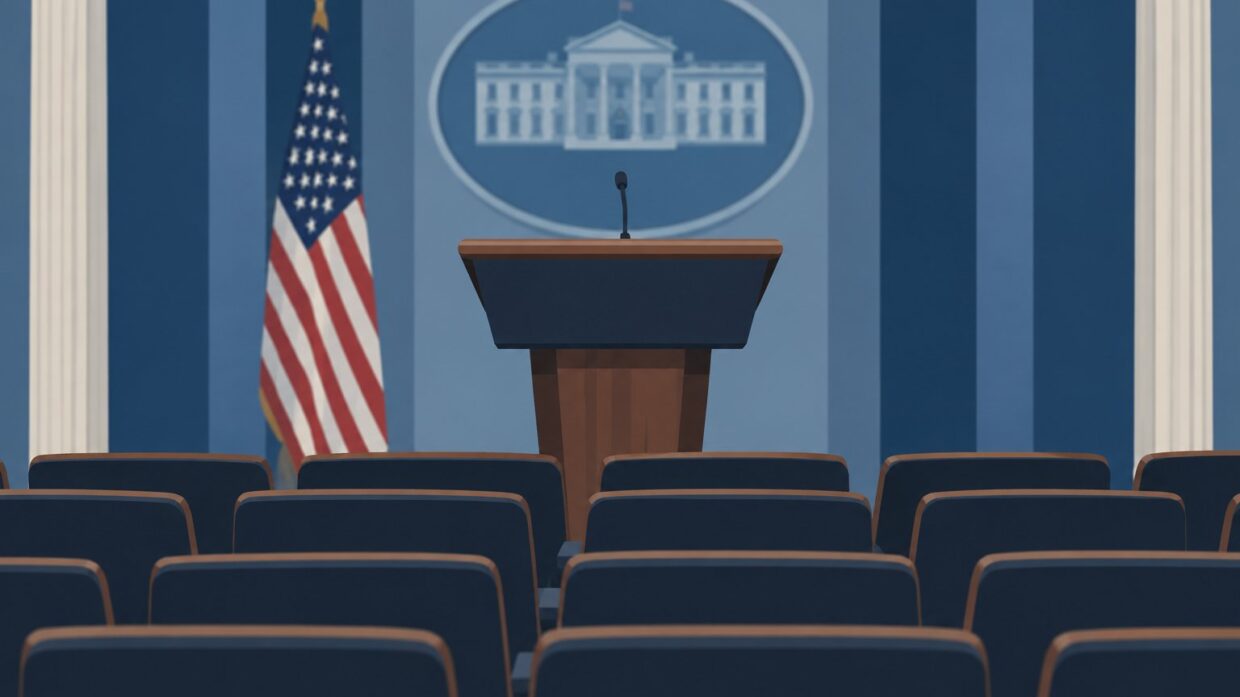
Photo: Well This Is News
Trump's press secretary crisis deepens as hostile environment drives out second appointee
Leavitt: New press secretary role 'not for her' after Zacharia's brief stint
Leavitt helps Trump search for press secretary after Zacharia's five-day tenure
Key Takeaways
- Neither the right nor the left has published Katie Zacharia's own account of why she left after five days, relying instead on Karoline Leavitt's interpretation that the role 'was not for her.'
- The public record confirms Trump's administration is planning to physically relocate the White House press corps from the building, but does not establish whether this plan directly caused Zacharia's departure.
- The story cannot answer whether the press secretary role has become structurally dysfunctional under Trump or whether Zacharia was simply mismatched to the position from the start, a distinction that would determine whether future appointees face similar circumstances.
The Analysis
Katie Zacharia lasted five days as White House press secretary before departing, and Karoline Leavitt is now helping President Trump find a replacement, yet neither the right-leaning coverage nor the left-leaning framing discloses the specific reasons Zacharia left or what conditions made the position unsustainable so quickly.
What the record establishes: Zacharia held the position for five days. Leavitt, speaking to Fox News, stated she wished Zacharia well and described the role as extremely demanding. The New York Times reported that Trump's administration is considering physically relocating the White House press corps out of the White House itself, according to NPR's coverage. This is the second rapid departure from the press secretary role in Trump's current administration, following Leavitt's own tenure.
The right-leaning frame, evident in Fox News and The Daily Wire reporting, emphasizes the difficulty of the position itself rather than the conditions surrounding it. Leavitt's quoted language, "was not for her," frames Zacharia's departure as a matter of personal fit or capability rather than situational factors. This framing leaves out the context that Trump has consistently attacked journalists and the press as an institution, and that the administration is actively planning to remove the press from the White House building itself, a significant change to institutional practice. The right's narrative suggests some people can handle demanding roles and others cannot, deflecting from questions about the role's viability under current circumstances.
The left-leaning frame, as presented in NPR's coverage, emphasizes Trump's "war" on the press and positions Zacharia's departure as a symptom of a hostile environment that has become untenable. This frame foregrounds the administration's reported plan to relocate the press corps and connects it directly to press secretary departures. However, this coverage does not establish whether Zacharia herself experienced direct hostility from Trump, whether she was terminated, or whether she resigned voluntarily. The left's emphasis on systemic hostility is plausible given the reported relocation plans, but it attributes causation without demonstrating direct connection to Zacharia's specific departure.
What neither framing addresses is that the public record does not currently disclose Zacharia's own explanation for leaving. The reporting establishes that she departed after five days but does not include her account of why. Leavitt's characterization, "was not for her," may be accurate, but it is Leavitt's interpretation, not Zacharia's stated reason. Neither side has sought or published Zacharia's own account. This matters because the actual cause, whether health, family, direct conflict with Trump, insufficient preparation, or something else, would substantially change the meaning of her departure and what it signals about the press secretary position itself.
The underlying question is whether the press secretary role under Trump has become dysfunctional as an institution, or whether this particular appointment was mismatched from the start. That distinction would determine whether a third appointment will face similar circumstances or whether the position can stabilize. The available reporting does not yet answer it, leaving the story dependent on framing rather than evidence.
The rapid collapse of the press secretary position signals a breakdown in White House institutional functioning that will ripple through Trump's entire first term. If the administration cannot retain someone in this role beyond five days, it indicates either that Trump's management style makes the position unsustainable or that his team cannot adequately vet and prepare appointees for roles that require standing before hostile questioning daily. The reported plan to physically remove the press corps from the White House building suggests the administration views the traditional press briefing as a liability rather than a constitutional check on power, a shift that normalizes greater opacity in government operations. Without understanding Zacharia's own account of her departure, neither the right's framing of personal unfitness nor the left's emphasis on systemic hostility can be tested against reality, meaning subsequent press secretary appointments will operate under the same cloud of uncertainty about whether the role itself remains viable or whether Trump simply needs different personnel.