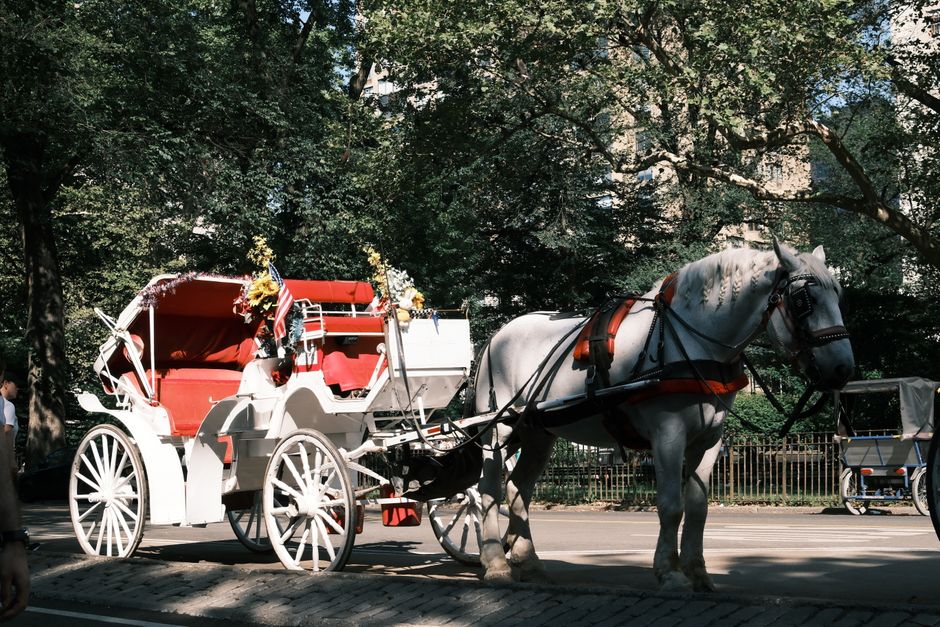
Photo: Mingyang LIU
NYC ends horse carriage industry in landmark animal rights victory after years of activist pressure
Mamdani's horse carriage ban faces legal challenges as Trump criticizes historic industry closure
NYC Council votes to ban horse-drawn carriages by 2028 after decades of animal welfare debate
Key Takeaways
- The City Council did not treat the horse carriage issue as an urgent animal welfare emergency despite the ban, since it postponed the actual phaseout until 2028.
- News coverage failed to explain what specific welfare concerns prompted the ban or what evidence convinced enough council members to vote overwhelmingly, leaving the factual basis of the decision unclear.
- No reporting identified how many carriage operators would lose jobs, what their average income is, or whether three years provides sufficient transition time for workers to find alternative employment.
The Analysis
New York City's City Council voted to phase out horse-drawn carriages by 2028, ending a practice that has operated in Central Park since the 19th century. The vote was described as overwhelming, though the reporting does not provide the exact vote count or identify which Council members dissented. This represents a policy conclusion to a debate that has persisted for decades without resolving a fundamental disagreement about whether the practice constitutes cruelty or constitutes legitimate cultural heritage.
The left's framing emphasizes animal welfare. Politico describes the vote as a historic win for animal rights activists who have pushed to end the practice for decades. That language centers the perspective of advocacy groups and their decades-long campaign. What this framing does not emphasize is the economic consequence to carriage operators, many of whom own small operations that depend on this revenue stream. The reporting does not name the number of jobs affected, the average income of carriage operators, or whether the three-year transition period is sufficient for workers to find alternative employment. The left framing also does not address whether the ban extends to all horse-drawn vehicles or carriage rides, or whether alternatives like electric replica carriages might satisfy both animal welfare and tourism concerns.
The right's framing emphasizes disruption to a historic industry and raises procedural concerns. Trump called the ban sad and referenced the industry's century-plus history. Washington Examiner and Breitbart coverage focuses on what is lost: a beloved tourist attraction, jobs, and cultural continuity. The Fox News headline references legal vulnerability, noting a councilwoman called the proposal unconstitutional. What this framing does not address is the specific welfare concerns that prompted the ban. The reporting does not quote veterinary testimony, document the conditions horses work under, or explain what evidence prompted the City Council to act. The right's coverage also does not explain what animal welfare standard would be acceptable short of a ban, or whether the operators themselves have proposed modifications to existing practices.
What neither framing fully captures is the structural question: why has a policy that advocates consider cruel and opponents consider historic remained unresolved for so long? The Bloomberg reporting indicates the debate has persisted for a decade at minimum, which suggests neither the evidence of harm nor the economic stake has been sufficient to resolve the disagreement through compromise. The three-year transition period suggests the Council is not treating this as an emergency animal welfare matter, which may indicate the urgency of the problem is less clear than the advocacy framing suggests. The Breitbart reporting that Mamdani has signed only one bill into law in ten months raises a separate question not addressed in any of these sources: whether the carriage ban represents his normative legislative output or whether the reporting is using this one measure to illustrate a broader pattern of low productivity.
The legal challenge possibility mentioned in Fox News reporting is significant but underdeveloped across all sources. No reporting quotes the specific constitutional objection or identifies the legal grounds on which a challenge might succeed. The phaseout until 2028 may itself be a response to anticipated legal vulnerability, allowing time for litigation before the ban takes effect, though no source explicitly states this.
The actual headline is narrower than either side claims: New York banned one specific tourist industry after decades of advocacy, with a three-year implementation period and unresolved questions about the adequacy of animal welfare alternatives and the completeness of the economic transition plan.
New York's carriage ban creates immediate precedent for regulating animal labor in urban tourism, forcing other cities with similar industries to either defend their practices in court or preemptively phase them out. The three-year timeline reveals the Council does not view this as an urgent welfare crisis, suggesting future bans will face legal challenges on constitutionality grounds that this reporting has not adequately explored. The 2,000-plus carriage workers and operators now have three years to retrain or relocate, a transition period that will test whether cities can actually execute economic phase-outs or whether legal delays and industry pushback extend the timeline indefinitely. This sets the template for how animal welfare advocacy converts decades-long campaigns into sudden policy mandates without requiring demonstrable compromise between operators and advocates, potentially hardening opposition to future regulation attempts.