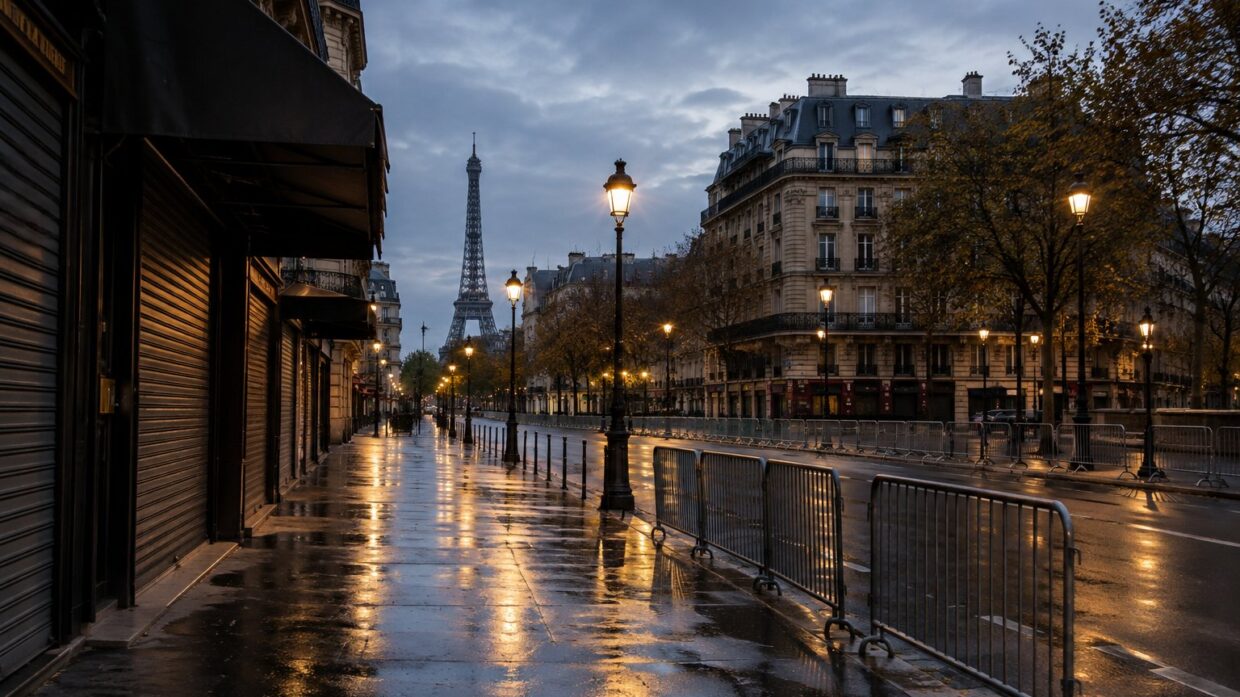
Photo: Well This Is News
France Deploys Emergency Curfews to Suppress Weekend Protests Over Cost-of-Living Crisis
We haven't found a right-leaning take on this story yet.
Breaking stories sometimes publish before every side has covered them. We'd rather show you that than invent a view.
French Unrest Subsides After Authorities Impose Targeted Curfews and Security Measures
Key Takeaways
- The curfews coincided with reduced violence but the reporting does not establish whether protesters would resume demonstrations if security measures were lifted.
- The government has not announced any policy response to the cost-of-living conditions that motivated the original protests, only security enforcement.
- The parliamentary inquiry will examine police tactics but there is no indication it will investigate whether the economic grievances sparking the unrest have entered government policy deliberation.
The Analysis
French authorities imposed targeted curfews and tougher security measures this week, and street violence subsided, but the framing of what happened and why diverges sharply depending on which version of events receives emphasis. The reported facts are straightforward: protests involving more than half a million people occurred over the weekend, some descended into vandalism and looting, and curfews introduced Monday night in Paris and restrictions in other cities corresponded with a decline in unrest. What neither the left nor the right framing fully surfaces is the political calculus around whether security measures ended protests or suppressed them, and whether the underlying grievance that sparked the demonstrations has been addressed.
The Guardian's framing emphasizes that Prime Minister Lecornu "suggests more curfews could be introduced" and that parliament will investigate both the protests and "the law enforcement measures used in response." The language chosen, "law enforcement measures," implies scrutiny of police tactics as potentially problematic. The left-leaning frame foregrounds the cost-of-living crisis as the original motivation for protests and treats security escalation as a government response to citizen grievance. The omission here is whether the curfews addressed the economic conditions that sparked the initial demonstrations or simply dispersed crowds.
Bloomberg's framing presents the security measures as a straightforward causal solution: "French protests largely died down after authorities rolled out tougher security measures." The sequence reported moves from unrest to enforcement to calm, with no editorial language suggesting the calm represents suppression rather than resolution. Bloomberg does not characterize the curfews or restrictions as controversial or subject to parliamentary review. The frame treats security effectiveness as the relevant metric and does not address whether the underlying demands or grievances remain unresolved.
What neither framing adequately captures is the distinction between ending protest activity and addressing protest demands. The reporting establishes that the curfews corresponded with reduced street violence. It does not establish whether those same protests would have resumed if security measures were lifted, or whether the cost-of-living pressures that drew half a million people into the streets have been materially altered. The parliamentary inquiry Lecornu mentions will examine law enforcement response, but the available reporting does not indicate what specific police tactics are under review or whether the parliament will also examine the economic conditions that initiated the unrest.
The reported timeline also leaves a strategic question unaddressed: were the curfews introduced as a temporary measure to prevent escalation, or as a new enforcement baseline? Lecornu's suggestion that "more curfews could be introduced" indicates the measures are not presented as provisional, yet the reporting does not establish whether future curfews depend on renewed protest activity or are now permanent policy. One plausible interpretation is that the government has imported a security strategy without clarifying whether the underlying grievances it protests represented have entered policy deliberation. A fuller picture requires clarity on whether the cost-of-living crisis that mobilized half a million people has prompted any announced government response beyond the security deployment itself.
France's deployment of curfews has established a precedent for treating protest containment as policy success, potentially locking in a security infrastructure that persists regardless of whether the original grievances are addressed. If the parliamentary inquiry focuses exclusively on police tactics rather than the cost-of-living conditions that triggered the demonstrations, the government will have effectively decoupled security outcomes from substantive economic reform. This matters because France has now documented that half a million citizens can be dispersed without their demands entering legislative deliberation, creating institutional permission for future governments to respond to mass mobilization with enforcement rather than policy concessions. The distinction between suppressing protest activity and resolving protest causes has become the baseline governance model.