Photo: Well This Is News
Judge rebukes Trump for cutting hundreds of trees at DC golf course against court order
Judge reverses 'untenable' directive to DOJ in clash over East Potomac Park renovation
Federal judge blocks Trump administration golf course renovation despite ongoing legal dispute
Key Takeaways
- The core dispute hinges on the precise language of the injunction itself: whether it explicitly prohibited tree removal or only renovation work, and the available reporting does not establish what the order actually says.
- The judge's credibility finding that the tree removal is connected to the renovation does not legally resolve whether the trees fall within the formal scope of an injunction, creating uncertainty about what the administration can actually do.
- The judge's quick withdrawal of the attorney-disclosure order suggests that even judges unsure about administration compliance may lack effective enforcement tools short of contempt charges or escalation to higher courts.
The Analysis
The Trump administration is attempting to renovate East Potomac Park's historic public golf course into championship links despite a federal court order blocking work on the property, setting up a clash over whether ongoing tree removal violates that injunction and raising questions about the scope of judicial authority to enforce its own orders.
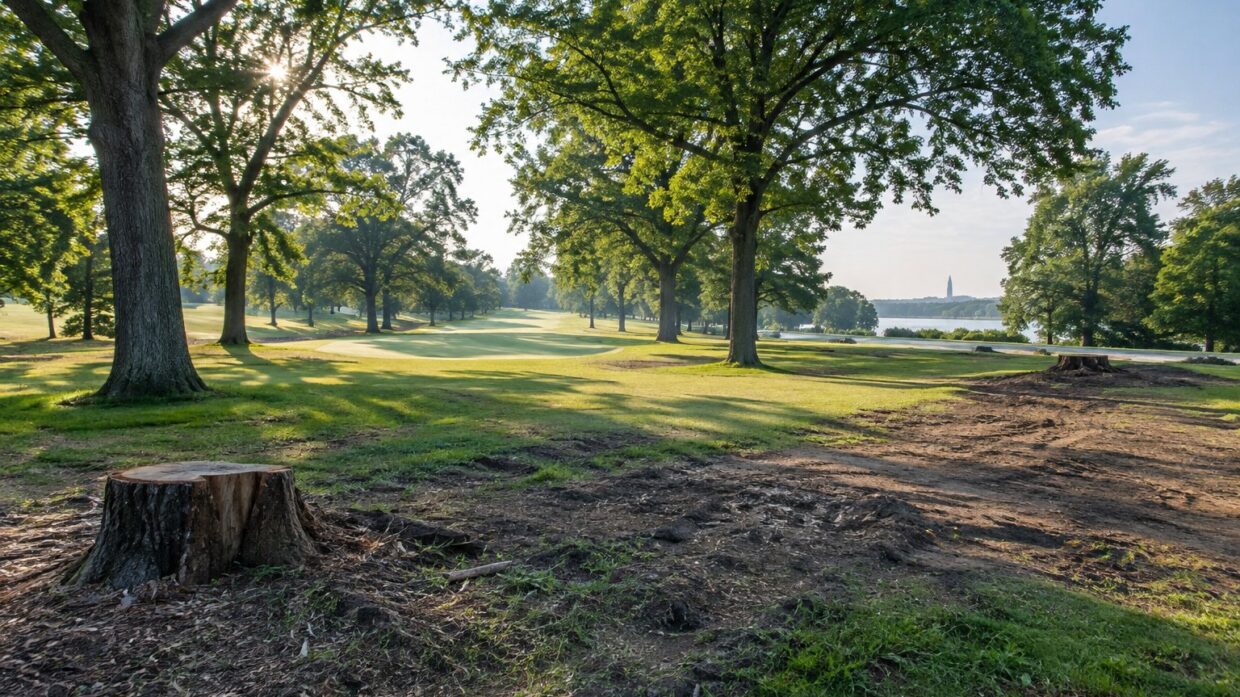
What actually happened: A Trump administration plan to shut down and redesign the East Potomac Park golf course triggered a lawsuit. A federal judge issued an order barring work on the property while the case proceeds. Hundreds of trees were then cut down at the site. When the administration argued this tree removal was unrelated to the renovation project and thus not covered by the order, the judge rejected that claim as not credible. During a Monday hearing, the judge also issued an order requiring the Department of Justice to publicly disclose which career attorneys agreed with the administration's legal position. Hours later, the judge withdrew that directive, acknowledging it as untenable after the Trump administration objected.
The left frames this as an administration openly defying a court order through a semantic technicality. NPR's language centers on the judge "chastising" the Trump administration for pushing ahead "despite" the order. NBC News emphasizes the judge's finding that the administration's argument about the tree removal being unrelated to the renovation "wasn't credible." This framing treats the tree cutting as evidence of bad faith and positions the judge as the guardian of judicial authority against executive overreach. What this frame leaves out is the specific legal distinction between the injunction's terms and subsequent actions, or how similar disputes over the scope of preliminary injunctions have been handled in prior administrations.
The right frames this as judicial overreach followed by a judicial retreat. The Washington Examiner's language emphasizes the judge "walking back" an "untenable" order after a Trump administration lawyer objected. The framing centers the judge's reversal as evidence that she issued a directive she could not defend. This narrative positions the administration as defending proper DOJ procedure against judicial micromanagement. What this frame leaves out is why the judge issued the directive in the first place, what specific legal basis she believed she had, or whether her concern about attorney disclosure reflected a pattern of concern in the case.
What neither side fully captures is the underlying procedural question: the scope of what "work" is prohibited by a preliminary injunction blocking "any future work at the property." Injunctions typically require precise language about what is and is not enjoined. If the order specifically prohibited renovation work but did not explicitly prohibit tree removal, the administration's argument has a technical foundation regardless of whether the two are practically connected. The judge's skepticism about the administration's credibility does not necessarily resolve whether the trees fell within the injunction's formal language. The judge's withdrawal of the attorney-disclosure order also does not clarify what leverage remains to enforce compliance if the administration interprets the injunction narrowly.
The real question is whether this dispute reflects a genuine gap in the order's language or reflects the administration testing the boundaries of judicial enforcement. The available reporting does not establish which is the case.
Federal courts lose enforcement power when judges cannot articulate the precise boundaries of their own orders, and this case exposes that vulnerability. If the preliminary injunction blocking "any future work" at East Potomac Park did not explicitly prohibit tree removal, then the administration's technical interpretation may be legally sound regardless of bad faith. The judge's withdrawal of the attorney-disclosure directive after just hours suggests judicial uncertainty about her own authority to compel compliance. Without clear injunction language specifying what constitutes prohibited "work," future administrations and private litigants will exploit similar gaps, forcing judges into the same position of issuing orders they cannot defend in appellate review. This precedent weakens the federal judiciary's ability to prevent irreversible harm to disputed properties while litigation proceeds, fundamentally undermining the preliminary injunction as an enforcement mechanism.