Photo: Well This Is News
Macron Condemns 'Unbridled Violence' as Ministers Face Pressure Over Police Response to France Riots
Nero Fiddled While Rome Burned: Macron Attended Céline Dion Concert as France Descended Into Chaos
Macron Criticizes Violence as France Faces Unrest; 2,400 Arrested Over Days of Protests
Key Takeaways
- The actual trigger that sparked the unrest, the identity of the protesters, and their stated objectives were not documented in any of the three accounts, making it impossible to assess whether the violence was proportionate to the underlying grievance.
- No source established whether Macron's concert was scheduled in advance, whether security officials advised him to attend or cancel, or whether the violence was foreseeable on Friday night when decisions about his attendance were made.
- Both the left emphasis on institutional failure and the right emphasis on presidential optics addressed consequences of the unrest but neither examined the root causes that generated the anger that preceded the arrests and burned buildings.
The Analysis
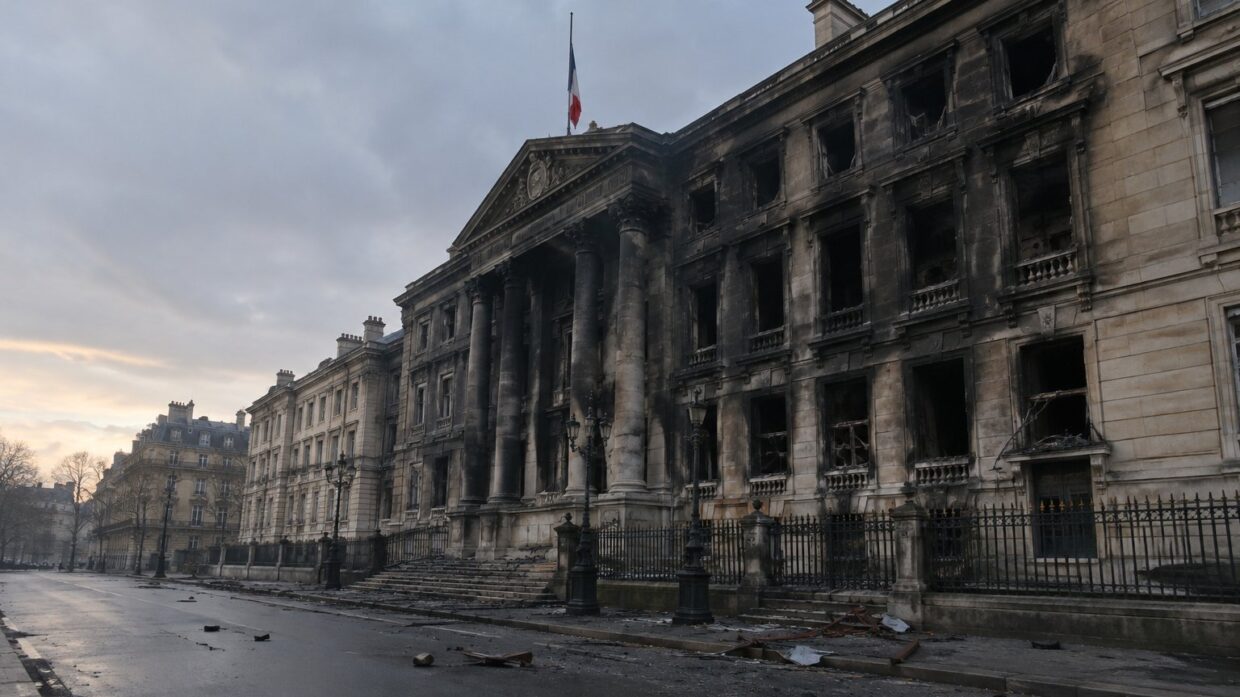
France experienced severe unrest with 2,400 arrests and burned public buildings over multiple days, prompting Emmanuel Macron to criticize the violence and call for order. But the three versions of this story frame entirely different narratives about what happened and what it means, each leaving out essential context the others emphasize.
The documented facts establish: unrest occurred on a significant scale; 2,400 people were arrested; public buildings were damaged; Macron attended a Céline Dion concert on Friday night at the Plenitude Arena in Nanterre while violence was escalating; government officials held crisis talks and acknowledged problems with state response; Macron later issued statements condemning the violence. These events are not in dispute.
The Guardian frames this as institutional and systemic failure. The language chosen emphasizes "unbridled violence," "colossal failure of the state," and pressure on "ministers, officials and police." This framing moves the reader toward questions of governmental competence and accountability. The story centers the crisis talks and the acknowledgment of failure. What this frame leaves unaddressed is what triggered the unrest in the first place, who was protesting, what demands they articulated, and whether those demands had merit or legitimacy. The narrative treats the violence as the primary problem requiring explanation, not as a symptom of something preceding it.
The Daily Wire frames this as a leadership failure of personal judgment and optics. The headline invokes "Nero fiddled while Rome burned," a classical reference to perceived detachment from crisis. The fact that Macron attended a concert on Friday while unrest was occurring becomes the interpretive lens through which all of Friday's events are filtered. This framing emphasizes the appearance of presidential indifference. What this version does not establish is whether the concert was scheduled weeks in advance, whether Macron's attendance materially affected state response capacity, whether security officials advised attendance or recommended cancellation, or whether the violence itself was foreseeable on Friday night when he purchased a ticket. The story trades documented context for symbolic critique.
Bloomberg's account emphasizes that Macron "said the country felt anger and shame" and "called for order to be restored." The language is transactional and minimal. This framing treats the events as a policy problem requiring state action. What neither the left nor right frame adequately addresses is the actual trigger for the unrest. Neither source provided in the summaries explains what the protests were about, who organized them, what their stated objectives were, or whether those grievances have documented foundation. Both the left framing and the right framing accept violence as the primary story without establishing whether underlying conditions justified the anger that preceded it.
The right frame's emphasis on Macron's concert attendance raises a legitimate question about optics and judgment. The left frame's emphasis on institutional failure raises legitimate questions about security response and governmental capacity. What both omit is the specific content of the grievance that triggered 2,400 arrests and burned buildings. Without that context, readers cannot assess whether the violence was disproportionate to the provocation, whether state response was heavy-handed or inadequate, or whether Macron's policy response addresses root causes or merely contains symptoms. The fuller picture requires establishing what France was angry about before evaluating how France responded to that anger.
France's unrest reveals a critical gap in how democracies communicate crisis to their publics. When major civil disorder occurs, competing political narratives can obscure the triggering grievance entirely, leaving citizens unable to distinguish between proportional response and overreach. Macron's government now faces pressure to articulate what specific policies or conditions sparked the violence, because absent that explanation, any security measures enacted appear reactive rather than remedial. Future French policy credibility depends on whether officials address root causes or merely contain symptoms through arrest and deployment. Without transparent acknowledgment of what provoked 2,400 arrests, public trust in institutional legitimacy erodes further, making the next crisis harder to manage.