Photo: Well This Is News
Climate crisis transforms California coast as El Niño intensifies coastal erosion and threatens beachfront communities
We haven't found a right-leaning take on this story yet.
Breaking stories sometimes publish before every side has covered them. We'd rather show you that than invent a view.
Southern California coastal homes face accelerated erosion as king tides and storm surge reshape shoreline
Key Takeaways
- King tides are predictable, recurring natural phenomena with documented cyclical patterns, distinct from long-term sea level rise, yet current erosion coverage often conflates the two without separating their individual contributions to property damage.
- California engineered its coastline extensively starting in the 1950s through seawalls, groins, and beach replenishment projects that altered natural sediment dynamics, meaning current erosion reflects both changed ocean conditions and infrastructure designed for different baseline parameters.
- Available reporting establishes that measurable property damage is occurring now but does not clarify whether this represents acceleration beyond historical patterns or normal cyclical variation becoming more economically visible as property values and building density have increased.
The Analysis
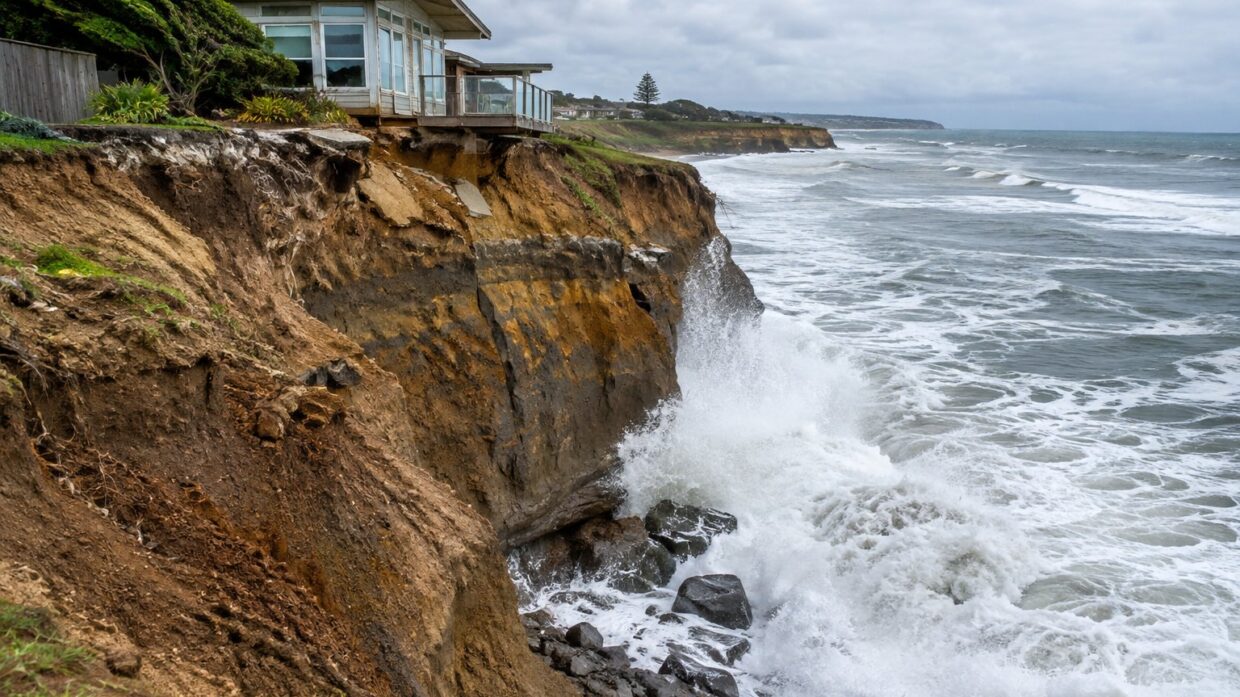
Southern California's coastal erosion is accelerating under documented conditions: record king tides combined with storm surge are transforming beachfront properties in real time, with NBC News reporting homes described as "toast" by observers tracking the damage in San Clemente and surrounding communities. The erosion is occurring during what the National Weather Service characterizes as a developing Super El Niño pattern, a condition that historically amplifies coastal storm systems and water level pressure along the Pacific coast.
The left's framing centers this phenomenon explicitly within climate crisis narrative. The Guardian's coverage uses the specific phrase "reckoning with the reality of climate crisis" and emphasizes that El Niño represents an intensifying pattern that compounds existing coastal vulnerability. This framing connects immediate coastal damage to systemic climate acceleration and positions the erosion as symptomatic of broader warming trends. The omission in this framing is the distinction between long-term sea level rise (driven by thermal expansion and ice sheet dynamics) and short-term coastal flooding events (driven by tidal cycles and storm systems). King tides are predictable, recurring phenomena with documented cyclical patterns. Attributing all current erosion damage to climate change, rather than distinguishing between baseline cyclical coastal dynamics and climate-induced changes, leaves readers unable to discern what portion of current damage results from natural tidal phenomena versus what results from changed baseline conditions.
No right-leaning source material appears in the provided articles. Without a documented right-perspective framing, the opposing interpretation cannot be accurately represented.
What neither framing foregrounds is the history of coastal development choices that preceded this moment. California's coastline has been engineered extensively: seawalls, groins, and beach replenishment projects have altered natural sediment dynamics since the mid-20th century. San Clemente's position as a "capital of American surf culture since the 1950s" reflects deliberate development of beachfront property during a period of stable or declining sea levels. The erosion now occurring reflects not only changed ocean conditions but also the interaction between those conditions and built infrastructure designed for different baseline parameters. Additionally, the reporting does not establish which specific coastal properties face imminent threat versus which face long-term pressures, a distinction that matters for understanding risk timelines and adaptation options.
The available evidence establishes that coastal water levels and storm dynamics are creating measurable property damage now. Whether this represents acceleration beyond historical patterns, or whether it reflects normal cyclical variation occurring in communities where property values have risen and building density has increased (making damage more economically visible), remains incompletely addressed in the provided sources. The most grounded headline is simpler than either framing suggests: California's coast is experiencing documented erosion pressure from combined tidal and storm conditions, occurring during a Super El Niño pattern, affecting communities with significant property exposure. What remains unresolved is whether adaptation responses will focus on protection (building infrastructure), accommodation (property buyouts and managed retreat), or some combination reflecting available local resources and political choices.
California's coastal erosion crisis will force municipal governments to choose between three expensive paths: spending billions on seawalls and beach replenishment that temporarily delays property loss, purchasing homes at escalating prices for managed retreat, or allowing tax bases to literally crumble into the Pacific. San Clemente and neighboring communities cannot avoid this decision. The Super El Niño pattern accelerating current damage will persist for years, creating a compressed timeline before erosion reaches properties currently considered safe. Cities that delay will face either catastrophic tax revenue collapse as waterfront parcels become unmarketable or debt obligations from emergency buyout programs that dwarf typical municipal budgets. The state will eventually absorb costs it cannot contain locally, setting precedent for how California responds to climate-driven infrastructure failure across all coastal counties simultaneously.