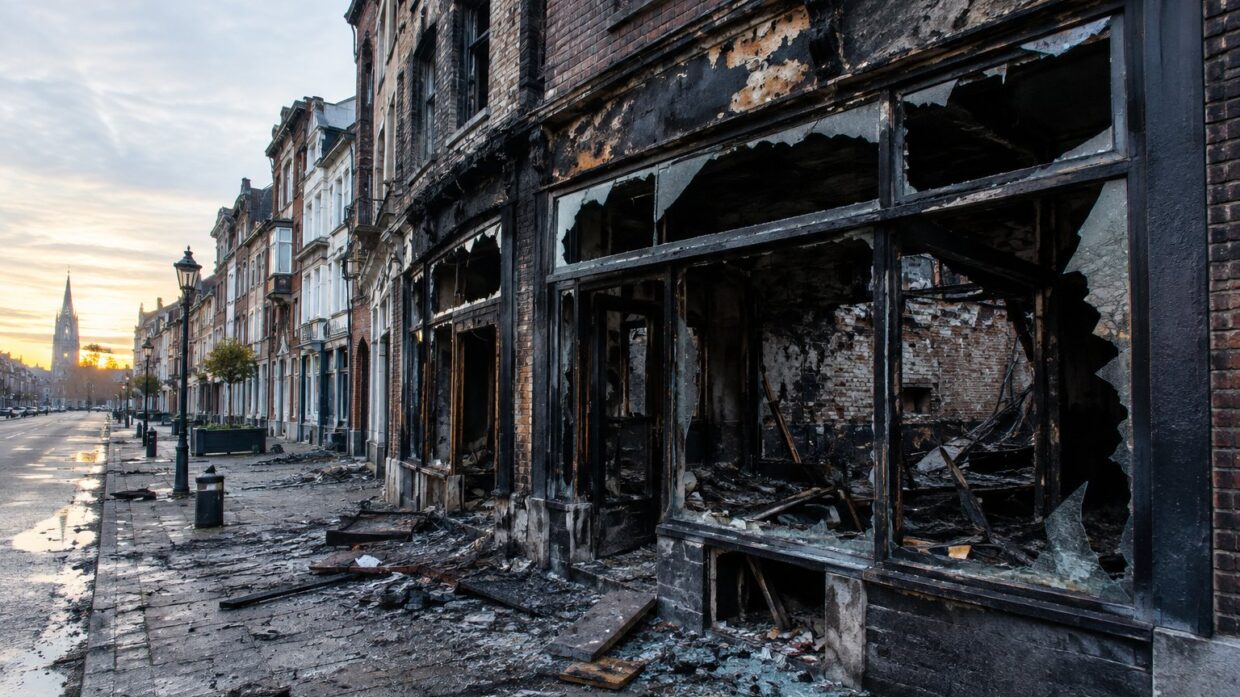
Photo: Well This Is News
We haven't found a left-leaning take on this story yet.
Breaking stories sometimes publish before every side has covered them. We'd rather show you that than invent a view.
France on Fire: Macron Government Blames Far-Left for Fueling Nationwide Riots, Looting, and Arson
We haven't found a neutral take on this story yet.
Breaking stories sometimes publish before every side has covered them. We'd rather show you that than invent a view.
The Analysis
France experienced substantial civil unrest on Saturday, with government authorities recording over 1,200 arrests and documenting incidents of looting in major cities and arson attacks on government buildings. The Breitbart reporting frames these events as riots initiated by far-left actors who exploited initial protests against the cost of living and educational funding. What the available reporting does not establish is the evidentiary basis for the government's attribution to far-left coordination, the specific organizational structures involved, or what proportion of the estimated thousands of participants were affiliated with any particular political faction.
The French government's decision to publicly identify far-left actors as the primary drivers of the escalation serves a framing function that shifts focus from the underlying grievances that prompted the initial protests. By naming "far-left" as the causal agent, the Macron administration emphasizes external agitation rather than policy discontent. The Breitbart coverage amplifies this frame by leading with government attribution and using language like "fuelling" and "devolved into riots" that suggests a distinction between legitimate protest and illegitimate violence orchestrated by ideological extremists. The reporting does not foreground the specific demands that drew protesters into the streets initially, nor does it establish a timeline of when or how the protests escalated, or provide direct evidence of far-left organization versus opportunistic looting.
What the available reporting does not establish is whether the far-left attribution reflects documented investigation into arrested individuals' affiliations and statements, or whether it represents initial government positioning. The naming of "unprecedented" levels of looting in Breitbart's second headline carries descriptive weight, but the reporting does not clarify whether this unprecedented scale is being compared to France's recent history, Europe's recent experience, or another baseline. The framing leaves out what specific policy changes or government responses the initial protesters were demanding, whether there is a history of similar cost-of-living protests in France in preceding months, or what role economic conditions played in motivating turnout.
The underlying question this story raises is the relationship between economic grievance and political unrest in France. Saturday's events began as protests tied to identifiable policy disputes rather than as riots. The escalation from protest to looting to arson is a factual sequence, but causation between far-left agitation and that escalation remains asserted rather than documented in the available reporting. The public record does not yet disclose the breakdown of arrested individuals by age, employment status, prior activism, stated motivation, or organizational affiliation. A fuller picture would require establishing whether those arrested for looting and arson were the same individuals who participated in the initial cost-of-living protests, or whether distinct populations mobilized at different phases of the day.
What neither the government's attribution nor the Breitbart framing fully captures is the degree to which economic conditions in France may have created conditions where large numbers of people were willing to take to the street in the first place, and how pre-existing grievances may have shaped receptiveness to escalation once it occurred. The decision to frame Saturday's events primarily through the lens of ideological agitation leaves out context about employment, inflation, and policy changes that preceded the protests themselves.
France's government attribution of riots to far-left coordination, amplified uncritically by media outlets, obscures whether economic desperation or organized extremism actually drove Saturday's escalation from protest to looting and arson. Without documented evidence linking arrested individuals to specific organizations or ideological networks, the far-left frame functions as political messaging that redirects accountability away from Macron administration policies on cost of living and education spending that prompted initial turnout. This framing choice will likely shape how French policymakers respond to future unrest, determining whether they address underlying material grievances or focus law enforcement resources on suppressing protest activity itself, fundamentally altering the government's relationship with citizens experiencing economic instability.