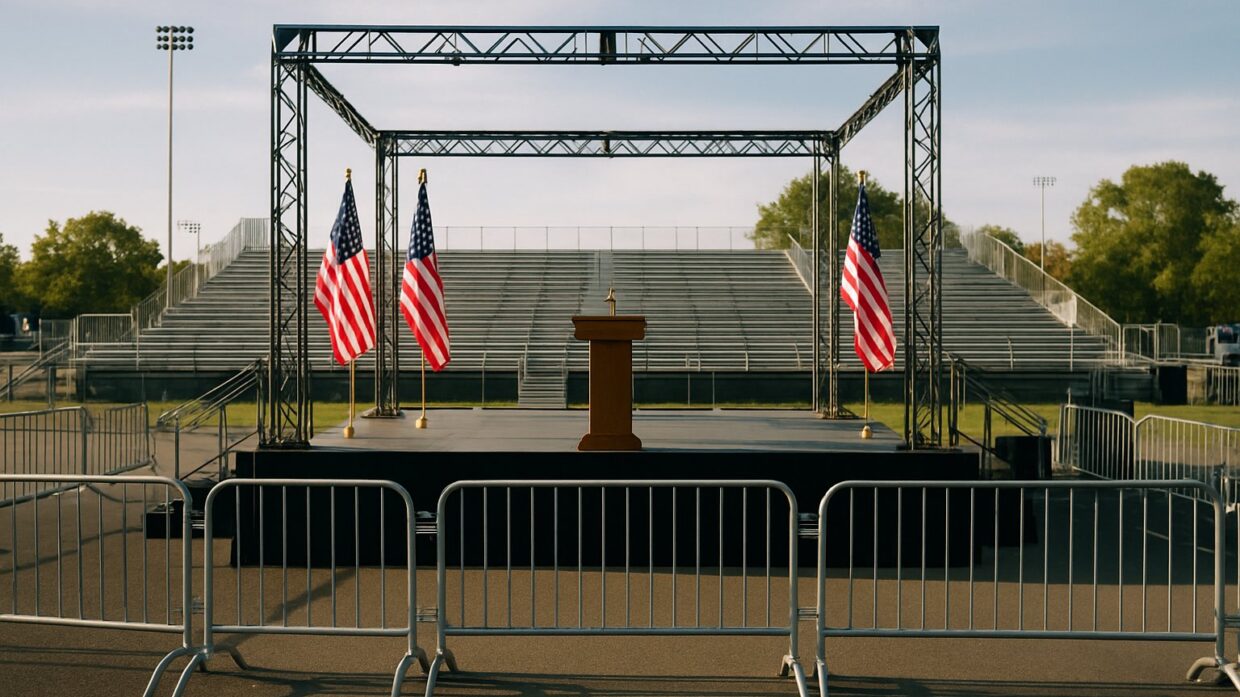
Photo: Well This Is News
We haven't found a left-leaning take on this story yet.
Breaking stories sometimes publish before every side has covered them. We'd rather show you that than invent a view.
Trump rallies Kentucky Republicans as 2026 midterms near
Trump campaigns in Kentucky as midterm push accelerates ahead of Nov. 3
Key Takeaways
- Trump announced a seven-day, seven-stop campaign tour but no sources report specific attendance figures, the content of his remarks, or measurable outcomes from the Kentucky rally.
- Neither left nor right coverage examined whether Ed Gallrein is genuinely vulnerable in his district or whether Kentucky's political landscape made a presidential rally strategically necessary.
- The reporting does not compare Trump's current midterm rally pace to prior presidential cycles or explain whether party leaders view this level of presidential involvement as helpful or harmful to down-ballot candidates.
The Analysis
Trump held a Kentucky rally on Saturday at 2 p.m. in Highland Heights supporting Republican candidate Ed Gallrein weeks before the November 3 midterm elections. The event is one stop on a planned seven-day, seven-stop campaign tour Trump announced Friday, with scheduled appearances in Michigan on October 25 and other battleground states. The available reporting establishes the rally occurred and names the candidate it was designed to support, but does not provide specific attendance figures, the content of remarks beyond general candidate support, or measurable indicators of the rally's political impact.
The right-leaning coverage, particularly the Washington Examiner, frames this straightforwardly as Trump executing a planned campaign strategy to support vulnerable Republican candidates in competitive races. The framing uses the language of standard electoral mobilization: Trump is "stumping for vulnerable Republican candidates" and moving to "storm the country with rallies." This language reflects the rally as normal presidential campaign activity directed at candidate support. The Examiner's reporting does not address what other political figures are doing simultaneously or whether this represents unusual intensity for a sitting president in midterm season. The omission is not necessarily deliberate; it reflects the perspective's focus on Trump's campaign positioning rather than comparative analysis.
The Hill's reporting provides a crucial contextual layer that reframes the political environment. The headline structure itself signals a different priority: Trump's Kentucky appearance is subordinated to a larger story about "Russia sanctions waiver backlash." This framing embeds the rally within a separate, concurrent controversy involving Trump's policy decisions, suggesting that his campaign activity occurs against a backdrop of internal criticism and policy conflict. The Hill does not claim the rally itself was affected by this backlash; instead, the placement implies readers should understand Trump's political capital and messaging environment differently than the rally-focused coverage suggests. What this framing does not establish is whether the "backlash" affected turnout, candidate willingness to appear with Trump, or public reception at the rally itself.
Neither source engages with the specific political geography of Kentucky or the competitive positioning of Ed Gallrein in his district. The public record does not appear to disclose whether Gallrein is a particularly vulnerable Republican requiring presidential support, whether Kentucky's political lean has shifted in ways that make presidential rallies strategically necessary, or how this rally's candidate compares to other beneficiaries of Trump's campaign schedule in terms of electoral margin or fundraising. The available reporting treats the rally as an event to cover rather than as evidence of strategic targeting based on district-level data.
What both framings leave unexamined is whether a sitting president's campaign activity at this intensity and frequency in the midterm season reflects standard practice or has shifted. Neither source compares Trump's rally schedule to prior midterm cycles or addresses whether party leaders view this level of presidential involvement as helpful or complicating for down-ballot candidates. The reporting establishes that Trump said in early September he would campaign heavily in the final weeks before November 3; it does not establish whether that pace has matched his initial framing or whether candidates in targeted races view the rallies as net positive.
The underlying story appears to be about Trump's campaign infrastructure and political capital allocation. What remains unclear is whether the level of presidential campaign activity reflects strategic necessity in competitive states or shifts the midterm focus away from local and state-level messaging that may be more relevant to specific races.
Trump's seven-stop rally tour signals a fundamental shift in how presidential power operates during midterms. When a sitting president commits to this campaign intensity weeks before voting, he reallocates his political capital and media attention away from governing functions toward direct voter mobilization in specific districts. This changes what messages reach contested races. A candidate like Ed Gallrein gains Trump's endorsement platform but may become tethered to Trump's policy controversies, including the Russia sanctions backlash occurring simultaneously. The strategic consequence cuts both directions: candidates in marginal districts must decide whether Trump's rallies expand their voter base or activate opposition turnout. Republican leaders' willingness to invite Trump into specific races versus their silence about others reveals which candidates they consider salvageable through presidential intervention and which they have already written off. This resource allocation becomes the real story of who lives and dies in Republican politics.