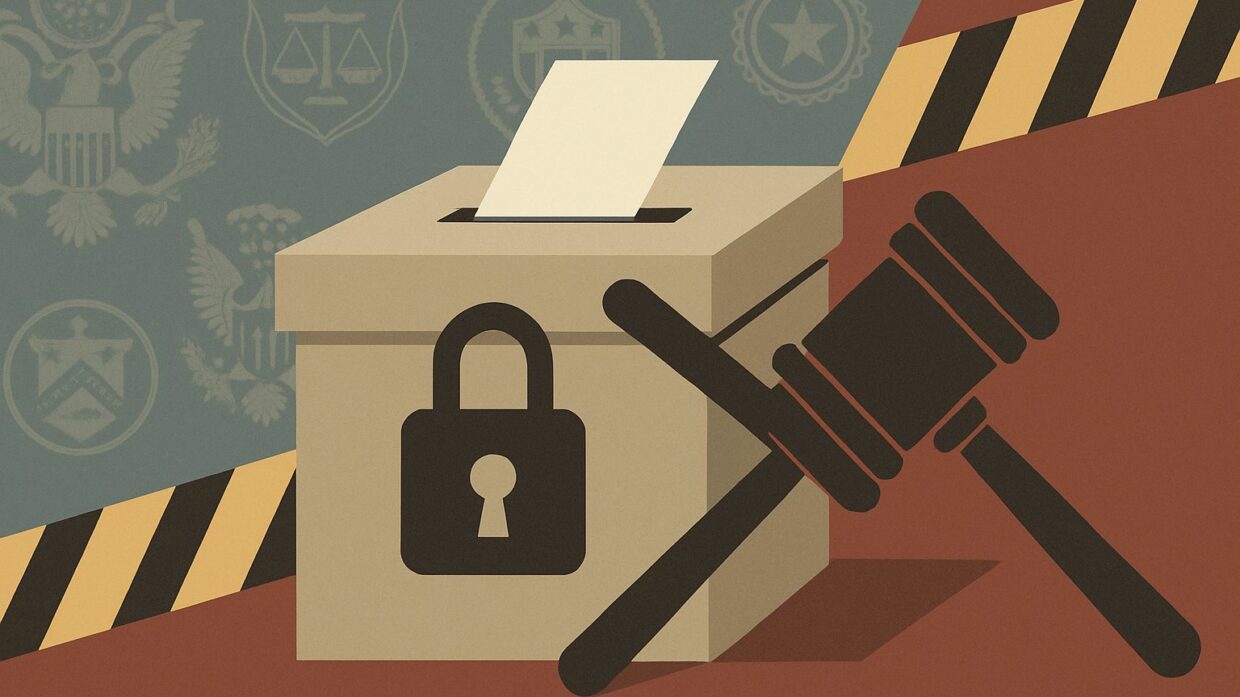
Photo: Well This Is News
Trump Threatens California Officials With Imprisonment Over Mail Ballot Stance
We haven't found a right-leaning take on this story yet.
Breaking stories sometimes publish before every side has covered them. We'd rather show you that than invent a view.
DOJ Warns California Officials of Prosecution Risk Over Noncitizen Ballot Processing
Key Takeaways
- The DOJ warning identifies no specific statute, prior prosecutions, or documented pattern of noncitizen voting in California, making its legal foundation unclear.
- Election officials perform citizenship verification during voter registration, not at the ballot counting stage, but the DOJ warning does not explain what mechanism officials should use to identify suspected noncitizens during tabulation.
- The gap between when citizenship is verified (registration) and when the DOJ's warning applies (ballot processing) suggests the warning may rest on a procedural expectation that does not align with how election administration actually works.
The Analysis
The Trump administration's Department of Justice has told California election officials they face potential criminal prosecution if they process ballots from individuals suspected of being noncitizens, but what the warning omits about existing law and enforcement practice fundamentally shapes how to read this threat.
The documented facts are these: the DOJ issued a written warning to California officials stating that processing ballots from suspected noncitizens could expose them to prosecution. The warning arrived before the midterm election. PBS reported that this represented an escalation in the administration's conflict with California over voting procedures. HuffPost cited research findings that noncitizens actually casting ballots is exceedingly rare. Neither source identified the specific statute under which prosecution would occur or cited a prior case in which election officials were prosecuted under that statute for processing disputed ballots.
The left frame, represented by HuffPost's language of Trump "threatening" officials with "imprisonment," emphasizes the coercive intent and the absence of widespread noncitizen voting. This framing treats the DOJ warning as a tool of political pressure rather than law enforcement. The language choice matters: "threatens" presumes intimidation as the primary motive. What this frame leaves out is the specific legal basis for the DOJ's warning and whether similar warnings have been issued by previous administrations or are standard practice when the government identifies a category of potentially illegal ballots.
The right perspective would argue that the DOJ is performing its statutory obligation to enforce election law and that California's reluctance to verify voter citizenship before tabulation creates an enforcement problem. That frame emphasizes the government's duty to investigate violations rather than the rarity of such violations occurring. What it would likely leave out is the operational burden on local officials of verifying citizenship status and whether such verification mechanisms are effective or reliable.
What neither frame fully captures is the gap between the DOJ's legal authority and the practical circumstances. Election officials do not typically verify citizenship status before counting ballots; that verification occurs during voter registration. The DOJ warning appears to treat ballot processing as the appropriate point to intercede, but the verified public record does not establish whether citizenship verification is even possible at the ballot counting stage or what mechanism California officials would use to identify suspected noncitizens. The warning also does not specify which officials face prosecution risk or under what statute. That omission matters because it makes the warning's legal weight difficult to assess.
The underlying question is whether this represents enforcement of existing law or an attempt to create prosecutorial leverage over officials performing routine duties. The available reporting does not establish whether the DOJ has documented a specific pattern of noncitizen voting in California, what the magnitude of that pattern might be, or whether the citizenship verification mechanisms the DOJ might expect already exist in California law. A fuller picture requires knowing whether California has existing procedures for handling ballots cast by individuals discovered to be noncitizens after the fact, and whether those procedures comply with federal law.
California's election infrastructure now operates under prosecutorial threat for performing duties that federal law does not clearly mandate officials perform at the ballot-counting stage. If the DOJ follows through with charges against local election workers, it establishes that state officials can face criminal liability for processing ballots that survive voter registration scrutiny, fundamentally shifting how counties manage ballot counting and dispute resolution. This creates a precedent where federal prosecutors can criminalize routine election administration rather than address noncitizen voting at registration, where citizenship verification actually occurs. The practical result is that election officials nationwide will face pressure to implement citizenship verification systems that may not exist in their states' legal frameworks, or they must defend prosecution decisions in court at enormous expense.