Photo: Well This Is News
Tech sell-off deepens as AI debt fears collide with persistent inflation and rate hike prospects
We haven't found a right-leaning take on this story yet.
Breaking stories sometimes publish before every side has covered them. We'd rather show you that than invent a view.
Producer prices surge 6.3% annually as energy, tariffs, and AI demand sustain inflation pressure
Key Takeaways
- The US economy appears to have shifted from demand-side inflation driven by too much money chasing too few goods to supply-side inflation driven by tariffs, energy costs, and AI infrastructure bottlenecks competing for the same materials and supply chains.
- The standard economic prediction that rate hikes destroy demand and lower prices has failed at the producer level, suggesting that neither tech companies nor the broader economy are responding to higher borrowing costs the way historical models expect.
- A rate-cutting cycle could help indebted tech companies and struggling borrowers but risks restarting price pressures if the actual inflation drivers are tariffs, energy markets, and supply constraints rather than excessive monetary demand.
The Analysis
The US producer price index for September rose 1.3% month-over-month and 6.3% year-over-year, marking the largest annual gain since March 2022, yet the public conversation about what this means has split into two separate stories that talk past each other entirely. One focuses on why inflation persists despite Federal Reserve rate hikes. The other focuses on why tech investors are panicking. Neither fully captures what the data actually establishes about the structure of current price pressures.
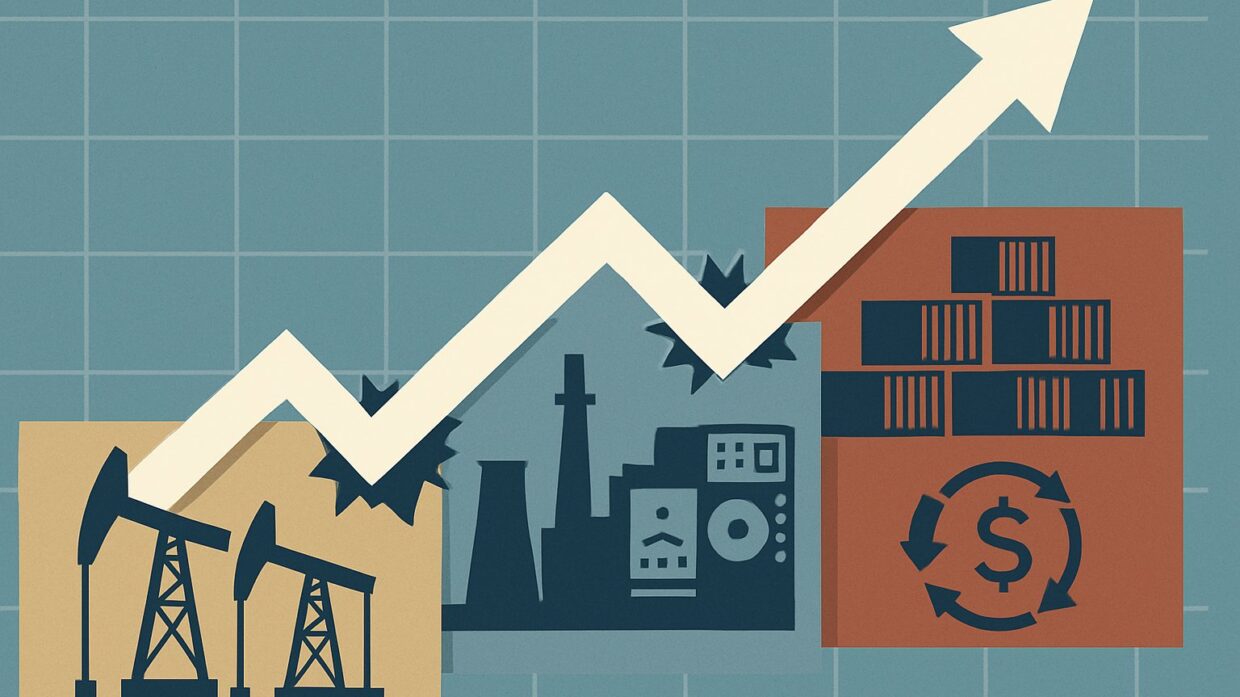
The documented facts establish three distinct drivers. Energy prices surged 10.8% in September alone, according to Bureau of Labor Statistics data. Tariff costs are embedded in producer prices and flowing downstream. AI infrastructure demand is competing for the same materials and supply chain capacity that consumer goods require, creating bottlenecks that show up as higher input costs for manufacturers. These three pressures operate independently but overlap in their inflationary effects.
The left-leaning framing, represented by The Guardian's coverage, emphasizes the tech sell-off and AI debt concerns. The language choices matter: "AI-linked shares" tumbling, Samsung and SoftBank "plunging," references to "AI debt." This framing treats tech collapse as the primary story and inflation as its trigger. What this narrative leaves out is whether the AI debt panic is driven by asset-level reality or by investors repricing risk based on backward-looking inflation data. The reporting does not establish whether AI companies are actually overleveraged or whether markets are simply repricing expected returns downward in response to higher-for-longer interest rate expectations. The emphasis on tech contagion risk shifts attention away from the question of whether inflation itself has actually moderated or merely grown at a slightly slower pace than its pandemic peak.
The center-leaning economic coverage from Bloomberg presents inflation as a structural challenge with three specific, named causes: tariffs, energy costs, and AI demand. The language is more measured, "affordability squeeze" rather than panic framing. This reporting establishes that cooling from pandemic-era highs does not mean prices are falling or even stabilizing, only that the rate of increase has slowed. What this framing does not foreground is whether these three shocks are temporary or systemic. The producer price surge of 6.3% annually still exceeds the Federal Reserve's 2% inflation target by a factor of three. The reporting acknowledges the "credibility risks" of missing the target but does not establish what policy options remain available if these pressures prove persistent.
What neither side fully addresses is the prior policy context. The Federal Reserve raised rates aggressively from 2022 onward, yet producer prices remain elevated and broad-based. The standard economic model predicts that demand destruction from rate hikes should suppress prices. The evidence suggests that is not occurring at the producer level, which may indicate that supply-side constraints from tariffs, energy markets, and AI infrastructure capacity are overwhelming demand-side effects. This raises an unresolved question: whether the Fed has room to cut rates without re-accelerating inflation, or whether attempting to do so will restart price pressures that have never truly cooled.
The real headline is not whether tech is crashing or inflation is sticky, but that both problems may be signaling the same underlying constraint: that the US economy has shifted from demand-side inflation to supply-side inflation, and the policy tools designed to manage one may worsen the other.
Producer price inflation remaining three times the Federal Reserve's target despite aggressive rate hikes signals a fundamental shift in what is actually driving prices upward. When demand destruction fails to suppress costs, supply-side constraints become the binding constraint on the economy. Tariffs embedded in production chains, energy market volatility, and AI infrastructure competing for semiconductor and power capacity are not temporary shocks that recede with higher borrowing costs, they are structural barriers that rate policy cannot directly address. This means the Fed faces a genuine policy bind: cutting rates risks reigniting price pressures that supply constraints will amplify, while maintaining high rates fails to achieve the inflation target. That unresolved tension will dictate whether the next phase of economic policy relies on trade policy adjustments, energy market intervention, or industrial policy to redistribute capacity rather than on interest rates alone.