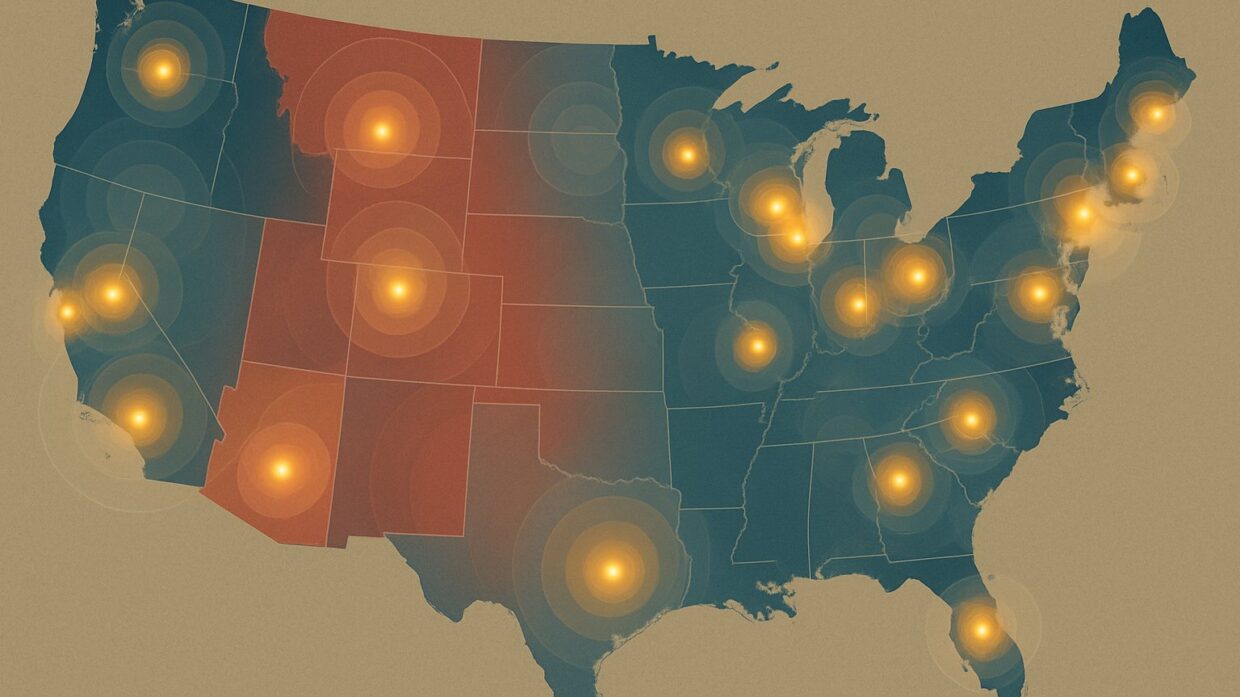
Photo: Well This Is News
Voters Near Data Centers Are Ditching the GOP in Droves
Data Center Proximity Correlates With Democratic Voting Shift, Survey Shows
Read More... from Data Center Proximity Correlates With Democratic Voting Shift, Survey Shows
Data Center Proximity Correlates With Democratic Voting Shift, Survey Shows
Key Takeaways
- The survey reports a correlation between living near a data center and Democratic voting preference but never reveals the actual new support level, margin of error, or sample size needed to judge if the change is statistically real.
- Data center proximity may correlate with demographic factors like age or education that independently drive Democratic support, but the reporting never tests whether the infrastructure itself explains the voting shift.
- The causal direction remains completely unclear: the survey cannot show whether data centers attract Democratic voters, whether Democratic areas attract data center investment, or whether environmental or economic concerns drive people away from these sites.
The Analysis
A YouGov/Economist survey claims Americans living within a mile of data centers have shifted toward Democratic voting, with support rising from 54 percent in May to an unspecified higher level. The framing immediately invokes a causal story, but what actually happened is much narrower: a correlation in one survey between geographic proximity to data centers and stated voting intention at a specific moment. Neither the stated increase nor its causes are fully established.
The Mother Jones headline frames this as Republicans "ditching" voters, which reverses the directional claim. The actual reported movement is voters changing their stated preference, not parties abandoning constituencies. The article emphasizes that "since May alone" support rose, suggesting momentum and urgency. This language choice implies the trend is accelerating and will continue, though a single survey snapshot cannot establish trajectory. The framing assumes data centers are a proxy for voter approval of Democratic infrastructure policy, but the survey does not ask voters why they live near data centers or why their voting preference changed. It reports correlation only.
The Daily Wire piece takes a different angle entirely, treating data centers as an unresolved policy problem that politicians have "stopped lecturing us about" in favor of winning elections. The piece does not engage with the voting shift data at all. Instead, it frames data centers as a crisis requiring "visionary solutions," implying both parties have abandoned serious governance on the issue. This move shifts the conversation from electoral behavior to policy neglect. The language choice, "stopped lecturing us about," suggests politicians are being cynical or evasive. But the reporting does not establish what either party's actual position is or whether they have shifted it.
What neither framing addresses is the survey's own limitations. A single snapshot from one polling outfit does not establish whether this represents a meaningful shift or normal survey variance. The Mother Jones article reports the share rose from 54 percent but does not report the new figure, the margin of error, or the sample size of voters living near data centers. Without those specifics, readers cannot evaluate whether the change is statistically significant. The article also does not report whether data center proximity correlates with other demographic factors,education level, income, or existing partisan lean,that might explain the shift independently. If voters near data centers are already younger and more educated, they may be shifting Democratic for reasons unrelated to proximity to infrastructure.
The available reporting also does not establish causation or the direction of selection bias. Do data centers attract Democratic voters, or do Democratic-leaning areas attract data center investment? Do people move toward data centers because of economic opportunity, or do they move away from them for environmental reasons, changing the composition of the remaining population? The survey appears to measure association at one moment, not to sort through these possibilities.
What the record actually shows is that a survey found a correlation between two variables at a single point in time. What that correlation means remains undisclosed. The left frame uses it to claim momentum and Democratic advantage. The right frame ignores the voting data entirely and treats data centers as a bipartisan policy failure. Neither engages with the actual scope of the evidence or the specific questions voters were asked.
A single survey snapshot claiming correlation between data center proximity and Democratic voting gains has activated partisan framing on both sides without establishing what voters actually think or why. Mother Jones treats the finding as momentum evidence without disclosing the actual vote share, margin of error, or sample size for data center residents. The Daily Wire abandons the voting claim entirely to argue data centers represent political neglect. Neither addresses whether data center proximity correlates with age, education, or income that might independently drive partisan shift, or whether the causation runs the opposite direction: Democratic areas attracting data center investment rather than proximity driving votes. Until reporters establish whether this represents statistical significance, demographic overlap, or simple selection bias, the correlation remains a vessel for whatever narrative each outlet needs.