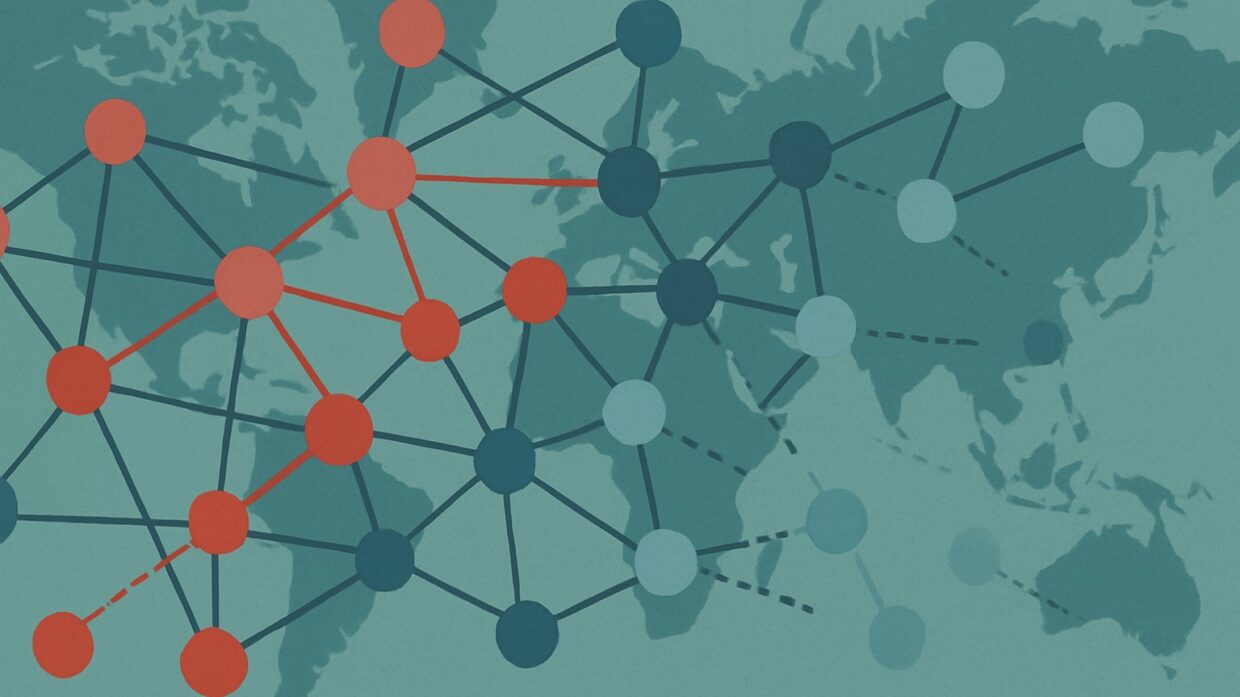
Photo: Well This Is News
OpenAI exposes Russian operatives using ChatGPT for covert influence campaigns
OpenAI cracks down on false-front propaganda networks in Russia and Iran
OpenAI disrupts Russian and Iranian influence operations using ChatGPT
Key Takeaways
- OpenAI has not disclosed how long the Russian and Iranian accounts operated before being detected or whether the company discovered them independently or through government intelligence.
- Large language models enable influence operators to generate multilingual propaganda without employing native speakers in each target language, making state-sponsored campaigns dramatically cheaper and faster to execute.
- OpenAI reports when it removes violative networks but does not publish detection latency data, leaving unclear whether the company's systems can identify coordinated inauthentic behavior in real time or only during retrospective analysis.
The Analysis
OpenAI disclosed Thursday that it had disabled accounts tied to influence operations in Russia and Iran, marking the largest disruption of a single state-sponsored network since the company began publishing enforcement reports. The distinction matters because what OpenAI actually found, what each side is emphasizing, and what the underlying technical capability reveals are three different stories.
The verified facts: OpenAI identified accounts it attributed to Russian operatives using ChatGPT to draft communications with supervisors, generate commentary on current events, and produce multilingual content designed to shape online discourse. A separate Iranian network operated similar accounts, also generating content for propaganda purposes. OpenAI removed both networks and published technical details in its Thursday safety report, including network topology and content samples. The company characterized the Russian operation as achieving its largest reach to date among disrupted influence schemes.
The left framing, represented in NPR's coverage, emphasizes the word "caught" and the revelatory dimension: these Russian operatives were exposed using ChatGPT in ways previously unattributed to Russia. The narrative foregrounds what OpenAI discovered rather than what OpenAI did about it. This framing leaves out the fact that OpenAI actively disrupted these networks when identified, not passively reported them after the fact. It also leaves out the timeline: how long these accounts operated before detection, what damage assessment OpenAI conducted, and whether the disruption was urgent or routine enforcement.
The right framing, in the Washington Examiner, emphasizes enforcement and the architecture of deception: "false front" entities, "covert operations," "crackdown." The language highlights OpenAI's proactive role as a platform guardian identifying and removing threat actors. This framing leaves out scale context: how many accounts, what volume of content, what geographic distribution of targets. It also does not establish whether OpenAI detected these networks independently or through government intelligence tips, which would matter to understanding the company's actual forensic capability versus its reporting relationship with U.S. authorities.
What neither side fully addresses is the prior question: how long does ChatGPT's content typically serve before either human moderators or the platform's detection systems identify it as part of a coordinated inauthentic network? OpenAI reports disruption, not detection latency. The company also does not disclose in public reports whether it shares real-time threat intelligence with U.S. government agencies or whether it learns about these networks only from its own backlog analysis. This matters because it establishes whether OpenAI is functioning as a passive platform that removes violative content after the fact, or as an active intelligence partner with early warning capabilities.
The underlying technical fact neither side emphasizes: large language models make influence operations cheaper and faster to scale. Russian and Iranian operatives did not need to employ dozens of native-language propagandists to generate content in multiple languages across multiple platforms. They needed API access and a prompt. That efficiency gain is what makes this story significant beyond today's disruption. The question the coverage does not yet address is whether OpenAI's detection methods scale as ChatGPT's user base grows, or whether future operations will simply operate at volume until human investigation catches them.
OpenAI's disclosure reveals that state actors have weaponized AI to mass-produce propaganda at fraction of previous cost, but the real institutional question remains unanswered: does the company detect coordinated inauthentic networks in real time or only after retrospective analysis of its logs? If detection comes after the fact, then OpenAI's enforcement capacity becomes the limiting factor on influence operation scale rather than operator capability. This inverts the conventional threat calculus. For years, platform moderation relied on human volume to catch coordinated campaigns. Now that LLMs eliminate the human bottleneck for adversaries, platforms must prove they can detect synthesis-at-scale faster than bad actors can deploy it, or content laundering through API accounts becomes efficient espionage infrastructure. OpenAI's silence on detection latency means policymakers cannot yet assess whether this disruption represents genuine containment or simply the gap between deployment and discovery widening.