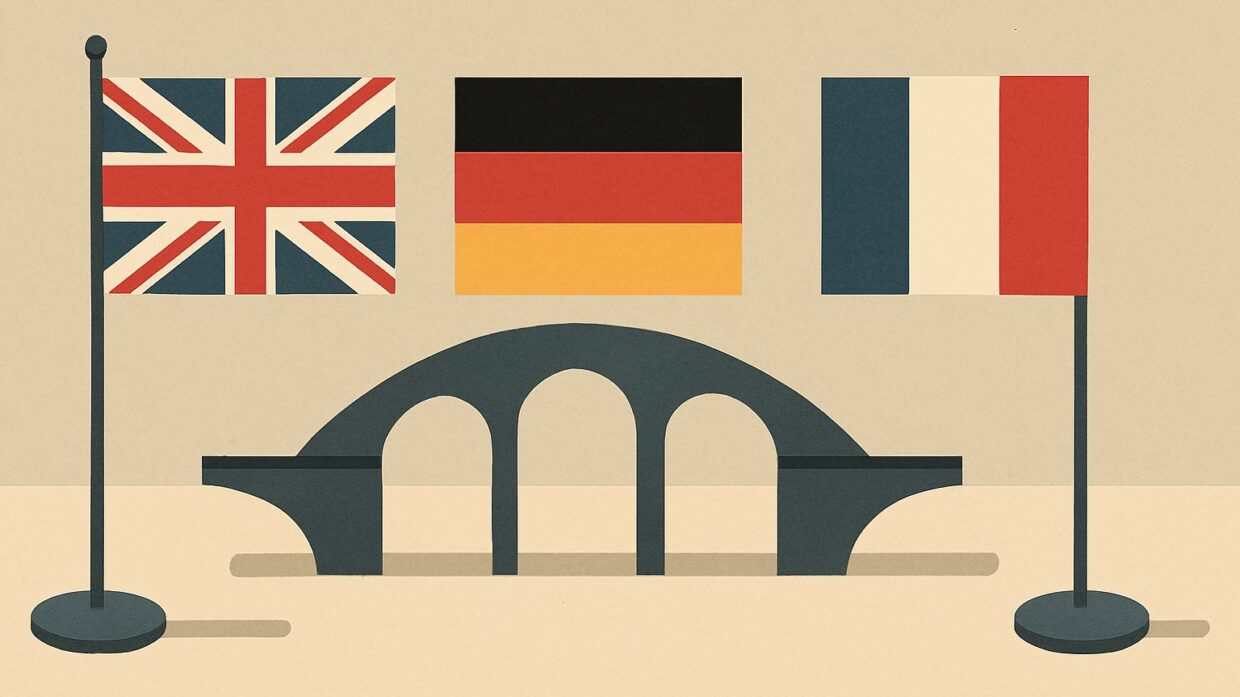
Photo: Well This Is News
French minister urges UK to rejoin EU as Burnham signals openness to closer bloc ties
Burnham charts independent defense path with Germany while keeping EU options open
Burnham explores closer UK-EU ties while opening defense partnerships with Germany
Key Takeaways
- Burnham used exploratory language like 'see if we can' and 'exploring' when discussing EU ties, while Lescure responded with declarative language inviting the UK to 'come all the way back,' creating a mismatch in commitment levels.
- The UK simultaneously signaled movement toward the EU and expanded its independent defense leadership by inviting Germany to GCAP, but neither side has explained how these two moves fit together strategically.
- A UK-EU summit scheduled for next month suggests Burnham's Berlin statements may be pre-negotiation positioning rather than announcement of settled policy, and his actual intentions remain unclear.
The Analysis
Prime Minister Andy Burnham's Berlin visit and subsequent meetings with French officials have produced two distinct signals from the same event, and neither side of the political debate has acknowledged the tension between them. Burnham told German leaders the UK is committed to "see if we can bring the UK closer to Europe" and signaled openness to a UK-EU summit next month. Simultaneously, he told defense officials the UK would consider admitting Germany to the GCAP fighter jet program, a platform the UK controls independently of EU structures. What matters is understanding what Burnham actually proposed versus what each side heard.
The documented record shows Burnham's exact language was exploratory, not committal. He spoke of "seeing if" the UK could move closer to Europe and referenced "exploring" whether that might include examining a new referendum on EU membership. The French finance minister Roland Lescure responded with language far more declarative: he invited the UK to "come all the way back" to the EU, framing bloc membership not as one option among others but as the logical destination. Lescure told the BBC that being in the EU "enables members to better address the challenges facing the world," which is a causal claim about institutional necessity, not a description of options.
The left framing, represented most clearly in The Guardian's coverage, seized on Burnham's willingness to explore a referendum as evidence that Brexit reversal is now on the table. That framing emphasizes Lescure's invitation and interprets Burnham's exploratory language as tacit agreement that rejoining is desirable. What it does not foreground is that Burnham used hedged language and that he paired his EU overture with a simultaneous expansion of UK-independent defense partnerships. The left frame treats the GCAP-Germany announcement as secondary theater.
The right framing, evident in Bloomberg's coverage, emphasizes Burnham's willingness to lead on defense cooperation outside EU structures. It notes that the UK retains defense leadership capacity and that Germany joining GCAP demonstrates the UK remains a gravitational center for European security even without EU membership. What this framing underplays is that Burnham explicitly signaled movement toward the EU on the same visit, and the timing suggests these are not separate conversations but related positioning.
What neither framing fully captures is that Burnham appears to be negotiating optionality rather than committing to a direction. His language suggests the UK is signaling openness to EU reintegration on terms that preserve British institutional independence, particularly in defense and security policy. Lescure's response treats that signal as a concession or an opening move in a reversal negotiation. The underlying question is whether these conversations represent genuine movement toward EU rejoining or whether Burnham is using the prospect of closer ties to extract concessions on security cooperation and trade without binding the UK to Brussels' institutional requirements.
The key fact neither side emphasizes is that a UK-EU summit is scheduled for next month. That summit was presumably planned before this visit, which means Burnham's Berlin statements may be positioning for those negotiations rather than announcing settled policy. The public record does not establish what the UK government actually intends to propose at that summit or whether exploring closer ties means exploring membership, trade arrangements, or a looser security partnership.
Burnham's ambiguous diplomatic language has created two incompatible interpretations of British foreign policy without clarifying which direction the government intends to pursue. France believes the UK is signaling movement toward full EU rejoining, while the UK simultaneously positioned itself as an independent security actor by offering Germany access to its GCAP fighter jet program. The next month's UK-EU summit will reveal whether Burnham was genuinely exploring reintegration or simply leveraging the prospect to negotiate better terms on defense and trade while maintaining British institutional autonomy. This ambiguity leaves British allies uncertain about the UK's actual commitments and weakens Britain's negotiating position by allowing others to project their preferences onto deliberately opaque language.