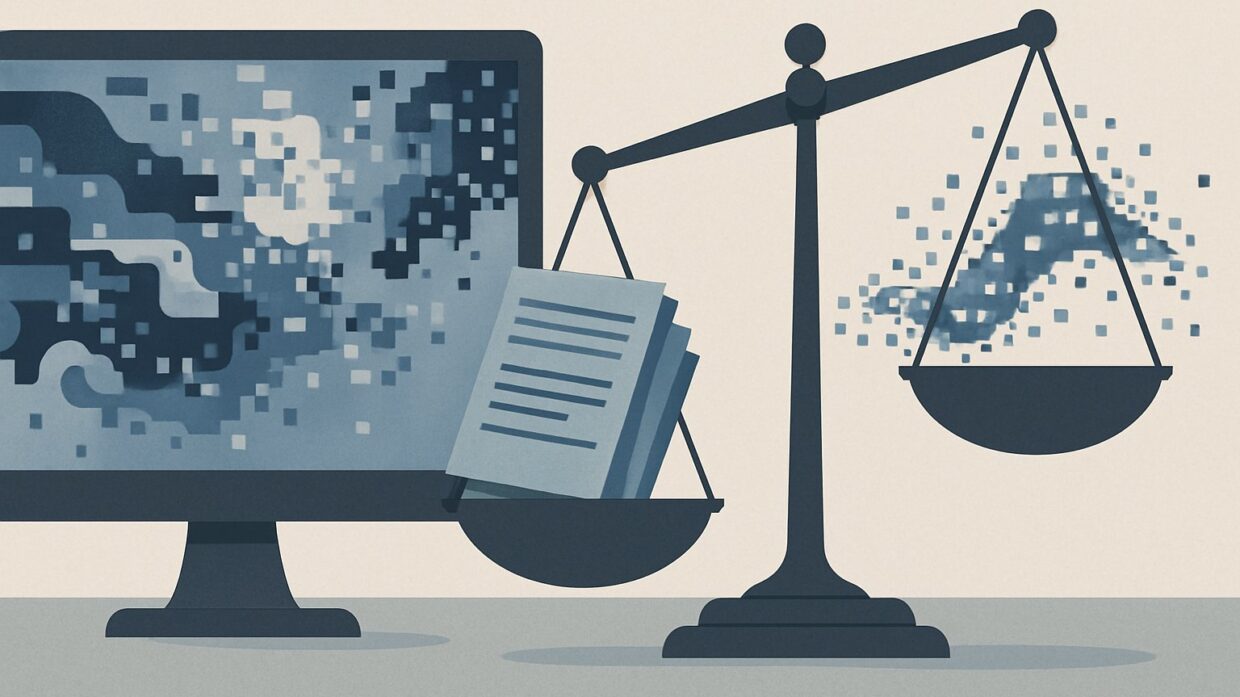
Photo: Well This Is News
One Nation's vile AI video exposes how tech companies enable political decay without consequence
While US considers AI moratorium, Australia's free speech debate reveals regulatory overreach risks
One Nation's AI video sparks debate on political regulation as AI capability outpaces oversight
Key Takeaways
- Australia's existing political advertising regulations already cover some AI-generated content, but enforcement has been inconsistent, meaning the problem may not be inadequate rules but rather inconsistent application of rules that already exist.
- Neither expanded media regulator authority nor development moratoria have been tested at scale, so claims about their effectiveness rest on assumptions rather than evidence about institutional capacity to govern content creation speed in real time.
- One Nation is a fringe party with limited electoral relevance in Australia, meaning the actual political impact of the video depends on how widely it circulated and who engaged with it, not simply on its existence or inflammatory nature.
The Analysis
One Nation's AI-generated campaign video has forced a collision between two competing framings of AI governance, each leaving out the specific policy trade-offs that matter most. The Guardian uses the phrase ensloppification of Australian politics to argue the problem is unchecked platform profit from inflammatory AI content. The Washington Examiner frames the same period as one where Western hesitation on AI development creates strategic advantage for authoritarian competitors. Neither addresses what the record actually shows about how political content moderation works, or doesn't, at scale.
What actually happened: One Nation released an AI-generated video that Australian media outlets described as inflammatory and divisive political content. The video was widely shared and criticized. The Guardian's op-ed called for regulators like the Australian Communications and Media Authority to gain expanded powers to govern AI-generated political material, arguing current watchdogs lack authority to meaningfully intervene. The Washington Examiner piece cited recent remarks by Chinese President Xi Jinping to Donald Trump, where Xi stated that China and America, as leading nations in AI, share responsibility for its development, then contrasted that with a proposed US federal moratorium on certain AI capabilities.
The left frame emphasizes that tech companies have created tools with minimal content safeguards, allowing political actors to amplify divisive messaging at scale with plausible deniability. The Guardian's language of ensloppification suggests a systemic decay enabled by profit motive. This framing leaves out two things: first, that One Nation is a fringe party with limited electoral relevance in Australia, meaning the actual reach of the content matters more than its existence; second, that media regulation of political speech, even when applied to new tools, carries institutional risks regulators themselves rarely foreground. The Guardian does not engage with whether expanded ACMA authority could suppress legitimate political speech or how one defines inflammatory in a polarized media environment.
The right frame emphasizes that Western democracies restraining AI development while China openly pursues technological leadership creates asymmetric vulnerability. The Examiner explicitly names Xi's recent comments to Trump as evidence of intentional strategy. This framing leaves out that the proposed US moratorium was narrowly scoped to specific regulatory applications, not a blanket ban on AI development, and that China itself maintains strict state controls over AI systems deployed domestically. The right frame does not acknowledge that regulatory restraint and technological development are not zero-sum, and that other democracies can regulate AI political content without ceding overall technological advancement.
What neither side fully addresses is the actual institutional question: whether media regulators designed for broadcast television can meaningfully govern AI-generated content in real time at platform scale. The Guardian assumes ACMA can develop adequate oversight authority. The Examiner assumes a US moratorium would meaningfully slow American development. The documented record shows neither premise is certain. Australia's existing regulatory framework for political advertising already covers some AI-generated material through existing provisions on political content, but enforcement has been inconsistent. The US has not yet defined what a moratorium would operationally mean or how it would be enforced across private sector development. What remains undisclosed is whether either regulatory approach actually prevents the core problem: the asymmetry between content creation speed and regulatory response time.
The real question is not whether AI political content should be regulated, but which institutions are actually capable of doing so, and what rules they would need to enforce without chilling legitimate political speech. One Nation's video exists. Xi made those comments. Both facts matter. The gap between them is not about values. It is about institutional capacity.
Australia's regulatory framework already covers AI-generated political advertising through existing provisions, yet enforcement has been inconsistent, exposing a fundamental gap between content creation velocity and oversight capability. Neither expanded ACMA authority nor US development moratoria addresses whether media regulators designed for broadcast television can govern AI content at platform scale in real time. The institutional consequence is now unavoidable: Australia and other democracies must either build new enforcement mechanisms with clarity on what constitutes actionable harmful content, or accept that existing regulators cannot meaningfully intervene in AI political speech regardless of new powers granted to them. One Nation's video demonstrates the capability exists; the regulatory response framework does not. This gap will determine whether future governance is reactive theater or functional authority.