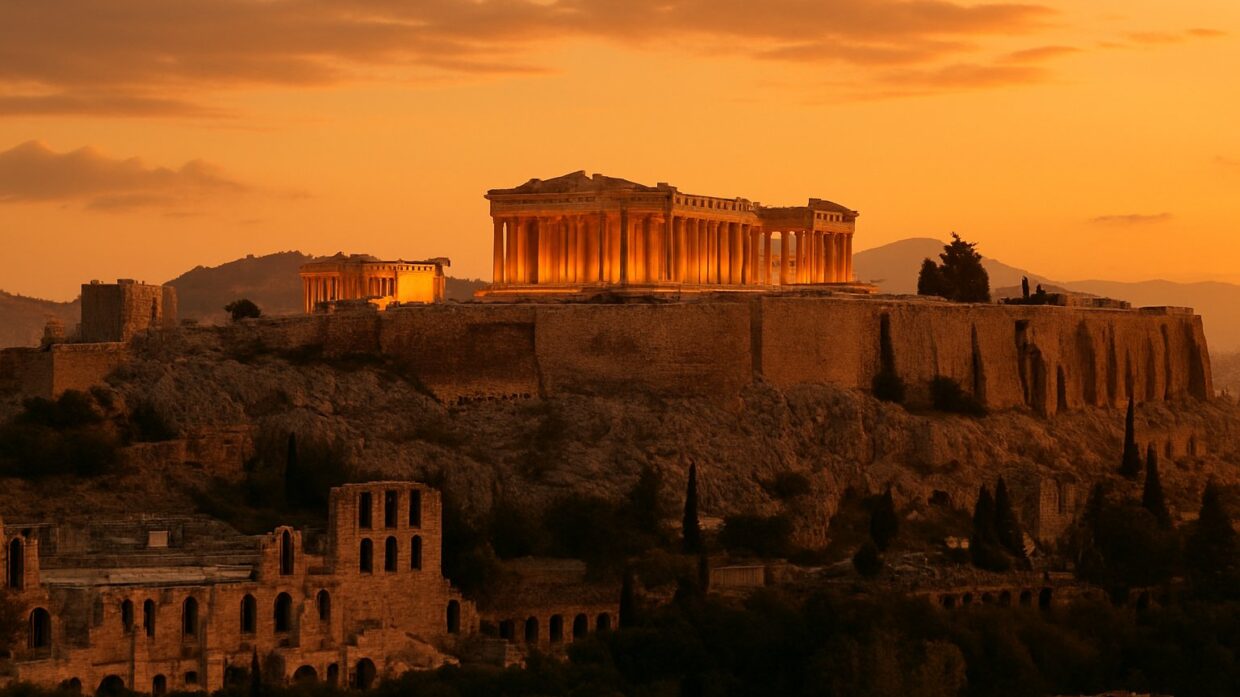
Photo: Well This Is News
Rubio uses Secretary of State platform for campaign positioning on Western decline
Rubio rallies West against civilizational decline in landmark Athens speech
Rubio delivers Western civilization address in Athens amid 2028 speculation
Key Takeaways
- Observers across the political spectrum interpreted Rubio's Athens speech as potential 2028 campaign positioning, but reporting has not established whether campaign considerations actually motivated the venue selection or message content.
- The core policy substance of Rubio's address,that Western nations should coordinate on shared interests, cultural continuity matters, and American power should operate without apology,represents coherent foreign policy positions a Secretary of State might articulate regardless of electoral timing.
- The institutional question of whether a Secretary of State should avoid messaging that appears calculated for electoral positioning remains largely unaddressed in the coverage, despite being central to evaluating the speech's appropriateness.
The Analysis
Marco Rubio used his position as Secretary of State to deliver a major foreign policy address in Athens that has been interpreted by observers across the political spectrum as positioning for a 2028 presidential campaign, raising questions about the separation between diplomatic responsibility and electoral ambition.
Rubio spoke near the Acropolis on Wednesday, invoking classical philosophers including Aristotle, Plato, and Plutarch, and framing Western civilization as facing decline that requires active renewal. Bloomberg reported that Rubio characterized the Trump administration's approach as unapologetic about pursuing American power. The speech called on Europeans and Americans to recognize shared cultural heritage stretching from ancient Greece through Rome to Christian tradition and the founding of American institutions. Fox News and Breitbart emphasized the philosophical content and the call for Western renewal. Washington Examiner noted that the Acropolis setting and the speech's apparent campaign messaging stoked speculation about Rubio's 2028 plans.
Right-leaning outlets framed the address as a significant diplomatic moment. Fox News used the phrase "campaign-ready" in its headline and emphasized Rubio's rejection of open borders and globalism. Breitbart described it as a "landmark speech" renewing calls for Western renewal. The Washington Examiner called it a "rallying cry for the West" and acknowledged the "stunning Acropolis optics" while noting that campaign speculation "overshadowed" the philosophical content. These framings emphasize the substantive foreign policy message and the resonance of classical Western heritage.
Bloomberg's reporting, while noting the dramatic backdrop, highlighted the Trump administration's stated commitment to unapologetic pursuit of power, which reframes the civilizational language into a power politics context. This framing does not challenge the content of Rubio's remarks but situates them within a doctrine of American assertiveness rather than philosophical or cultural renewal.
What neither framing addresses directly is the institutional question: whether a Secretary of State has an obligation to avoid messaging that appears calculated for electoral positioning. The speech's philosophical substance, the classical references, and the call for Western renewal are documented. What remains unestablished in the reporting is whether Rubio or the State Department deliberately chose Athens and the Acropolis as a location specifically to generate campaign optics, or whether the diplomatic merit of the address would have resulted in the same venue and messaging regardless of electoral considerations.
The timing matters contextually. Rubio is 54 years old and currently holds the nation's chief diplomatic post. A 2028 campaign would be approximately two years away at the time of this speech. The Washington Examiner's framing that speculation "stoked 2028 embers" suggests observers read campaign intent into the event, but the available reporting does not establish whether campaign positioning motivated the speech's content or venue selection.
The actual policy substance,that Western nations should coordinate on shared interests, that cultural continuity matters, that American power should be exercised without apology,represents coherent foreign policy positions that a Secretary of State might articulate regardless of electoral ambitions. The question the reporting raises but does not resolve is whether the staging and framing choices indicate that electoral positioning shaped diplomatic decisions.
Using the State Department's diplomatic platform and resources to deliver a message explicitly calibrated for presidential ambitions corrupts the distinction between foreign policy and campaign strategy. If Rubio deliberately selected Athens and classical rhetoric to generate favorable media coverage for a 2028 run, he transformed a senior cabinet position into a campaign apparatus, setting a precedent that future Secretaries of State can blur official duties with electoral calculations. The institutional damage extends beyond one speech: it signals that taxpayer-funded diplomatic infrastructure becomes available to candidates, that the timing and framing of foreign policy statements can serve personal political timelines, and that the public cannot trust whether major diplomatic initiatives reflect genuine strategic interests or electoral positioning. This normalization of using high office for campaign staging weakens the credibility of American diplomacy itself, since foreign counterparts must now evaluate whether U.S. policy pronouncements reflect actual commitments or temporary campaign messaging designed for domestic audiences.