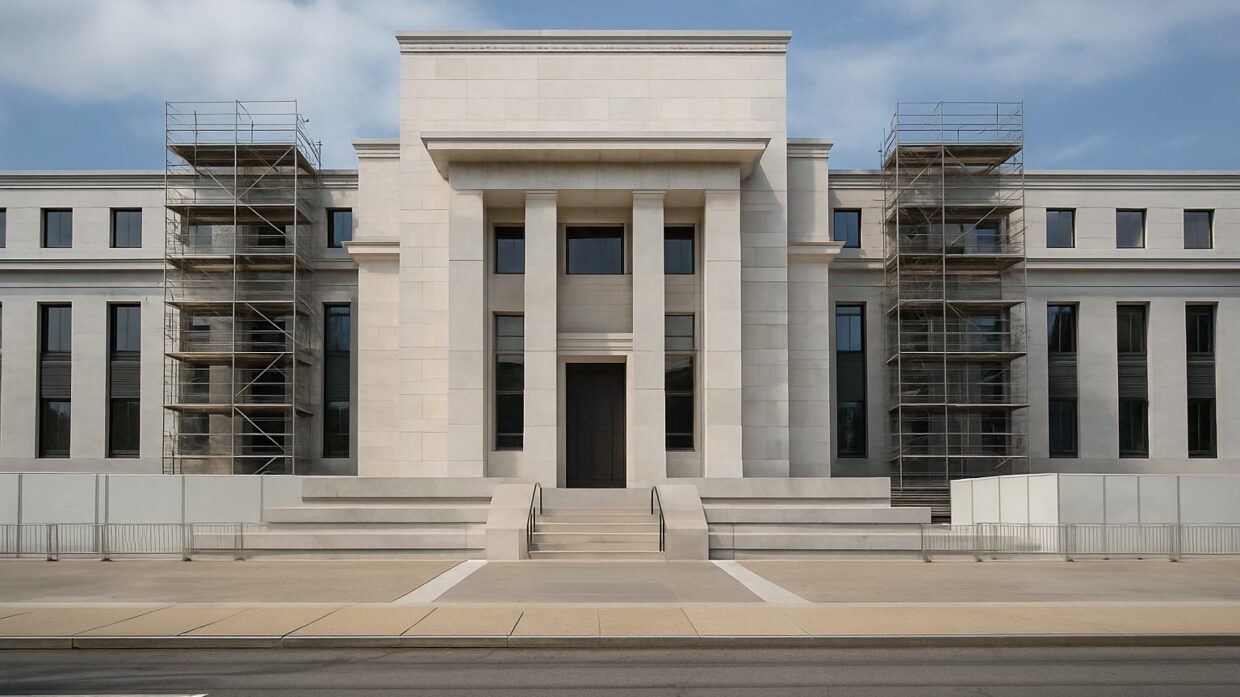
Photo: Well This Is News
Federal Reserve Watchdog Finds No Criminality in Renovation Project Trump Attacked
Fed Inspector General: No Illegal Conduct by Powell in Building Renovation Mismanagement
Fed Watchdog Clears Powell in Renovation Probe, Finds No Criminal Wrongdoing
Key Takeaways
- The inspector general distinguished between criminality and mismanagement, finding that the Fed broke no laws even though it failed to effectively manage the $2.4 billion renovation project.
- The watchdog's authority was limited to determining whether federal law was violated, not whether the Fed should have spent money differently or managed the project more efficiently.
- The split finding creates an accountability gap where poor stewardship of federal funds can be documented and acknowledged without triggering criminal investigation or subsequent administrative remedies.
The Analysis
The Federal Reserve's inspector general found no basis for criminal charges against Jerome Powell or other Fed officials in the central bank's $2.4 billion renovation of its Washington headquarters, though the watchdog simultaneously documented that the institution failed to effectively manage the project. This split finding reveals a specific distinction between criminality and mismanagement that both political sides have used to tell opposite stories about what the report actually concludes.
The documented facts are narrow. Inspector General Michael Horowitz's office examined whether federal law was violated during the renovation process. The project exceeded its budget. Trump publicly criticized Powell over the renovation costs. The watchdog examined the conduct and determined no criminal statute had been broken. The report acknowledged the Fed's project management fell short of acceptable standards. No charges were filed. No indictments were recommended.
The left frame, as presented by NBC News, emphasizes the word "cleared" and foregrounds that the watchdog found "no criminality." This language performs a function: it suggests that scrutiny of the project was overheated political pressure from Trump, and that the innocent verdict vindicates Powell. The framing leaves out what the report simultaneously found, which is that the Fed's management practices were inadequate. By leading with the criminal exoneration, this frame treats the management failures as a secondary detail and implies that if no laws were broken, there is little substance to the criticism.
The right frame, as presented by the Washington Examiner, leads with the management failure and subordinates the criminal clearance to a supporting clause. It names the finding explicitly: the Fed did not "effectively manage" the project. This framing performs its own function: it suggests that while the watchdog could not pursue criminal charges, the report actually documents institutional dysfunction. The frame leaves out the significance of the criminal clearance itself, treating it as a threshold that was simply met rather than a substantive exoneration.
What neither side fully foregrounds is the gap between the two verdicts and what that gap reveals about the limits of the inspector general's authority. A federal watchdog can determine whether a law was violated. A federal watchdog cannot determine whether an agency should have spent money differently, managed contractors better, or set clearer budgets at the outset. The report appears to have concluded: this was wasteful and poorly run, but not illegal. That finding satisfies different audiences depending on what they believe the watchdog was supposed to do.
The underlying institutional question is whether poor management of federal funds constitutes a crisis requiring criminal investigation or whether it is a matter for administrative correctives. The report answers that question by saying no criminal investigation was warranted, but does not address whether additional oversight mechanisms, budget controls, or leadership changes should follow. A reader relying solely on left framing understands the story as political vindication. A reader relying on right framing understands it as documented waste. Neither reading captures that the watchdog found both to be true simultaneously.
The real headline is that the Federal Reserve's renovation was expensively mismanaged but not criminally corrupt, and that distinction maps precisely onto competing definitions of accountability.
The Fed's $2.4 billion renovation failure exposes a critical gap in federal oversight: inspector generals can prosecute criminality but cannot mandate institutional reform for wasteful mismanagement. Powell faces no charges, yet the report documents the Fed's project management fell short of acceptable standards, leaving unanswered whether administrative correctives, tighter budget controls, or leadership accountability should follow. This split verdict will likely embolden future arguments that agencies can misspend taxpayer money without consequences as long as no laws technically break, since the watchdog mechanism that found wrongdoing lacks authority to force structural change. The renovation project becomes a precedent for how federal institutions can fail their fiduciary duty while remaining legally untouchable.