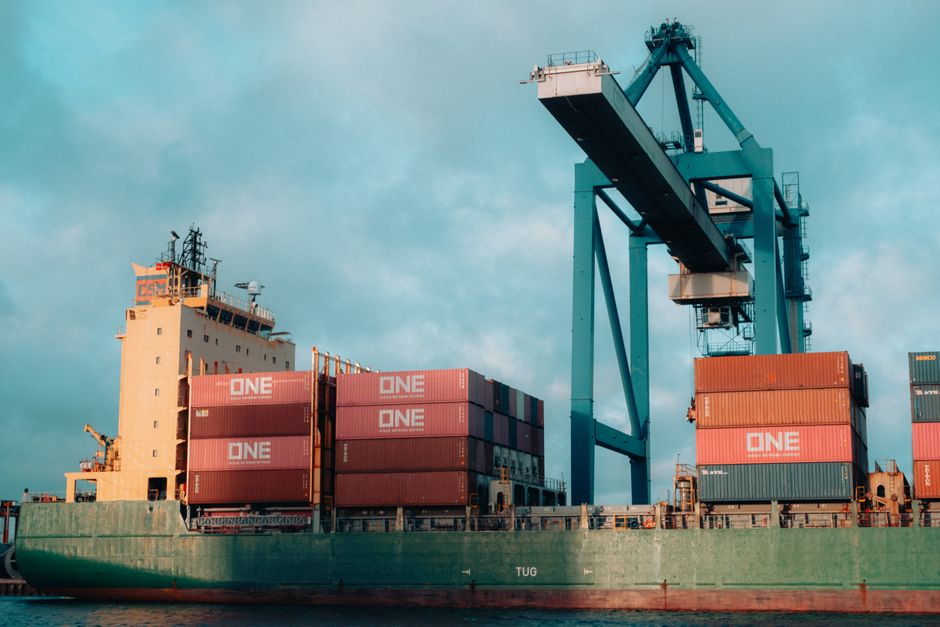
Photo: lucas hegaard
Shipping giant Hapag-Lloyd signals sustained industry recovery with upgraded guidance
Container shipping rally proves market resilience amid global trade uncertainty
Hapag-Lloyd raises 2026 earnings forecast on container shipping strength
Key Takeaways
- Hapag-Lloyd's two earnings revisions in a single year suggest either that demand shifted faster than the company modeled or that initial guidance was significantly miscalibrated, raising questions about forecast reliability.
- Shipping markets have historically moved in multi-year boom-bust cycles driven by capacity additions and trade volume swings, meaning a single year of positive revisions does not prove that current freight rate elevation represents a permanent structural shift rather than a cyclical upturn.
- Hapag-Lloyd is one of only four major global container carriers, so its guidance reflects real trade activity volumes rather than sentiment alone, but the public reporting has not explained why elevated freight rates should persist if global trade returns to historical patterns and excess capacity continues entering the market.
The Analysis
Hapag-Lloyd raised its 2026 earnings outlook for the second time in 2024, pushing shares higher on what appears to be a straightforward earnings beat. What the market reaction actually reflects is more complicated: sustained freight rates that many analysts expected to normalize have instead remained elevated, and management's twice-updated forecast suggests demand forecasting itself remains volatile.
Hapag-Lloyd is one of four major global container carriers. The company reported improved profitability across 2024 following severe container shipping losses in 2022 and 2023, when oversupply and collapsing demand pushed margins into negative territory. The second earnings upgrade signals that freight rates, which had collapsed to near-zero in 2023, are holding steadier than prior guidance assumed. The company's exact new earnings target was not disclosed in available reporting, which limits the ability to assess the magnitude of the revision.
Investor enthusiasm hinges on a specific framing: that the container shipping industry has structurally recovered and pricing power has returned. That narrative leaves out the cyclical history of shipping markets. Container freight rates are notoriously volatile, driven by global trade volumes, port congestion, fuel costs, and shipping capacity additions. The 2022-2023 collapse that forced some carriers into losses followed a 2021-2022 surge when pandemic-driven supply chain chaos created artificial scarcity. Hapag-Lloyd's rising guidance may signal sustained demand, or it may signal that rates have yet to normalize to historical levels.
What complicates the optimism is the company's track record with forecasts. Two earnings revisions in a single year suggests either that demand shifted faster than modeled, or that prior guidance was miscalibrated. Neither interpretation is reassuring for long-term reliability. Investors are betting on sustained elevated freight rates, but the reporting does not establish why rates should remain elevated if global trade volumes return to historical patterns and excess capacity continues entering the market.
The broader framing from equity markets treats this as a durable recovery story. The framing from shipping analysts and competitors is more muted: they see a cyclical upturn that may peak before 2026. The public record does not establish which scenario the evidence favors. What it does establish is that Hapag-Lloyd management is more confident about 2026 profitability than it was six months ago, and that confidence is being priced as market-wide recovery rather than parsed as company-specific execution.
The story is significant because Hapag-Lloyd is large enough that its outlook signals real trade activity, not sentiment. If shipping companies are raising guidance repeatedly, vessel utilization and freight volumes are likely moving in the direction those forecasts suggest. But the framing consistently omits the cyclical context: shipping markets boom, crash, and recover on patterns measured in years. A single year of revised guidance, even twice, does not establish a structural shift.
Hapag-Lloyd's twice-revised earnings forecast signals that global container freight rates remain elevated, but the company's forecasting volatility reveals something more troubling about market reliability. As one of four major global carriers, Hapag-Lloyd's guidance carries real weight because it reflects actual vessel utilization and trade volumes, not investor sentiment. The problem is that shipping rates are fundamentally cyclical, driven by capacity additions and trade volumes that follow multi-year patterns. Two guidance upgrades in one year could indicate either sustained demand recovery or merely that rates haven't normalized to historical levels yet. What matters for supply chains and global trade infrastructure is whether this upturn represents a durable structural shift or a predictable cyclical peak that precedes another downturn. Management's twice-updated forecast suggests their own demand models are unreliable, which should concern anyone betting that elevated freight rates and carrier profitability will persist through 2026.