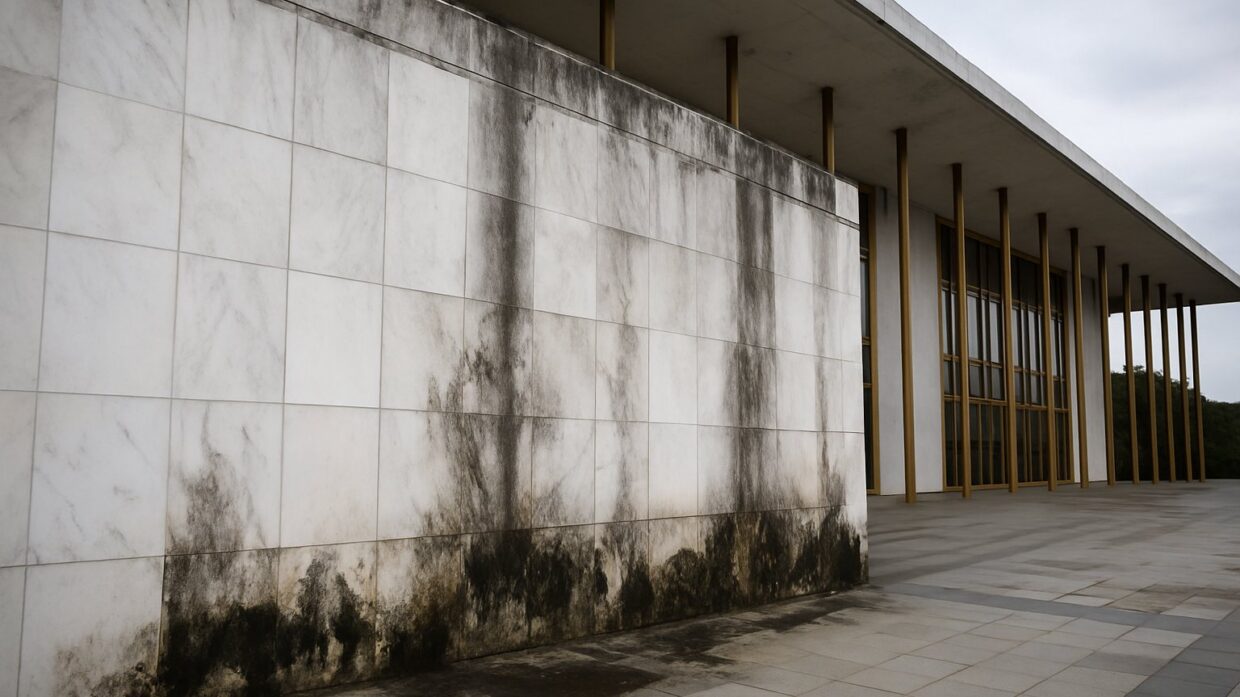
Photo: Well This Is News
Kennedy Center's dangerous neglect: leadership ignored critical safety repairs
Kennedy Center whistleblowers demand accountability for deferred maintenance decisions
Kennedy Center halted waterproofing repairs months before closure, whistleblowers claim
Key Takeaways
- The public record does not reveal why Kennedy Center leadership halted the waterproofing repairs, whether budget pressure or risk assessments influenced the decision, or whether leadership disputed the whistleblowers' characterization.
- Whether deferring waterproofing work represents gross negligence or reasonable capital planning under constraints depends on information not yet reported, including the assessed risk level and competing maintenance priorities at the time.
- The Kennedy Center receives federal appropriations and operates under federal oversight, meaning any decision to defer critical repairs potentially involved budget pressures or risk calculations that Congress and the public have not seen justified in detail.
The Analysis
The Kennedy Center closed this year amid what former employees now characterize as leadership's decision to halt waterproofing repairs. Attorney David Seide submitted a letter to Congress on behalf of whistleblowers, accompanied by internal documents showing the cancellation of planned maintenance work earlier in 2024. The specific sequence matters: repairs were halted, then the facility subsequently closed. What remains publicly unclear is the precise timeline, the stated reason for the repair cancellation, and whether water damage related to deferred maintenance contributed to the closure decision itself.
The Atlantic's framing emphasizes the Kennedy Center as structurally dangerous, using language that moves beyond the specific repair dispute into broader claims about the building's inherent risks. That framing treats the whistleblower allegations as confirmation of a pre-existing narrative about the venue's condition. The article does not establish what the Atlantic's source material actually demonstrates about whether the halted repairs were directly responsible for the closure or whether they represented one of several maintenance failures.
The Hill's reporting focuses on the whistleblower letter itself and the internal documents it contains. The outlet names David Seide as the attorney representing the whistleblowers and indicates he possesses documentation that challenges the leadership's narrative. That framing stays closer to the documented claims without extending them into broader conclusions about building-wide danger. However, The Hill's summary does not fully explain what caused leadership to halt the repairs in the first place, whether budget constraints were involved, or whether leadership disputed the whistleblowers' characterization of the decision.
What neither side foregrounds is institutional context. The Kennedy Center receives federal appropriations and operates under federal oversight. If leadership made a deliberate decision to defer critical repairs, the question is why: were they responding to budget pressure from Congress? Did risk assessments suggest the repairs were less urgent than the left-leaning framing implies? Were there competing maintenance priorities? The whistleblower letter presumably addresses this, but the public reporting does not establish what justification, if any, leadership offered at the time the repairs were cancelled.
The other omission is structural. The Kennedy Center is a 50-year-old performing arts building. Buildings of that age routinely require major maintenance. The question is not whether maintenance was needed, but whether deferring waterproofing work in particular was a reasonable decision under the circumstances. That distinction matters because it separates negligence from normal capital planning trade-offs. The available reporting does not establish which category this falls into.
What the record shows so far is that former employees claim repairs were halted, that they have documentation, and that they are bringing the matter to Congress. Whether that represents gross mismanagement, reasonable prioritization under constraints, or something in between depends on information the current headlines do not contain: the stated rationale for the cancellation, the assessed risk at the time, and the role that deferred waterproofing actually played in the subsequent closure.
The Kennedy Center's federal funding structure means Congress now controls the investigation into whether leadership deliberately deferred critical infrastructure work, potentially setting precedent for how oversight bodies evaluate maintenance deferrals at other taxpayer-funded cultural institutions. If whistleblowers can demonstrate that waterproofing cancellations directly contributed to the closure, the center's reopen timeline extends years and federal agencies will face pressure to mandate predictive maintenance audits across all major performing arts facilities receiving appropriations. The institutional impact hinges on establishing causation: whether deferred waterproofing actually triggered the closure or simply coincided with it determines whether Congress treats this as isolated mismanagement or systemic failure requiring new federal maintenance protocols for aging buildings under congressional stewardship.