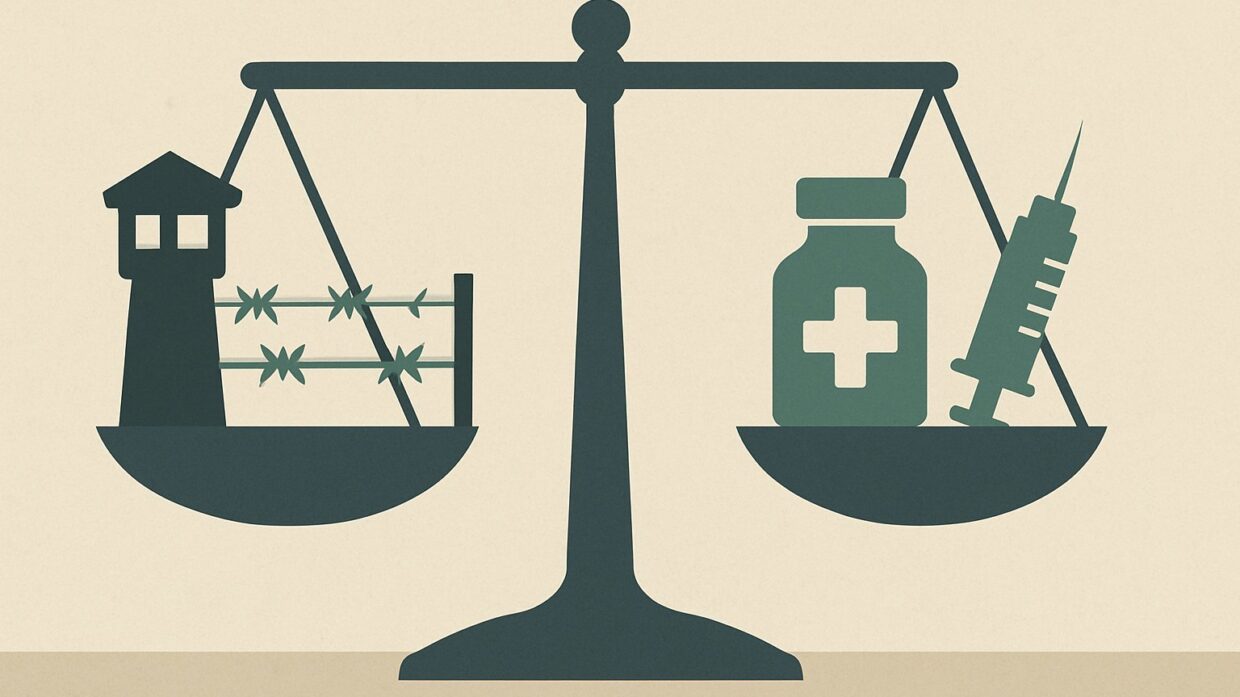
Photo: Well This Is News
Maher Acknowledges Social Safety Net Expansion Reduced Crime Despite Trump's Tough Rhetoric
Maher: Trump's Tough Approach Was Essential to Driving Down Crime and Drug Deaths
Maher Credits Both Trump Enforcement and Biden Narcan Policy for Crime and Drug Death Declines
Key Takeaways
- Maher attributed crime and drug death declines to overlapping policy changes from both administrations without establishing which specific policies produced which specific improvements or in what proportion.
- Neither major media framing captured Maher's actual point: that both sides' current arguments claiming disproportionate credit for the improvements rest on inference about causation rather than forensic evidence.
- Both left and right outlets selectively foregrounded the credit to their preferred policies while minimizing or subordinating the opposing party's contribution, despite Maher explicitly crediting both.
The Analysis
Bill Maher's Friday closing monologue credited both the Trump administration's enforcement actions and Biden-era Democratic initiatives for measurable declines in crime and drug deaths, but what matters is that neither major media framing captured what he actually said or why his framing matters.
Maher stated that border closures, criminal deportations, and strikes on drug trafficking operations contributed to lower drug deaths, and that the Trump administration's tough-on-crime posture affected crime rates. He simultaneously credited Democratic expansion of Narcan availability and the broader social safety net for the same outcomes. The specific phrase Breitbart quotes is Maher calling it "childish to pretend" one party's approach was irrelevant. That word choice matters: childish implies intellectual dishonesty, not just disagreement.
The right-leaning framing, captured in both Breitbart and Washington Examiner headlines, emphasizes Maher's credit to Trump enforcement while either subordinating or minimizing the Democratic contribution. Washington Examiner leads with Trump's approach "partially" driving decline but does not equally foreground the social safety net credit. Breitbart's headline structure places Trump policies first and uses the phrase "no more Mr. Nice Guy," which is Maher's language but carries a tonal edge that Maher himself applied to Trump, not necessarily endorsed. The right frame answers the implicit question: see, a left-leaning entertainer admits tough policies work.
The left-leaning framing would emphasize that Maher credited social safety net expansion and Narcan availability, treating the Trump credit as secondary or as Maher being "fair-minded" to the opposition. That framing answers the implicit question: see, even Trump's policies work best when paired with Democratic social investment. Neither framing lies, but each one front-loads what its audience wants to hear.
What neither side fully captures is what Maher's framing actually establishes: that measurable improvements in public safety metrics appear to correlate with multiple, overlapping policy changes from both administrations. The available crime data does show decline in recent years, and drug overdose deaths have declined from their 2023 peak. But the sources do not establish which specific policies produced which specific changes, or in what proportion. Maher is making an inference about causation based on timing and policy overlap, not an evidence-based allocation of credit.
The deeper omission in both frames is accountability for what created the original crisis. Crime rose and drug deaths surged under specific prior conditions; neither party's current framing addresses why those conditions existed or what both sides may have contributed to them. Maher's "childish" comment cuts at that: it is intellectually childish to deny that your opponent's policies matter, but it is also childish to claim credit for decline without forensically establishing what caused the original problem.
What this story signals is that when a visible, trusted voice says both sides contributed to measurable improvement, the instinct across ideological lines is to claim more credit than the evidence supports. The actual headline is that crime and drug death trends suggest multiple policy levers matter, but the public debate remains framed around which single factor matters most.
Maher's willingness to credit both administrations exposes how media outlets on both sides immediately weaponize ambiguous causation. Neither a decline in overdose deaths nor crime rates proves which specific policy drove improvement, yet the right frames this as vindication of Trump's enforcement while the left emphasizes social safety nets. The real casualty is accountability: if both parties can claim credit for improvement without proving their policies caused it, neither faces pressure to explain what created the original crisis or to defend which interventions actually work. This pattern will repeat in future policy debates, allowing politicians to cherry-pick favorable data while avoiding rigorous evaluation of their actual contributions to public health outcomes.