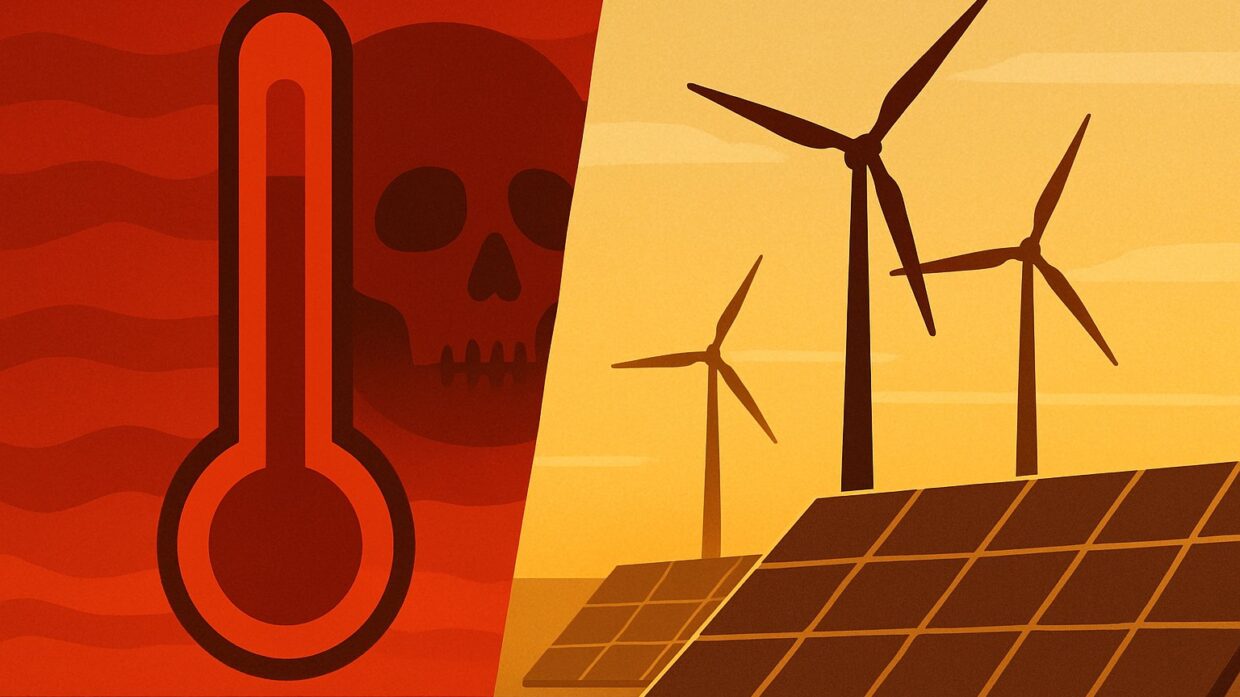
Photo: Well This Is News
Al Gore: Fossil Fuel Backlash Won't Stop Climate Victory as Super El Niño Death Toll Rises
Gore Claims Climate Win Despite El Niño Projections; Cost of Transition Policies Questioned
Climate Scientists Project 450,000 Heat Deaths From El Niño; Gore Declares Momentum on Renewables
Key Takeaways
- The 451,000 heat death projection lacks disclosed methodology, peer-review status, or clarity on whether it represents global deaths, regional deaths, or excess mortality above baseline expectations.
- Climate science projections of future mortality and renewable energy momentum are separate claims that contradict each other but are being presented as one supporting narrative.
- Deaths attributed to El Niño-driven heat reflect infrastructure, wealth, cooling access, and health systems as much as climate change itself, but reporting treats all mortality as climate-caused rather than parsing these factors.
The Analysis
Two separate climate stories are being discussed as a single narrative, but they establish different facts that deserve separate scrutiny. The first claim is specific: climate researchers estimate 451,000 deaths from excess heat caused by El Niño by February. The second claim is about Al Gore's assertion that the renewable energy transition is gaining momentum despite fossil fuel opposition. Neither claim directly proves the other, and treating them as one narrative obscures what each does and does not establish.
The El Niño death projection comes from climate scientists quoted by the Guardian and reproduced in Mother Jones. The exact methodology behind that 451,000 figure is not disclosed in the available summaries, nor is it clear whether this represents global deaths, deaths in specific regions, or excess mortality above a baseline. The reporting identifies the phenomenon but does not establish whether this projection is peer-reviewed, disputed among climate researchers, or represents a widely-accepted consensus estimate. What the available reporting confirms is that the figure exists and is being cited as part of climate crisis communication.
Gore's framing emphasizes momentum and inevitability. He has "admitted he was surprised by the ferocious, ongoing backlash from the fossil fuel industry," according to the Mother Jones summary. That phrasing reveals what the left-leaning framing emphasizes: that opposition exists, it is sustained, and it comes from a specific interest group with financial incentive to resist. The reporting does not disclose what specific claims from An Inconvenient Truth proved inaccurate, which predictions have been validated, or how Gore evaluates the film's track record two decades later. The narrative focuses on his confidence in eventual victory rather than on measurable outcomes of the climate movement since 2006.
What the right-side framing would likely emphasize is that 451,000 projected deaths, if accurate, indicates that current climate policies have not prevented the catastrophic outcomes the climate movement has been warning about for twenty years. A conservative reading might note that Gore's confidence in "momentum" is offered without specific economic data about the cost of the transition, the displacement of workers, or the actual carbon reduction achieved by renewable deployment to date. The reporting does not provide those figures, leaving Gore's optimism unmoored from measurable metrics.
What neither framing adequately addresses is the distinction between climate science (the El Niño projections) and climate policy advocacy (Gore's renewable energy optimism). The El Niño event is a natural phenomenon; deaths from heat are a function of infrastructure, wealth, access to cooling, and health systems, not solely of climate. The reporting attributes 451,000 deaths to El Niño's "additional heat" but does not establish what portion of that toll reflects infrastructure and equity gaps rather than climate change itself. Similarly, renewable energy growth can be documented separately from claims about fossil fuel industry opposition or about the inevitability of climate movement victory.
The underlying question is whether renewable energy deployment is accelerating fast enough to prevent the mortality outcomes climate researchers project. Gore says yes; the death projections suggest no. The available reporting does not resolve that contradiction because it treats Gore's optimism and the mortality projections as supporting evidence for the same narrative, when they may actually reflect contradictory assessments of current trajectory.
El Niño projections of 450,000 heat deaths and Gore's renewable momentum claims occupy the same headline but describe opposite conclusions about climate policy effectiveness. If the mortality estimate reflects current trajectory, renewable deployment is failing to prevent catastrophic outcomes the climate movement promised to avert two decades ago. The reporting elides this contradiction by presenting Gore's confidence and scientific projections as compatible rather than checking whether renewable growth rates actually align with the carbon reductions necessary to prevent deaths at the scale researchers project. Without disclosed methodology for the mortality figure or measurable benchmarks for Gore's momentum claim, readers cannot assess whether the transition is succeeding or whether climate advocates are describing victory while bodies accumulate from preventable heat exposure.