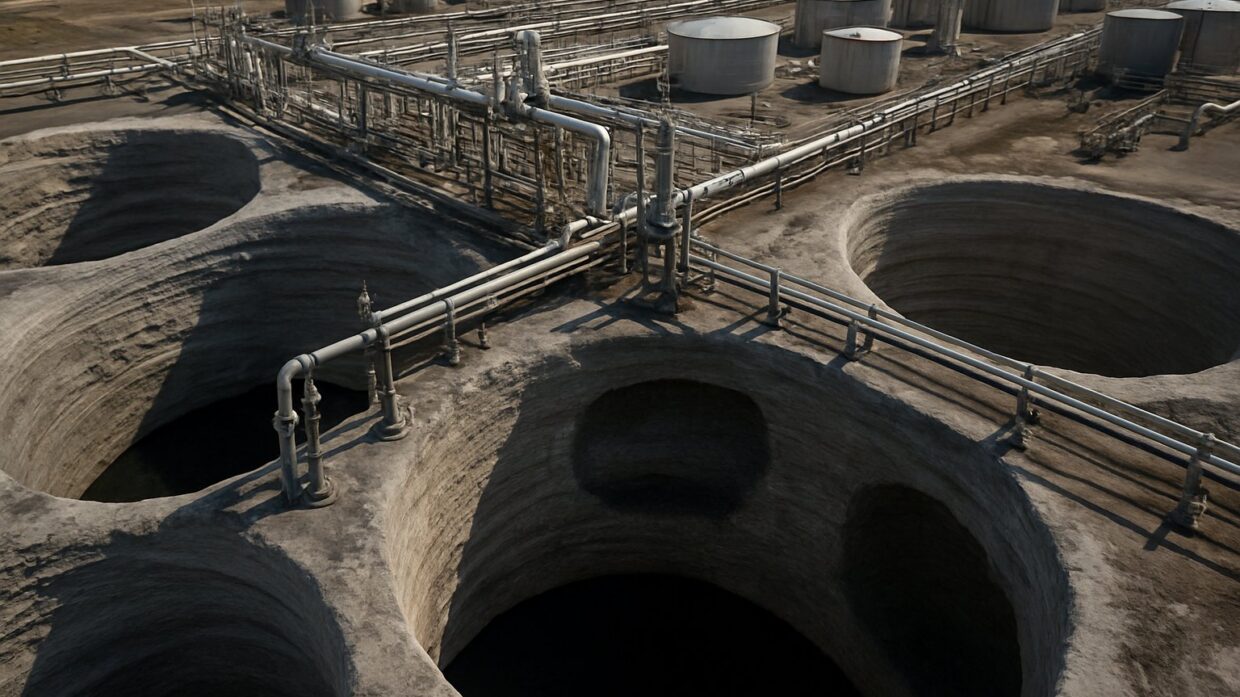
Photo: Well This Is News
U.S. Taps Oil Reserve to Combat Inflation as Gasoline Prices Surge Post-Iran Conflict
Strategic Reserve Drain Exposes Flawed Energy Policy: Administration Prioritizes Short-Term Prices Over Long-Term Security
Biden Administration Depletes Strategic Petroleum Reserve Amid Price Pressures, Faces Refill Debate
Key Takeaways
- The Strategic Petroleum Reserve has fallen to its lowest level in decades after the Biden administration released approximately 180 million barrels since 2021, with the largest releases occurring during the 2022 midterm cycle before recent Iran tensions escalated.
- Congress designed the Strategic Petroleum Reserve in 1975 specifically for use during severe energy supply interruptions, but the administration and critics disagree on whether sustained high prices from geopolitical uncertainty qualify as such an interruption worthy of reserve depletion.
- Importing Venezuelan crude to refill the reserve requires either sanctions waivers or exceptions that create diplomatic commitments the administration has not publicly explained, and public reporting does not clarify whether officials have already negotiated terms or are still exploring the option.
The Analysis
The Strategic Petroleum Reserve currently sits at its lowest level in decades, a direct result of the Biden administration releasing approximately 180 million barrels since 2021 to moderate crude prices at the pump. The timing matters: the largest releases occurred during the 2022 midterm election cycle and intensified after recent Iran tensions. The administration has not disputed these numbers; they are part of the public record. What the two sides dispute is whether this depletion reflects sound crisis management or political calculation disguised as energy policy.
The left frame, represented by NPR's coverage, emphasizes consumer relief and normalcy restoration. The exact language matters: NPR describes the reserve release as a response to "rising gasoline prices in the wake of the war with Iran," framing the action as reactive and proportionate. This framing leaves out the 2022 releases, which predated any recent Iran conflict and occurred during the midterm campaign. It also does not establish how many barrels were released specifically to address the Iran situation versus how many were released for general price suppression. The coverage foregrounds the Venezuelan refill option as a practical solution but does not address the diplomatic complexity of securing crude from a sanctioned regime, which complicates the "straightforward supply chain" narrative.
The right frame, articulated by The Federalist, uses different language entirely: "misuse" of the reserve, "price tool," and "election-cycle politics." The Federalist's five-point argument does not dispute the depletion itself but reframes it as ideologically driven rather than emergency-driven. The piece emphasizes what it calls the administration's rejection of market forces, citing unspecified "windfall profits tax" proposals that allegedly distort energy markets further. However, The Federalist does not establish that these specific proposals are currently operative policy or explain how a windfall profits tax interacts with reserve depletion. The framing leaves out the fact that reserve releases during price spikes have bipartisan precedent, including during the Trump administration's tenure.
What neither side fully captures is the underlying tension between the reserve's two competing purposes. The reserve was established by Congress in 1975 specifically for use during "severe energy supply interruptions." The question the public record has not resolved is whether sustained high prices triggered by geopolitical events qualify as such an interruption, or whether the reserve should be held only for supply shocks like pipelines breaking. The Iran tensions created uncertainty about future supply; the administration's interpretation was that this uncertainty justified releases. Critics argue that uncertainty is not scarcity and that the reserve should reflect actual supply disruption, not price management.
The refill question exposes a separate issue neither frame adequately addresses. Importing Venezuelan crude requires either sanctions waivers or exceptions, which creates diplomatic commitments the administration is not explicitly defending publicly. NPR mentions it as a possibility; The Federalist does not mention it at all. What remains undisclosed in public reporting is whether administration officials have already negotiated terms or whether the Venezuelan option is genuinely exploratory.
The record establishes that reserve depletion happened. What it does not establish is the internal calculus distinguishing emergency response from price suppression, or whether current reserve levels pose material national security risk in the next actual supply crisis.
Depleting the Strategic Petroleum Reserve to 40-year lows creates a concrete vulnerability for the next genuine supply crisis, whether from pipeline failure, geopolitical escalation, or natural disaster. When the next real emergency strikes and crude supplies actually vanish rather than merely spike in price, the U.S. will lack the buffer it accumulated over decades. Refilling from Venezuela requires sanctions exceptions that bind future policy and shift leverage toward a hostile regime. The administration's refusal to publicly defend the internal distinction between price management and emergency response suggests that distinction may not exist in their decision-making. Reserve depletion is not recoverable quickly; rebuilding takes years and considerable expense. Every barrel released for midterm politics or general price suppression is a barrel unavailable when American refineries face actual scarcity.