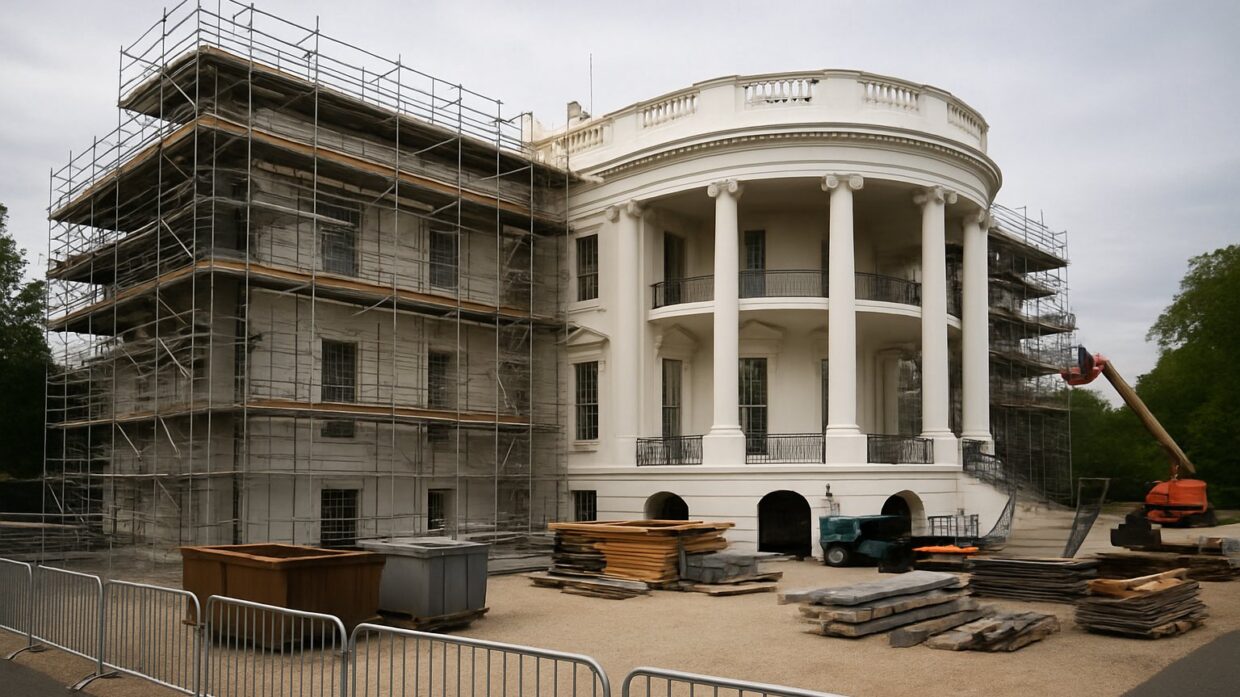
Photo: Well This Is News
Supreme Court overrides courts, lets Trump build $400M ballroom without Congress approval
Supreme Court delivers Trump victory on ballroom project after lower courts tried to halt construction
Supreme Court allows Trump White House ballroom construction to proceed despite lower court blocks
Key Takeaways
- A Supreme Court stay is a temporary procedural measure that allows work to continue pending final judgment, not a ruling on whether the project is actually legal.
- The White House has never publicly explained why it proceeded without explicit congressional approval or what statutory authority it claims justifies skipping the approval process.
- The fact that Chief Justice Roberts publicly warned the project is probably unlawful while voting with the majority to allow it suggests the Court may be deeply divided on the underlying legal question of whether Congress approval is required.
The Analysis
The Supreme Court allowed construction of Trump's White House ballroom to continue Monday despite acknowledging the project likely violates federal law, creating a specific tension: the nation's highest court permitted work to proceed while one of its own justices warned it was probably illegal.
The documented facts are these. Two lower federal courts had ruled the ballroom project must stop because it lacked congressional approval required by law. The Supreme Court issued a stay Monday that permits construction to continue pending final resolution of the legal challenge. Chief Justice John Roberts, in a separate opinion, stated the project is likely unlawful. The vote was 5-4. The project is estimated to cost $400 million and involves renovations to the East Wing. Congressional approval requirements for such construction remain part of federal statute, though the Court has not yet ruled on whether those requirements apply here.
The left frame, articulated by NBC News and similar outlets, emphasizes that Trump received a win despite the Court acknowledging likely illegality. The language used is "handed a win" and "allowing indefinitely." This framing leaves out the fact that a Supreme Court stay pending final judgment is a standard legal procedure that does not determine the final outcome, nor does it indicate the Court's ultimate view of the project's legality. The emphasis on "indefinitely" shifts attention away from the procedural nature of the ruling, which permits work to continue only while the case proceeds. The framing also does not foreground that Roberts's warning suggests at least some justices view the project as problematic on the merits.
The right frame, articulated by the Washington Examiner and Fox News, emphasizes Trump's victory and notes the Court rejected lower court rulings. The language emphasizes "significant victory" and "handed Trump." This framing leaves out that the stay is a temporary procedural measure and does not constitute a final ruling on the merits. It downplays Roberts's explicit caution about the project's likely unlawfulness. The framing does not emphasize that a 5-4 stay, combined with Roberts's separate statement, suggests the Court is closely divided on the underlying question of legality.
What neither side fully captures is the specific legal question at issue: whether federal law requiring congressional approval for certain White House construction applies to this ballroom project. The reporting does not establish why Congress did not explicitly approve this renovation, nor does it clarify what statutory authority the White House claims for proceeding without approval. The sequence raises questions about the administration's confidence in its legal position if even the Chief Justice has publicly warned of likely unlawfulness.
The underlying question is whether a Supreme Court stay that permits ongoing construction while acknowledging probable illegality represents deference to executive authority, institutional comity with the White House, or standard procedure for stays that do not prejudge final merit. The Court's final ruling on whether congressional approval is required remains pending. Until that ruling, the project's legal status is uncertain, and calling this a definitive win or loss for either side overstates what the procedure actually establishes.
Construction of a $400 million White House renovation can now proceed without congressional approval despite federal law likely requiring it, according to the Supreme Court's temporary stay. This decision creates immediate institutional precedent: future administrations may attempt similar high-cost projects while legal challenges wind through courts, effectively operating under provisional authority rather than statutory compliance. The split decision, combined with Chief Justice Roberts's separate warning about probable illegality, signals the Court itself is fractured on whether sitting presidents can bypass congressional oversight of executive branch construction. The final ruling remains pending, but the stay allows irreversible work to continue meanwhile, meaning if courts ultimately side with Congress's authority, the renovation will already be complete and impossible to undo, rendering the eventual legal victory hollow and establishing that executive action can outpace judicial review.