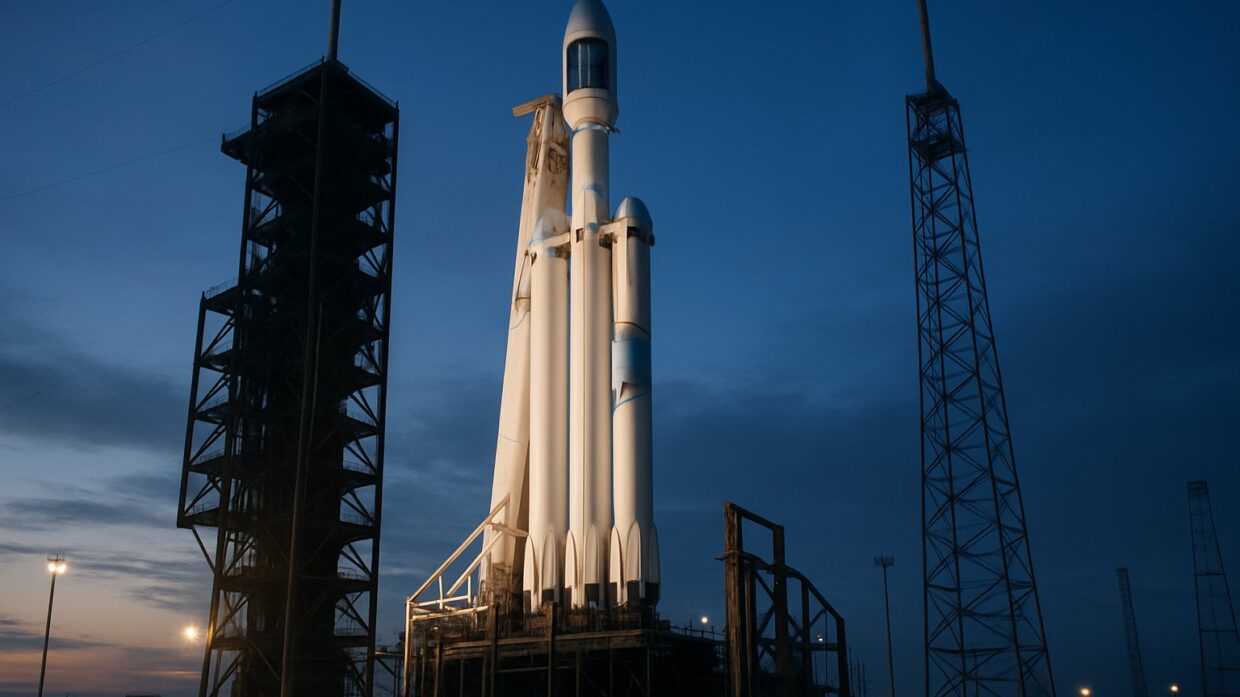
Photo: Well This Is News
NASA launches next-generation telescope to unravel cosmic mysteries and find distant worlds
NASA's newest crown jewel blasts off to hunt planets, explore dark energy, survey cosmos
NASA launches $4.3 billion Roman Space Telescope to survey billions of galaxies
Key Takeaways
- The $4.3 billion Roman Space Telescope cost as much as the James Webb Space Telescope, yet neither media outlet examined whether this expense delivers scientific returns that justify the investment compared to other NASA priorities.
- China is advancing its own astronomical observation capabilities, but American coverage frames the Roman mission as pure discovery rather than acknowledging the geopolitical competition in space exploration.
- The telescope was authorized in 2010 and has consumed resources across two decades, but coverage omits any sustained national debate about whether this represents the best use of federal scientific funding, which constitutes less than 1 percent of the federal budget.
The Analysis
NASA launched its Roman Space Telescope on Sunday from Cape Canaveral, Florida aboard a SpaceX Falcon Heavy rocket. The $4.3 billion observatory represents one of the most expensive scientific instruments ever deployed, yet the framing of what it will accomplish varies significantly depending on which outlet is reporting it.
The verified facts are straightforward: the telescope is designed to survey hundreds of millions of stars and billions of galaxies. It will search for exoplanets, study dark energy, and operate as a successor to the James Webb Space Telescope. The launch occurred on schedule. SpaceX provided the launch vehicle. The telescope is named after Nancy Grace Roman, the astronomer known as the "mother of Hubble."
NPR's framing emphasizes cosmic discovery and concrete planetary inventory, using the phrase "unravel cosmic mysteries" and promising identification of "more than 100,000 planets beyond our solar system." This language emphasizes tangible scientific achievements and positions the telescope as a tool for solving specific problems. The outlet leads with NASA's success rather than the program's cost or technical risks. The emphasis on planet-finding makes the mission relatable: humans want to know if we are alone, and this telescope offers answers.
The Washington Examiner uses markedly different language, calling the telescope a "crown jewel" and describing its mission to "hunt for planets," "explore secret dark energy," and "survey the cosmos like never before." The word "secret" appears in the right-leaning outlet's coverage but not in the left-leaning sources. This language choice carries exploratory, almost mystical undertones that emphasize grandeur and discovery rather than scientific methodology. The framing appeals to American accomplishment and technological superiority without the cautionary framing present in some other outlets.
What neither side foregrounds is the program's cost-benefit relationship or its connection to earlier commitments. The Roman telescope was authorized under the 2010 National Space Policy and has consumed resources across two decades. Its $4.3 billion price tag makes it comparable to the James Webb Space Telescope, which faced years of delays and budget overruns before its 2021 launch. Neither outlet discusses whether this expense is justified by the scientific return or how it compares to other NASA priorities. Neither frames the launch within the broader context of federal science spending as a percentage of the budget, which remains below 1 percent.
The reporting also does not address questions about international participation or whether other space agencies are pursuing similar capabilities. The Chinese space program has been advancing its own astronomical observation capacity, yet this competitive dimension does not appear in any of the provided coverage. The Roman telescope represents American scientific leadership, but framing it purely as discovery rather than within geopolitical context leaves readers without understanding why this particular mission matters to national priorities.
What makes this significant is that all outlets treat the launch as unambiguous success without examining technical or financial tradeoffs. Scientific missions of this scale involve genuine choices about resources. The real headline is not that NASA launched an expensive telescope, but that the American public has chosen to fund this particular vision of space exploration without sustained national debate about whether it represents optimal allocation of federal scientific resources.
Roman's $4.3 billion price tag locks NASA into a commitment that crowds out alternative space science priorities for the next decade. The telescope's two-decade authorization cycle means decisions made today about cosmic surveys directly reduce funding available for climate monitoring satellites, planetary defense research, or Mars sample return missions. James Webb's history of delays and cost overruns should have prompted explicit public discussion about whether surveying billions of distant galaxies justifies the opportunity cost of abandoned Earth science initiatives. By framing launch day as triumph rather than resource allocation, media coverage obscures how federal science budgets operate as zero-sum competitions where choosing one $4.3 billion mission means rejecting dozens of smaller ones that might address more immediate scientific questions.